• HOME
  • NEWS
  • EXPLORE
    • CAREER
      • Companies
      • Jobs
    • EVENTS
    • iGEM
      • News
      • Team
    • PHOTOS
    • VIDEO
    • WIKI
  • BLOG
  • COMMUNITY
    • FACEBOOK
    • INSTAGRAM
    • TWITTER
Wednesday, January 14, 2026
BIOENGINEER.ORG
No Result
View All Result
  • Login
  • HOME
  • NEWS
  • EXPLORE
    • CAREER
      • Companies
      • Jobs
        • Lecturer
        • PhD Studentship
        • Postdoc
        • Research Assistant
    • EVENTS
    • iGEM
      • News
      • Team
    • PHOTOS
    • VIDEO
    • WIKI
  • BLOG
  • COMMUNITY
    • FACEBOOK
    • INSTAGRAM
    • TWITTER
  • HOME
  • NEWS
  • EXPLORE
    • CAREER
      • Companies
      • Jobs
        • Lecturer
        • PhD Studentship
        • Postdoc
        • Research Assistant
    • EVENTS
    • iGEM
      • News
      • Team
    • PHOTOS
    • VIDEO
    • WIKI
  • BLOG
  • COMMUNITY
    • FACEBOOK
    • INSTAGRAM
    • TWITTER
No Result
View All Result
Bioengineer.org
No Result
View All Result
Home NEWS Science News Biology

Amazonian soils mapped using indicator species

Bioengineer by Bioengineer
April 17, 2019
in Biology
Reading Time: 2 mins read
0
IMAGE
Share on FacebookShare on TwitterShare on LinkedinShare on RedditShare on Telegram

IMAGE

Credit: Gabriela Zuquim

Understanding the ecology and distributions of species in Amazonia is hampered by lack of information about environmental conditions, such as soils. Plant occurrence data are typically more abundant than soil samples in poorly known areas, and researchers from Finland and Brazil have now developed a method that uses both plant and soil data to produce a map of soil properties.

Amazonia is a vast rainforest area that is both megadiverse and poorly known. Field measurements of environmental factors, such as soils, are few and far between, so maps depicting habitat characteristics that are relevant for plants and animals suffer from low accuracy.

To overcome this problem, researchers from the University of Turku in Finland and the National Institute of Amazonian Research (INPA) and the Federal University of Alagoas (UFAL) in Brazil decided to take advantage of plant occurrence data in addition to soil data.

“These results are also relevant in the context of global warming: species need to track climatically suitable areas, but they will only be able to establish if also soils are suitable. Information about soils is needed to identify and protect the suitable areas of both the present and the future,” says Postdoctoral Researcher Juliana Stropp from UFAL.

Researchers Utilised Digital Herbarium Databases

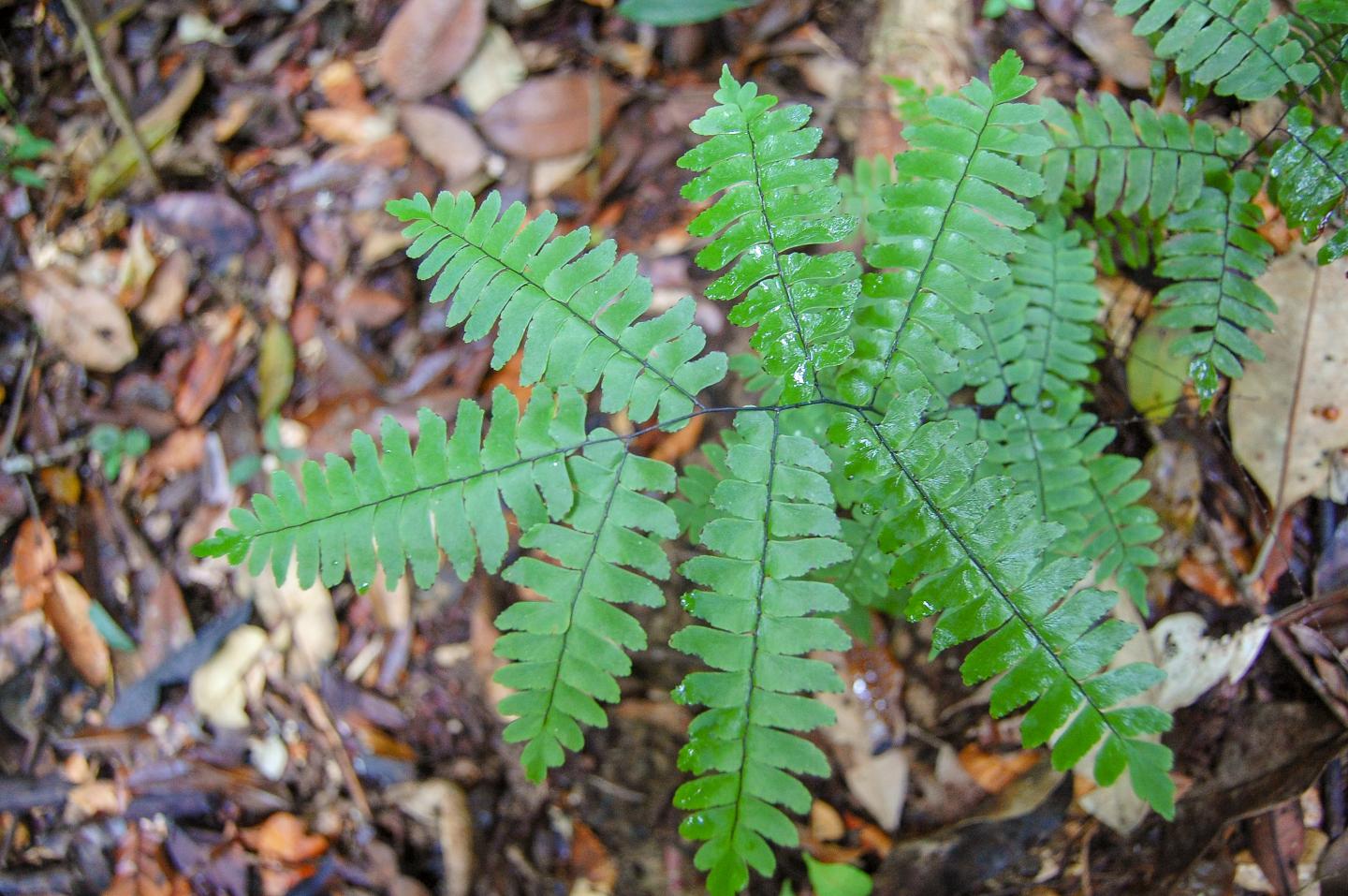
Already for a long time, the Amazon research team of the University of Turku has been collecting field data on ferns to utilise them as indicators of soil and forest types in Amazonia.

“Thanks to perseverance in the work, we now have the field information needed to convert fern species occurrence data to an estimate of soil properties,” says Professor of Plant Ecology Hanna Tuomisto, leader of the Amazon research team of the University of Turku.

Generations of botanists have made expeditions to Amazonia and brought back plant specimens that are deposited in herbaria all over the world. With GBIF and other online portals, the data are now easily accessible.

“Therefore, we thought that perhaps we can use these haphazard fern occurrences to derive estimates of soil properties, put them together with the actually measured soil data, and produce a new soil map,” says Postdoctoral Researcher Gabriela Zuquim from the University of Turku, who led the study.

The researchers’ plan worked. The mapping was based on 2,600 soil sampling points and more than 30,000 fern records from digital databases. In a nutshell, the method consists of five steps: compiling the available data, determining soil optima for the species, estimating soil properties for sites that have plant occurrence records but no soil data, interpolating between all soil data points, and validating the map. Validation using an independent set of soil samples suggested that the map is accurate enough to be used as a digital layer in species distribution and habitat modeling.

###

Media Contact
Hanna Tuomisto
[email protected]

Original Source

https://www.utu.fi/en/news/press-release/amazonian-soils-mapped-using-indicator-species

Related Journal Article

http://dx.doi.org/10.1111/2041-210X.13178

Tags: BiologyClimate ChangeEarth ScienceEcology/EnvironmentGeology/SoilPlant SciencesTechnology/Engineering/Computer Science
Share12Tweet8Share2ShareShareShare2

Related Posts

blank

Exploring PDR Gene Family and miRNAs in Wheat

January 14, 2026
Genetic Insights into Circadian Adaptation in Endangered Fish

Genetic Insights into Circadian Adaptation in Endangered Fish

January 13, 2026

Blastocystis Boosts B and K2 Vitamins in Antelope Gut

January 13, 2026

New Intermediate Host Found for Fish Parasite

January 13, 2026
Please login to join discussion

POPULAR NEWS

  • Enhancing Spiritual Care Education in Nursing Programs

    154 shares
    Share 62 Tweet 39
  • PTSD, Depression, Anxiety in Childhood Cancer Survivors, Parents

    147 shares
    Share 59 Tweet 37
  • Robotic Ureteral Reconstruction: A Novel Approach

    73 shares
    Share 29 Tweet 18
  • Study Reveals Lipid Accumulation in ME/CFS Cells

    52 shares
    Share 21 Tweet 13

About

We bring you the latest biotechnology news from best research centers and universities around the world. Check our website.

Follow us

Recent News

Exploring PDR Gene Family and miRNAs in Wheat

Aged Skin Worsens Osteoarthritis Through IL-36R

How Feedback Shapes Risk Attitudes

Subscribe to Blog via Email

Enter your email address to subscribe to this blog and receive notifications of new posts by email.

Join 71 other subscribers
  • Contact Us

Bioengineer.org © Copyright 2023 All Rights Reserved.

Welcome Back!

Login to your account below

Forgotten Password?

Retrieve your password

Please enter your username or email address to reset your password.

Log In
No Result
View All Result
  • Homepages
    • Home Page 1
    • Home Page 2
  • News
  • National
  • Business
  • Health
  • Lifestyle
  • Science

Bioengineer.org © Copyright 2023 All Rights Reserved.