

• HOME
  • NEWS
  • EXPLORE
    • CAREER
      • Companies
      • Jobs
    • EVENTS
    • iGEM
      • News
      • Team
    • PHOTOS
    • VIDEO
    • WIKI
  • BLOG
  • COMMUNITY
    • FACEBOOK
    • INSTAGRAM
    • TWITTER
Saturday, February 7, 2026
BIOENGINEER.ORG
No Result
View All Result
  • Login
  • HOME
  • NEWS
  • EXPLORE
    • CAREER
      • Companies
      • Jobs
        • Lecturer
        • PhD Studentship
        • Postdoc
        • Research Assistant
    • EVENTS
    • iGEM
      • News
      • Team
    • PHOTOS
    • VIDEO
    • WIKI
  • BLOG
  • COMMUNITY
    • FACEBOOK
    • INSTAGRAM
    • TWITTER
  • HOME
  • NEWS
  • EXPLORE
    • CAREER
      • Companies
      • Jobs
        • Lecturer
        • PhD Studentship
        • Postdoc
        • Research Assistant
    • EVENTS
    • iGEM
      • News
      • Team
    • PHOTOS
    • VIDEO
    • WIKI
  • BLOG
  • COMMUNITY
    • FACEBOOK
    • INSTAGRAM
    • TWITTER
No Result
View All Result
Bioengineer.org
No Result
View All Result
Home NEWS Science News Science

First month after infection is key time to tackle drug-related HIV spread

Bioengineer by Bioengineer
November 9, 2016
in Science
Reading Time: 2 mins read
0
Share on FacebookShare on TwitterShare on LinkedinShare on RedditShare on Telegram

Data from post-Soviet AIDS epidemic shows first month after infection is key point to tackle drug-related HIV spread

Data from the mid-1990s AIDS epidemic in Russia and Ukraine shows that the first month after infection is the key period to control the spread of the virus in drug-using populations, according to a new study by researchers at Oxford University. Crucially, needle exchange programmes and other 'harm reduction' approaches are the only measures that can target transmissions that happen within the first month.

HIV epidemics in people who inject drugs have been on the rise in recent years, including cases in Indiana, USA and Glasgow, UK, raising the question of which measures should be prioritised by authorities – particularly in regions with limited resources, such as the recently affected areas of the Middle East, northern Africa and southeastern Asia.

The research is published in the journal AIDS.

Lead author Tetyana Vasylyeva, a doctoral candidate in the Department of Zoology at Oxford University, said: 'The HIV epidemic among drug users in Russia and Ukraine following the collapse of the Soviet Union is the biggest of its kind ever recorded. From around only 50 cases per year by 1993, the epidemic grew to several thousand cases in 1994. By the end of the decade, over 1 million people were infected across the two countries — the majority of them drug users.

'There was very little in the way of a preventive effort in this epidemic, which makes it a good model to study.'

The researchers analysed all publicly available HIV genetic sequences sampled in Russia and Ukraine from 1993 to 2013 and combined this information with UN prevalence estimates relating to the epidemic. They fed this data into complex mathematical models to allow them to reconstruct the history of the virus and predict, based on the transmission timeline, which interventions would be most effective among drug users. During their analysis, the researchers found that each HIV-infected drug user infected another ten people with the virus, with the infection generally being passed on within the first month of it being contracted.

Tetyana Vasylyeva added: 'Without the right interventions, the spread of HIV among drug-using populations is a public health timebomb.

'While it's still very important to get recently infected people into treatment, we have shown that harm reduction measures are crucial to controlling the spread of the virus. Treatment on its own is not effective enough.'

Senior author Dr Gkikas Magiorkinis, also of Oxford's Department of Zoology, said: 'Drug users are a very difficult group in which to study the transmission of infections such as HIV. We have shown that there is a crucial window of intervention when a potential epidemic can be controlled.

'The key finding of this study is that identifying recently infected people is the most important intervention we can make.

'There is also an important policy message here around the support of needle exchange programmes.'

###

Media Contact

Stuart Gillespie
[email protected]
44-018-652-83877
@UniofOxford

http://www.ox.ac.uk/
Share12Tweet8Share2ShareShareShare2

Related Posts

Five or more hours of smartphone usage per day may increase obesity

July 25, 2019
IMAGE

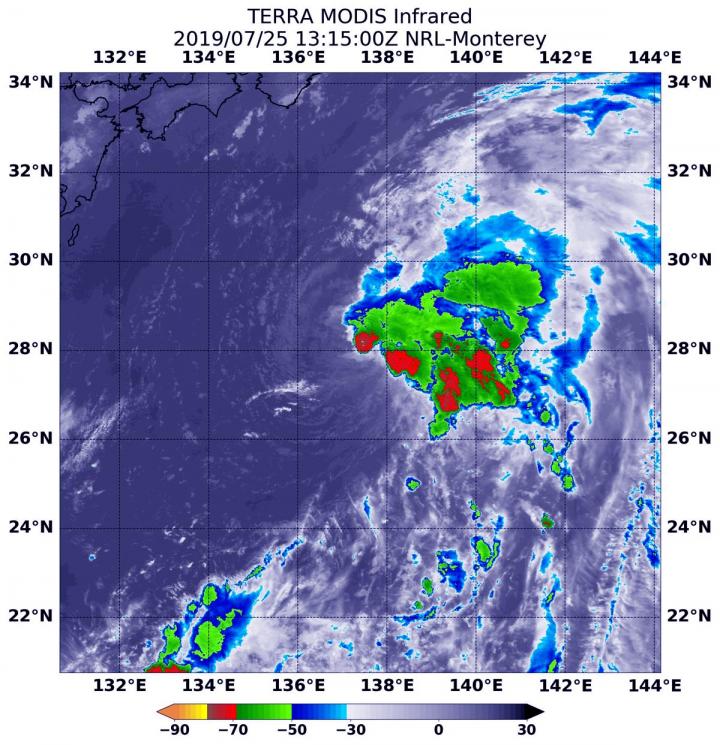
NASA’s terra satellite finds tropical storm 07W’s strength on the side

July 25, 2019

NASA finds one burst of energy in weakening Depression Dalila

July 25, 2019

Researcher’s innovative flood mapping helps water and emergency management officials

July 25, 2019
Please login to join discussion

POPULAR NEWS

  • Robotic Ureteral Reconstruction: A Novel Approach

    Robotic Ureteral Reconstruction: A Novel Approach

    82 shares
    Share 33 Tweet 21
  • Digital Privacy: Health Data Control in Incarceration

    63 shares
    Share 25 Tweet 16
  • Study Reveals Lipid Accumulation in ME/CFS Cells

    57 shares
    Share 23 Tweet 14
  • Breakthrough in RNA Research Accelerates Medical Innovations Timeline

    53 shares
    Share 21 Tweet 13

About

We bring you the latest biotechnology news from best research centers and universities around the world. Check our website.

Follow us

Recent News

Evaluating Pediatric Emergency Care Quality in Ethiopia

TPMT Expression Predictions Linked to Azathioprine Side Effects

Improving Dementia Care with Enhanced Activity Kits

Subscribe to Blog via Email

Success! An email was just sent to confirm your subscription. Please find the email now and click 'Confirm' to start subscribing.

Join 73 other subscribers
  • Contact Us

Bioengineer.org © Copyright 2023 All Rights Reserved.

Welcome Back!

Login to your account below

Forgotten Password?

Retrieve your password

Please enter your username or email address to reset your password.

Log In
No Result
View All Result
  • Homepages
    • Home Page 1
    • Home Page 2
  • News
  • National
  • Business
  • Health
  • Lifestyle
  • Science

Bioengineer.org © Copyright 2023 All Rights Reserved.
