• HOME
  • NEWS
  • EXPLORE
    • CAREER
      • Companies
      • Jobs
    • EVENTS
    • iGEM
      • News
      • Team
    • PHOTOS
    • VIDEO
    • WIKI
  • BLOG
  • COMMUNITY
    • FACEBOOK
    • INSTAGRAM
    • TWITTER
Saturday, December 20, 2025
BIOENGINEER.ORG
No Result
View All Result
  • Login
  • HOME
  • NEWS
  • EXPLORE
    • CAREER
      • Companies
      • Jobs
        • Lecturer
        • PhD Studentship
        • Postdoc
        • Research Assistant
    • EVENTS
    • iGEM
      • News
      • Team
    • PHOTOS
    • VIDEO
    • WIKI
  • BLOG
  • COMMUNITY
    • FACEBOOK
    • INSTAGRAM
    • TWITTER
  • HOME
  • NEWS
  • EXPLORE
    • CAREER
      • Companies
      • Jobs
        • Lecturer
        • PhD Studentship
        • Postdoc
        • Research Assistant
    • EVENTS
    • iGEM
      • News
      • Team
    • PHOTOS
    • VIDEO
    • WIKI
  • BLOG
  • COMMUNITY
    • FACEBOOK
    • INSTAGRAM
    • TWITTER
No Result
View All Result
Bioengineer.org
No Result
View All Result
Home NEWS Science News Chemistry

A significant supercomputing grant for investigations of atomically precise nanocatalysts

Bioengineer by Bioengineer
April 9, 2019
in Chemistry
Reading Time: 2 mins read
0
IMAGE
Share on FacebookShare on TwitterShare on LinkedinShare on RedditShare on Telegram

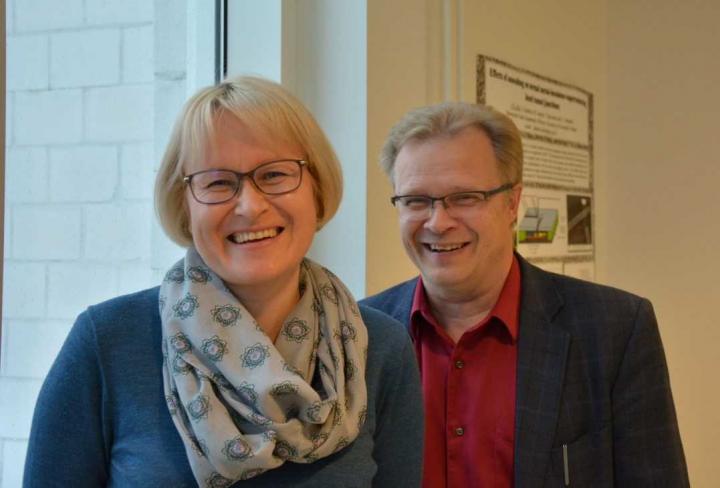
The project of Nanoscience Center of University of Jyvaskyla focuses on chemical reactions catalysed by ligand-stabilized metal nanoclusters
IMAGE

Credit: University of Jyvaskyla

The project runs for the next 12 months in the Barcelona Supercomputing Center and focuses on large-scale density functional theory calculations and molecular dynamics simulations to investigate chemical reactions catalysed by atomically precise, ligand-stabilized metal nanoclusters.

These cluster materials are emerging catalysts, e.g., for hydrogenation reactions of organic molecules in solution-phase catalysis. Their atomic structures are known, which offers unique possibilities to correlate the catalytic activity to atomically defined reaction mechanisms.

PRACE – Partnership for Advanced Computing in Europe is a non-profit association of 26 European member countries that promotes high-performance computing by awarding significant computational resources to scientific projects based on annual calls for proposals that go through a peer-review evaluation.

“This is already the fourth significant supercomputing grant that my group has received through competitive evaluation of the proposals in the PRACE organization since 2012. Professor Honkala and I look forward to combining our expertise on ligand-stabilized metal nanoclusters and computational catalysis, and to intensify collaborations to our partners doing experimental research on these nanocatalysts in China and in the Netherlands”, Häkkinen comments.

“The large-scale atomistic simulations in this project will also produce huge datasets encompassing structure-property correlations that will be used later in a parallel project aiming at using artificial intelligence to understand nanochemistry and catalytic reactions”, he says.

###

More information:

Hannu Häkkinen, [email protected], tel +358 400 247 973

Professor Karoliina Honkala, [email protected] , tel. +358 40 805 3686,

https://www.jyu.fi/science/en/chemistry/research/computational-chemistry-and-spectroscopy/catalysis

https://www.jyu.fi/science/en/nanoscience-center/research/nanoclusters

https://www.jyu.fi/science/en/nanoscience-center/

Facebook: jyunanoscience Twitter: jyscience

Media Contact
Hannu Häkkinen

358-400-247-973

Tags: Chemistry/Physics/Materials SciencesComputer ScienceNanotechnology/Micromachines
Share12Tweet8Share2ShareShareShare2

Related Posts

Cutting Electrolyte Reduction Boosts High-Energy Battery Performance

Cutting Electrolyte Reduction Boosts High-Energy Battery Performance

December 19, 2025
Microenvironment Shapes Gold-Catalysed CO2 Electroreduction

Microenvironment Shapes Gold-Catalysed CO2 Electroreduction

December 11, 2025

Photoswitchable Olefins Enable Controlled Polymerization

December 11, 2025

Cation Hydration Entropy Controls Chloride Ion Diffusion

December 10, 2025
Please login to join discussion

POPULAR NEWS

  • Nurses’ Views on Online Learning: Effects on Performance

    Nurses’ Views on Online Learning: Effects on Performance

    70 shares
    Share 28 Tweet 18
  • NSF funds machine-learning research at UNO and UNL to study energy requirements of walking in older adults

    71 shares
    Share 28 Tweet 18
  • Unraveling Levofloxacin’s Impact on Brain Function

    53 shares
    Share 21 Tweet 13
  • Exploring Audiology Accessibility in Johannesburg, South Africa

    51 shares
    Share 20 Tweet 13

About

We bring you the latest biotechnology news from best research centers and universities around the world. Check our website.

Follow us

Recent News

Dual-Polarization Radar Enhances Typhoon Precipitation Warnings

Efficient Synthesis of Imidazo[2,1-a]Isoquinolin-5-ones Unveiled

Unveiling Genomes: Vincetoxicum Pycnostelma Revealed

Subscribe to Blog via Email

Enter your email address to subscribe to this blog and receive notifications of new posts by email.

Join 70 other subscribers
  • Contact Us

Bioengineer.org © Copyright 2023 All Rights Reserved.

Welcome Back!

Login to your account below

Forgotten Password?

Retrieve your password

Please enter your username or email address to reset your password.

Log In
No Result
View All Result
  • Homepages
    • Home Page 1
    • Home Page 2
  • News
  • National
  • Business
  • Health
  • Lifestyle
  • Science

Bioengineer.org © Copyright 2023 All Rights Reserved.