Anonymous gift makes center at UH sustainable
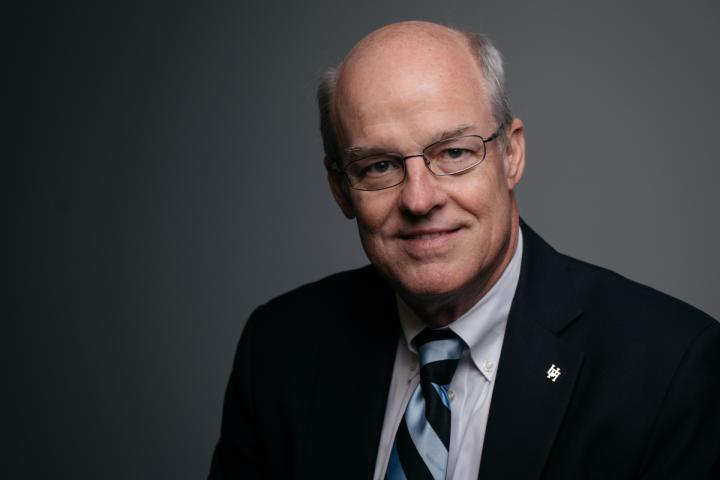
Credit: University of Houston
An anonymous $10-million gift by a grateful patient family to the Texas Center for Learning Disabilities (TCLD) has cemented its future as a world-class interdisciplinary research institution.
“We have first-hand knowledge of this need and recognize this program is a rare opportunity in this country that must be preserved and enhanced,” said the benefactor’s family.
Founded in 2006 and funded by grants from the Eunice Kennedy Shriver National Institute of Child Health and Human Development, the center investigates the diagnosis, treatment, and causes of learning disabilities in children and adolescents. TCLD is housed at UH and is a consortium among the University of Houston, the University of Texas Health Science Center at Houston and the University of Texas at Austin. It is one of five national centers at UH.
“We are so grateful for the extraordinary generosity that continues our ability to be a powerful force for change and improvement in the learning and lives of children with disabilities,” said Renu Khator, UH president.
“This gift knocks it out of the park for two key reasons – first, and fundamentally, this investment helps our most vulnerable; and, second, this gift took us over the $1 billion milestone for our ‘Here, We Go’ campaign, and creates tremendous momentum as we go forward,” said Eloise Brice, UH vice president for university advancement.
The center, one of only three National Institute of Child Health and Human Development (NICHD)-funded national learning disability centers in the United States, has been moving the needle on learning disabilities since it formed.
The center principal investigator Jack Fletcher, department chair of psychology, Hugh Roy and Lillie Cranz Cullen Distinguished University Chair and David Francis, Hugh Roy and Hugh Roy and Lillie Cranz Cullen Distinguished University Chair of psychology, who oversees statistical analysis and data management for all projects at TCLD, played a crucial role in revising special education legislation to provide early identification of children based on kindergarten screenings to identify students at risk rather than waiting to find discrepancies in scores between IQ and achievement tests.
“This is a ‘wait-to-fail model,'” said Francis. “There is a need to improve the ways in which intervention can occur for all children at risk without this discrepancy, because often this meant we had to wait for children to fail more and become severely impaired before they could get access to services.”
“Because of our work and others we showed that that the criterion was not valid. It unreliably identified children and presumed an IQ difference between those who can’t read or do math well and those who do or don’t have a discrepancy,” said Fletcher, formerly a member of the President’s Commission on Excellence in Special Education. “We systematically study the diagnostic formulae used in schools and found many are not valid and should not be used.” Other members of the TCLD research team at UH include co-PI’s Elena Grigorenko, Hugh Roy and Lillie Cranz Cullen Distinguished Professor of Psychology, in charge of genetic studies, and professor of psychology Paul Cirino who oversees cognitive studies.
“The TCLD is well known for its contributions to research on developmental learning disabilities like dyslexia and for neuroimaging work. The key is our ability to work at the edges of disciplines,” said Fletcher. Through a focus on treatment programs, the center can also understand cognitive, neural and genetic factors involved in why some children respond to instruction and others do not. The center applies insights from neuroscientific research into brain function and plasticity, along with findings from classroom studies, to the development of practical interventions. Other projects include creating models that incorporate response to intervention, the role of executive functions and attention in reading comprehension and other academic skills, effective interventions for English language learners with intractable reading difficulties, neural correlates of reading disabilities in children and genetic factors related to inadequate instructional response.
In addition to the anonymous gift, funds from the Texas Research Incentive Program (TRIP) may match this investment. TRIP provides matching funds to assist in leveraging private gifts for the enhancement of research productivity and faculty recruitment. UH is one of eight institutions eligible for the program.
###
Media Contact
Laurie Fickman
[email protected]
Original Source
http://www.