• HOME
  • NEWS
  • EXPLORE
    • CAREER
      • Companies
      • Jobs
    • EVENTS
    • iGEM
      • News
      • Team
    • PHOTOS
    • VIDEO
    • WIKI
  • BLOG
  • COMMUNITY
    • FACEBOOK
    • INSTAGRAM
    • TWITTER
Friday, August 28, 2026
BIOENGINEER.ORG
No Result
View All Result
  • Login
  • HOME
  • NEWS
  • EXPLORE
    • CAREER
      • Companies
      • Jobs
        • Lecturer
        • PhD Studentship
        • Postdoc
        • Research Assistant
    • EVENTS
    • iGEM
      • News
      • Team
    • PHOTOS
    • VIDEO
    • WIKI
  • BLOG
  • COMMUNITY
    • FACEBOOK
    • INSTAGRAM
    • TWITTER
  • HOME
  • NEWS
  • EXPLORE
    • CAREER
      • Companies
      • Jobs
        • Lecturer
        • PhD Studentship
        • Postdoc
        • Research Assistant
    • EVENTS
    • iGEM
      • News
      • Team
    • PHOTOS
    • VIDEO
    • WIKI
  • BLOG
  • COMMUNITY
    • FACEBOOK
    • INSTAGRAM
    • TWITTER
No Result
View All Result
Bioengineer.org
No Result
View All Result
Home NEWS Science News Health

Fellowship to further international research links in Huntington’s disease

Bioengineer by Bioengineer
April 3, 2019
in Health
Reading Time: 2 mins read
0
IMAGE
Share on FacebookShare on TwitterShare on LinkedinShare on RedditShare on Telegram

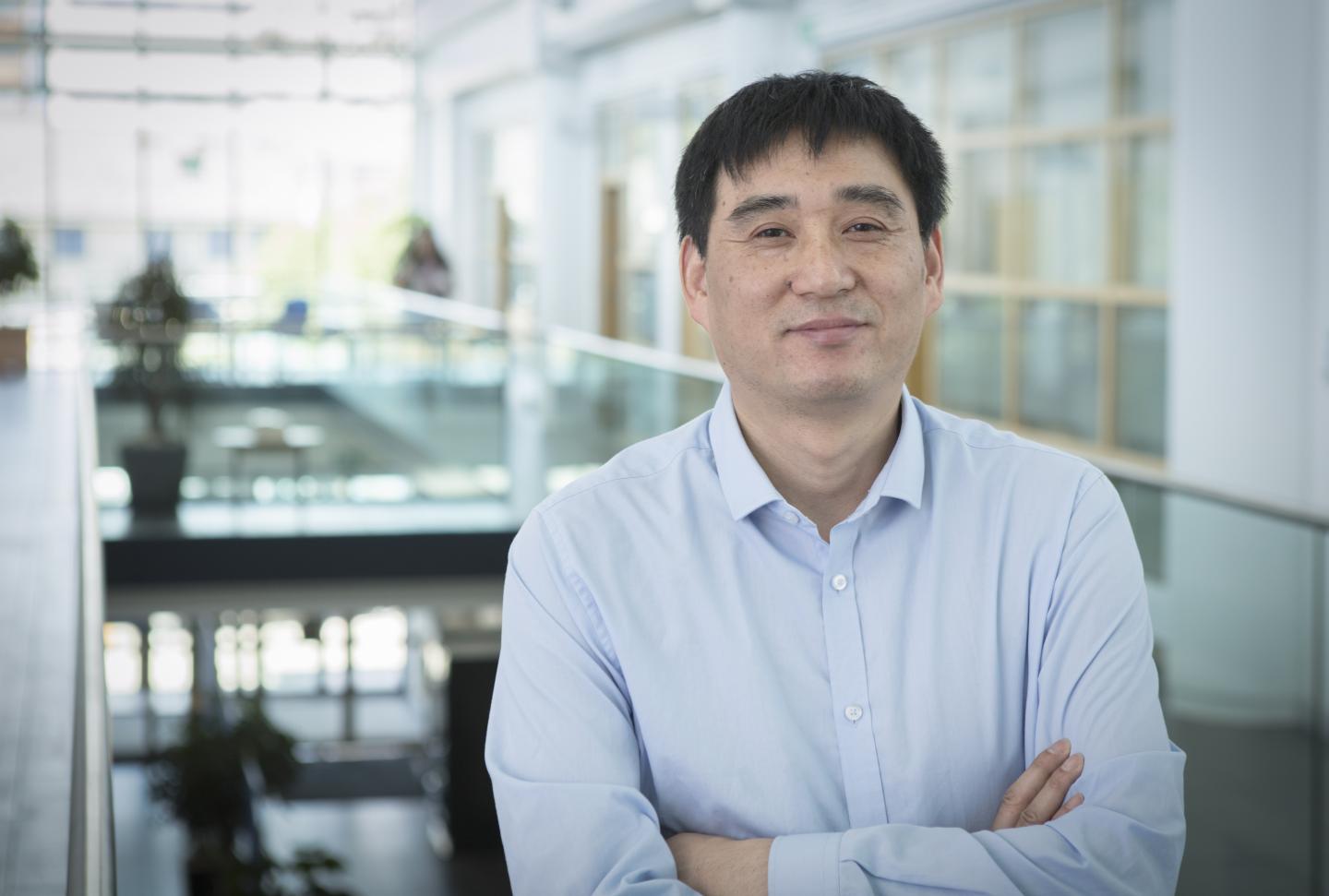
A researcher from the University of Plymouth has been awarded a fellowship from the Royal Society to help tackle the neurodegenerative condition
IMAGE

Credit: University of Plymouth

A researcher from the University of Plymouth has been awarded a fellowship from the Royal Society to help tackle neurodegenerative condition, Huntington’s disease.

Dr Shouqing Luo, Associate Professor in the University’s Institute of Translational and Stratified Medicine (ITSMed), received the Newton Advanced Fellowship from the Royal Society, in partnership with the UK Academy of Medical Sciences and the National Nature Science Foundation of China.

Alongside overseas lead Professor Boun Lu from Fudan University, Shanghai China, the UK funding of £111,000 (along with RMB 500,000 in China) will see the research teams collaborate towards finding a novel treatment strategy for Huntington’s disease.

A hereditary disease, Huntington’s is a disorder of the nervous system caused by a faulty gene on chromosome four. The faulty gene leads to nerve damage in the area of the brain resulting in gradual physical, mental and emotional changes. Those born to a parent with Huntington’s disease have a 50:50 chance of developing it, and there is currently no cure.

The Newton Advanced Fellowship scheme, funded by the Newton Fund, aims to establish solid links between the best researchers in the UK and partner countries, ensuring sustainable research advancements in the countries as well as the UK.

Dr Luo said: “The studies we have previously undertaken here at Plymouth have shown there is real potential for the development of an effective therapy for this devastating neurological disease. To have now received this fellowship from the Royal Society, we can open up more collaborations leading to more ideas, more research and ultimately a faster path to establishing a treatment for Huntington’s disease.”

###

Media Contact
Amy King
[email protected]

Tags: Cell BiologyGeneticsMedicine/Healthneurobiology
Share13Tweet8Share2ShareShareShare2

Related Posts

Visceral Fat Metabolism Linked to Brain Network Dysfunction, Cognitive Impairment in Alzheimer’s

August 28, 2026

C-reactive protein predicts prognosis in mildly reduced-ejection-fraction heart failure

August 28, 2026

Molecular Profiling Reveals Alpha-Synuclein Pathology and Seeding Activity in Parkinson’s Disease

August 28, 2026

SREBF2 protects failing hearts from ferroptosis via Cav-1-regulated PINK1/Parkin mitophagy

August 28, 2026
Please login to join discussion

POPULAR NEWS

  • Steane [[7,1,3]] Code Enables Loss-Tolerant One-Way Quantum Repeaters

    29 shares
    Share 12 Tweet 7
  • Machine learning reveals HLA-DQ2.5’s impact on naïve T-cell receptors in celiac disease

    29 shares
    Share 12 Tweet 7
  • Combining noncoding RNA profiles and HPV genotyping improves cervical cancer risk assessment

    29 shares
    Share 12 Tweet 7
  • Scientists develop reporter strain to detect inhibition of bacterial cell-wall biosynthesis

    29 shares
    Share 12 Tweet 7

About

We bring you the latest biotechnology news from best research centers and universities around the world. Check our website.

Follow us

Recent News

Steane [[7,1,3]] Code Enables Loss-Tolerant One-Way Quantum Repeaters

Machine learning reveals HLA-DQ2.5’s impact on naïve T-cell receptors in celiac disease

Combining noncoding RNA profiles and HPV genotyping improves cervical cancer risk assessment

Subscribe to Blog via Email

Enter your email address to subscribe to this blog and receive notifications of new posts by email.

Join 85 other subscribers
  • Contact Us

Bioengineer.org © Copyright 2023 All Rights Reserved.

Welcome Back!

Login to your account below

Forgotten Password?

Retrieve your password

Please enter your username or email address to reset your password.

Log In
No Result
View All Result
  • Homepages
    • Home Page 1
    • Home Page 2
  • News
  • National
  • Business
  • Health
  • Lifestyle
  • Science

Bioengineer.org © Copyright 2023 All Rights Reserved.