• HOME
  • NEWS
  • EXPLORE
    • CAREER
      • Companies
      • Jobs
    • EVENTS
    • iGEM
      • News
      • Team
    • PHOTOS
    • VIDEO
    • WIKI
  • BLOG
  • COMMUNITY
    • FACEBOOK
    • INSTAGRAM
    • TWITTER
Saturday, February 7, 2026
BIOENGINEER.ORG
No Result
View All Result
  • Login
  • HOME
  • NEWS
  • EXPLORE
    • CAREER
      • Companies
      • Jobs
        • Lecturer
        • PhD Studentship
        • Postdoc
        • Research Assistant
    • EVENTS
    • iGEM
      • News
      • Team
    • PHOTOS
    • VIDEO
    • WIKI
  • BLOG
  • COMMUNITY
    • FACEBOOK
    • INSTAGRAM
    • TWITTER
  • HOME
  • NEWS
  • EXPLORE
    • CAREER
      • Companies
      • Jobs
        • Lecturer
        • PhD Studentship
        • Postdoc
        • Research Assistant
    • EVENTS
    • iGEM
      • News
      • Team
    • PHOTOS
    • VIDEO
    • WIKI
  • BLOG
  • COMMUNITY
    • FACEBOOK
    • INSTAGRAM
    • TWITTER
No Result
View All Result
Bioengineer.org
No Result
View All Result
Home NEWS Science News Health

In the tree of life, youth has its advantages

Bioengineer by Bioengineer
March 26, 2019
in Health
Reading Time: 2 mins read
0
IMAGE
Share on FacebookShare on TwitterShare on LinkedinShare on RedditShare on Telegram

IMAGE

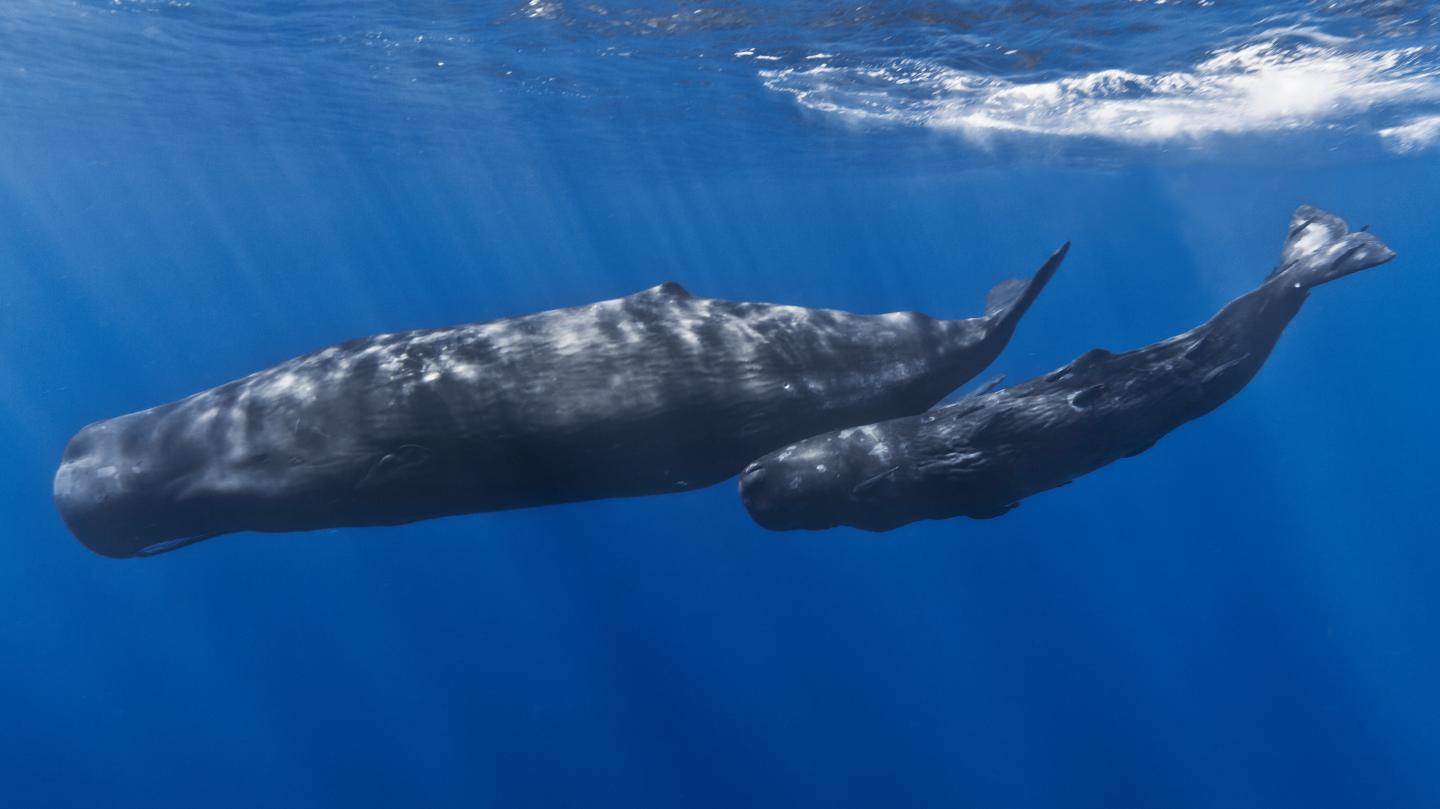
Credit: A mother sperm whale and her calf off the coast of Mauritius. Gabriel Barathieu, Wikipedia.

It’s a question that has captivated naturalists for centuries: Why have some groups of organisms enjoyed incredibly diversity–like fish, birds, insects–while others have contained only a few species–like humans.

Researchers trying to explain why the Tree of Life is so unbalanced have agreed on a few explanations–a species’ ability to change colour, its body size, and how it interacts with its environment all influence how quickly it can form new species compared to other organisms.

Geological age has also been a major explanation–older groups of organisms have had more time to accumulate more species.

But new research in the Proceedings of the National Academy of Sciences shows the passage of time has a surprising, and consistent impact on evolutionary diversity–and might favour young species.

“If you look at rates of macroevolutionary diversification across 3.8 billion years, it’s younger groups of organisms, on average, that accumulate diversity much more quickly than older groups,” says Matthew Pennell, an evolutionary biologist at the University of British Columbia and senior author on the paper.

“This suggest that there are some time-dependant, hidden general principles governing how life diversifies on Earth–operating underneath all the other factors we typically think determine how quickly species diversify or go extinct.”

The researchers estimated specification and extinction rates across almost 25,000 branches of multicellular organisms, using data from studies of over 100 groups of species and an independent data set of fossil time series. That enabled them to compare rates of diversification broadly over time. For example cichlids (a species of fish) from African rift lakes are diversifying incredibly fast, while whales are an example of a group that appear to be far past their prime in terms of diversity.

“If groups of species were simply reaching equilibrium and slowing down over time, we’d expect a more consistentĀ pattern of slowing within every group we look at,” says Pennell. “But our results aren’t showing that.”

When the researchers looked at individual groups, rates of diversification varied dramatically. What they did find at the macro-level was a strong pattern of faster growth of diversity in younger groups of species.

“This really throws a wrench in how we interpret how life diversified on Earth,” says Pennell.

Evolutionary biologists have tended to look at particular features that have helped particular groups of animals diversify–or not.

“The far less explored, and potentially more interesting question, is why, despite all the complexity involved in the evolution of new species, that process looks so similar across the Tree of Life.”

###

Media Contact
Chris Balma
[email protected]

Original Source

https://science.ubc.ca/news/tree-life-youth-has-its-advantages

Related Journal Article

http://dx.doi.org/10.1073/pnas.1818058116

Tags: Algorithms/ModelsBiodiversityBiologyDevelopmental/Reproductive BiologyEcology/EnvironmentEvolutionMicrobiologyPaleontologyPopulation Biology
Share12Tweet8Share2ShareShareShare2

Related Posts

Decoding Prostate Cancer Origins via snFLARE-seq, mxFRIZNGRND

February 7, 2026

Digital Health Perspectives from Baltic Sea Experts

February 7, 2026

Exploring Decision-Making in Dementia Caregivers’ Mobility

February 7, 2026

Succinate Receptor 1 Limits Blood Cell Formation, Leukemia

February 7, 2026
Please login to join discussion

POPULAR NEWS

  • Robotic Ureteral Reconstruction: A Novel Approach

    Robotic Ureteral Reconstruction: A Novel Approach

    82 shares
    Share 33 Tweet 21
  • Digital Privacy: Health Data Control in Incarceration

    63 shares
    Share 25 Tweet 16
  • Study Reveals Lipid Accumulation in ME/CFS Cells

    57 shares
    Share 23 Tweet 14
  • Breakthrough in RNA Research Accelerates Medical Innovations Timeline

    53 shares
    Share 21 Tweet 13

About

We bring you the latest biotechnology news from best research centers and universities around the world. Check our website.

Follow us

Recent News

Decoding Prostate Cancer Origins via snFLARE-seq, mxFRIZNGRND

Digital Health Perspectives from Baltic Sea Experts

Florida Cane Toad: Complex Spread and Selective Evolution

Subscribe to Blog via Email

Enter your email address to subscribe to this blog and receive notifications of new posts by email.

Join 73 other subscribers
  • Contact Us

Bioengineer.org Ā© Copyright 2023 All Rights Reserved.

Welcome Back!

Login to your account below

Forgotten Password?

Retrieve your password

Please enter your username or email address to reset your password.

Log In
No Result
View All Result
  • Homepages
    • Home Page 1
    • Home Page 2
  • News
  • National
  • Business
  • Health
  • Lifestyle
  • Science

Bioengineer.org Ā© Copyright 2023 All Rights Reserved.