Credit: Adam Brooks, UA College of Medicine – Phoenix.
Heart attack survivors are at greater risk of developing heart failure, a chronic condition in which more than half of those diagnosed will die within five years.
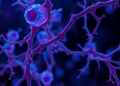
In response, researchers at the University of Arizona College of Medicine – Phoenix are attempting to prevent heart failure after a heart attack with a novel treatment that targets fibroblasts, cells in connective tissue that produce collagen and play a critical role in healing. An over-production of collagen, also known as fibrosis, is common in people with heart disease.
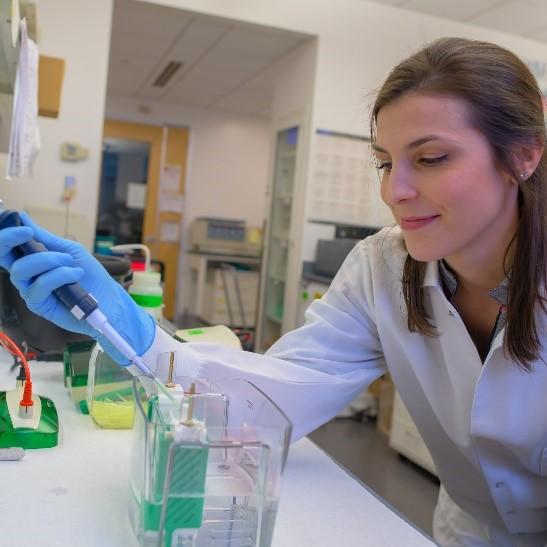
Alexandra Garvin, PhD, a post-doctoral fellow in the laboratory of Taben Hale, PhD, an associate professor in the Basic Medical Sciences Department at the UA College of Medicine – Phoenix, received a $100,000 fellowship from the American Heart Association in January to understand the influence of fibroblasts and fibrotic signaling on cardiac healing after a heart attack.
“Increased survival following a myocardial infarction, or heart attack, has led to more people suffering from heart failure,” Dr. Garvin said. “The progression to heart failure largely is due to the extent of cardiac fibrosis, but also involves the duration of inflammation. We already know that fibroblasts are the primary cell type in the heart involved in the production of collagen and fibrosis. However, the role of fibroblasts in mediating inflammation is not well understood.”
Nearly 5 million Americans are living with heart failure. Heart attack victims younger than 75 years old will have about a 25 percent chance of developing heart failure.
ACE inhibitors, commonly used anti-hypertension drugs that lower blood pressure, are effective in limiting cardiac fibrosis following a heart attack. Dr. Garvin’s studies will evaluate fibroblasts in the heart and in isolation to determine how ACE inhibitor treatment impacts inflammatory and fibrotic signaling — and ultimately cardiac healing — after a heart attack. She hopes her research will reveal a greater understanding of the cells that mediate fibrotic responses in the heart.
“Currently no drug treatments are available that are specifically designed to treat fibrosis. Targeting the cells responsible for collagen production and deposition represents an ideal and novel treatment approach,” Dr. Garvin said. “Identifying whether cardiac fibroblasts contribute to the extent of pro-inflammatory signaling, in addition to fibrosis, may increase the ways in which we can intervene pharmacologically to reduce the incidence of heart failure and produce a healthier population of individuals recovering from a cardiac event.”
Approximately 1.5 million heart attacks and strokes occur every year in the United States, according to the U.S. Centers for Disease Control and Prevention. They typically happen suddenly when one of the arteries leading to the heart becomes blocked. On the other hand, heart failure is a chronic, progressive condition, which occurs when the heart muscle is unable to pump enough blood to meet the body’s needs for blood and oxygen.
“Many positive effects of ACE inhibitor treatment on cardiac injury are due to treatment during and/or after the cardiac insult. Therefore, our research is unique in that the ACE inhibitor is transiently administered prior to a heart attack,” Dr. Garvin said. “Our goal is not to use this approach as a treatment, but rather a tool to understand cardiac fibroblasts. We have shown that this transient treatment leads to persistent changes in cardiac fibroblast physiology that improves inflammatory and fibrotic responses to injury. It is these changes that we are interested in. If we know what alterations in the fibroblast allow for improved outcomes after a heart attack, then this can help elucidate therapeutic targets for future development of treatments.”
###
The University of Arizona College of Medicine – Phoenix
The University of Arizona College of Medicine – Phoenix admitted its inaugural class of first-year medical students in August 2007 and currently has 332 students training to be physicians. The College inspires and trains exemplary physicians, scientists and leaders to optimize health and health care in Arizona and beyond. The UA College of Medicine – Phoenix is uniquely positioned to accelerate the biomedical and economic engines in Phoenix and the State by leveraging vital relationships with key clinical and community partners. For more, please visit phoenixmed.arizona.edu.
Media Contact
Teresa Joseph
[email protected]