Application of chelated calcium to stock plants improves resistance to physical damage for poinsettia cuttings
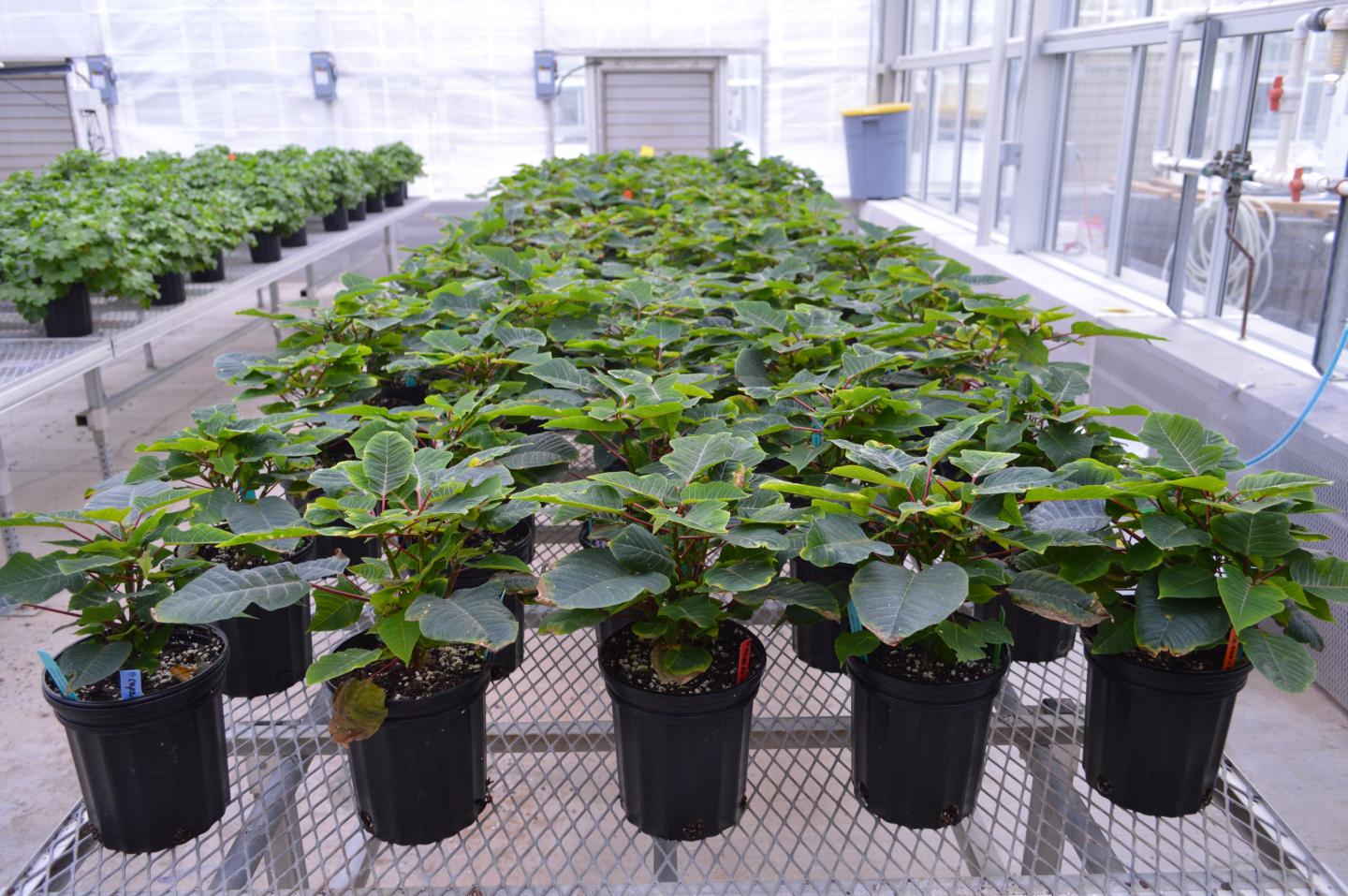
Credit: James Faust
CLEMSON, SOUTH CAROLINA–Chelated Calcium Benefits Poinsettias
Vegetatively propagated unrooted cuttings of annual ornamentals are typically grown in equatorial locations and shipped via airfreight to propagators located in temperate climates. Cutting quality, defined as the resistance to external forces–such as physical damage and pathogen infection–has an impact on postharvest durability during shipping and propagation.
In an effort to preserve the point-of-sale presentation of these unrooted cuttings, Uttara Samarakoon and James Faust conducted a study to identify treatments that will best benefit these ornamentals during transit.
Their findings are presented in their article “Quantifying the Effects of Chelated Calcium and Salicylic Acid on the Postharvest Quality of Poinsettia Cuttings” available now as an Open Access article in the February issue of HortTechnology.
Vegetatively propagated herbaceous ornamental species typically are started from shoot tip cuttings harvested from stock plants, then densely packed into plastic bags and cardboard boxes for delivery. The time from harvesting the cuttings to their arrival at greenhouses is 48 to 72 hours. Delays during shipping or poor cold-chain management can result in leaf chlorosis, leaf abscission, delayed root initiation, and fungal infections.
A goal of the stock plant grower is to produce cuttings that can resist these physiological and pathogenic problems. Growers empirically evaluate the postharvest durability during shipping and propagation and refer to the desired characteristics as “toning”, which is defined as the change in leaf texture required to provide resistance to external forces such as physical damage or pathogen infection.
Among the discoveries of this study was to identify what methods and applications best mitigate that expected deterioration.
During the study, six treatments comprising different concentrations of either chelated calcium or salicylic acid were applied to poinsettia ‘Prestige Red’ stock plants. A non-ionic surfactant was added to each solution to improve leaf contact. All treatments were applied weekly to poinsettia stock plants as a foliar spray to “glisten” the foliage. Shoot tip cuttings were harvested weekly from the stock plants to provide cuttings for analysis and to stimulate further shoot formation.
Three different evaluations were performed to determine the treatment effects on plant tissues. The evaluations included leaf texture analysis, leaf nutrient analysis, and moisture loss.
Says Faust, “Calcium applied to poinsettias in the form of chelated calcium proved to improve leaf mechanical strength. The impact was greater than the calcium chloride application that we reported in a previous study published in HortScience. Therefore, it is recommended to apply chelated calcium to stock plants to improve resistance to physical damage for poinsettia cuttings.”
###
The complete article is available Open Access on the ASHS HortTechnology electronic journal web site: DOI: https:/
You may contact James Faust of Clemson University at [email protected] or call him at (864) 633-7227.
Founded in 1903, the American Society for Horticultural Science (ASHS) is the largest organization dedicated to advancing all facets of horticulture research, education, and application. More information at ashs.org.
Media Contact
Michael Neff
[email protected]
Related Journal Article
http://dx.