• HOME
  • NEWS
  • EXPLORE
    • CAREER
      • Companies
      • Jobs
    • EVENTS
    • iGEM
      • News
      • Team
    • PHOTOS
    • VIDEO
    • WIKI
  • BLOG
  • COMMUNITY
    • FACEBOOK
    • INSTAGRAM
    • TWITTER
Thursday, June 25, 2026
BIOENGINEER.ORG
No Result
View All Result
  • Login
  • HOME
  • NEWS
  • EXPLORE
    • CAREER
      • Companies
      • Jobs
        • Lecturer
        • PhD Studentship
        • Postdoc
        • Research Assistant
    • EVENTS
    • iGEM
      • News
      • Team
    • PHOTOS
    • VIDEO
    • WIKI
  • BLOG
  • COMMUNITY
    • FACEBOOK
    • INSTAGRAM
    • TWITTER
  • HOME
  • NEWS
  • EXPLORE
    • CAREER
      • Companies
      • Jobs
        • Lecturer
        • PhD Studentship
        • Postdoc
        • Research Assistant
    • EVENTS
    • iGEM
      • News
      • Team
    • PHOTOS
    • VIDEO
    • WIKI
  • BLOG
  • COMMUNITY
    • FACEBOOK
    • INSTAGRAM
    • TWITTER
No Result
View All Result
Bioengineer.org
No Result
View All Result
Home NEWS Science News Biology

Scientists reveal impacts of anthropogenic nitrogen discharge on nitrogen transport in global rivers

Bioengineer by Bioengineer
February 22, 2019
in Biology
Reading Time: 2 mins read
0
IMAGE
Share on FacebookShare on TwitterShare on LinkedinShare on RedditShare on Telegram

IMAGE

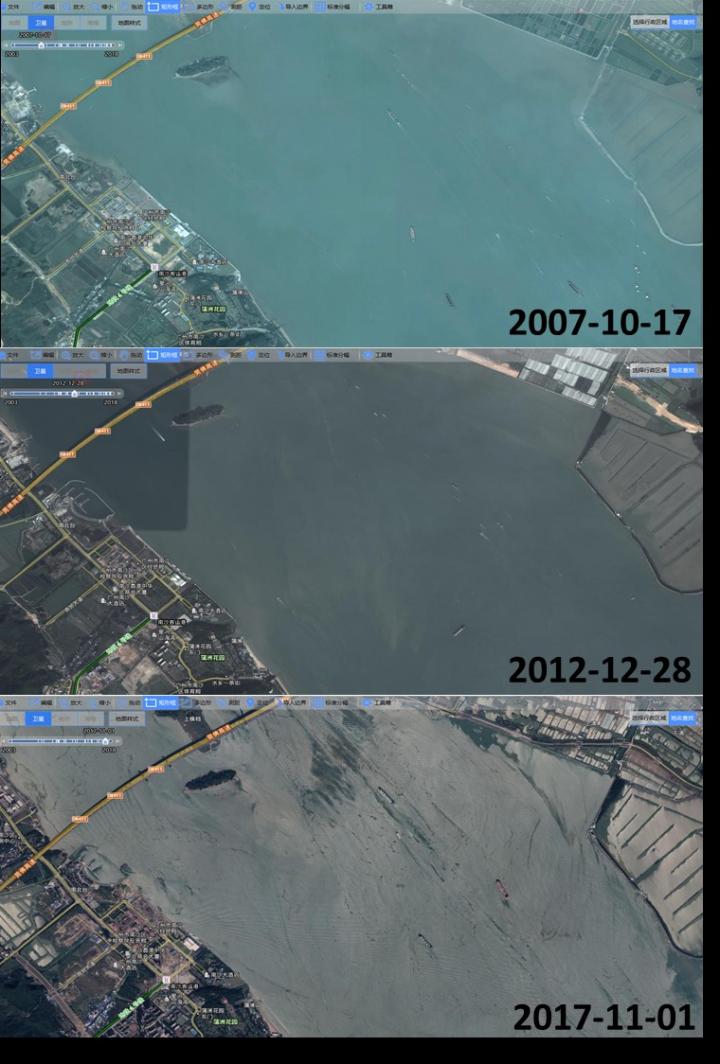
Credit: Obtained from Google Earth, compiled and annotated by Shuang Liu


Excess nutrients from fertilizer application, pollution discharge, and water regulations outflow through rivers from lands to oceans, seriously impacting coastal water quality and ecosystems. Understanding the effects of human activities on riverine nitrogen movement is very important for water environmental management and nitrogen cycle research.

In a recently published paper in Global Change Biology, Prof. Zhenghui Xie, Dr. Shuang Liu, and their co-authors in LASG/Institute of Atmospheric Physics, Chinese Academy of Sciences described how they synchronously incorporated the schemes of river water temperature change, riverine dissolved inorganic nitrogen (DIN) transport and human activities including nitrogen discharge and water regulation into the land surface model CLM4.5 under the framework of CESM1.2.0. Then the model was applied to explore the effects of anthropogenic nitrogen discharge on DIN transport in global rivers.

“We found that DIN in the USA has increased primarily due to the use of nitrogen fertilizers. In contrast, European rivers were affected mainly by point source pollution. However, both aspects are equally important for aquatic environments in China.” Said Xie.

The total anthropogenic impact on the DIN exported to the Pacific Ocean has increased from 10% to 30%, more significantly than any other ocean, over the past 20 years.

In general, the results indicated that incorporating schemes related to nitrogen transport and human activities into land surface models could be an effective way to monitor global river water quality and diagnose the performance of the land surface modeling.

###

Media Contact
Ms. Zheng Lin
[email protected]
86-108-299-5053

Original Source

http://english.iap.cas.cn/RE/201902/t20190222_205585.html

Related Journal Article

http://dx.doi.org/10.1111/gcb.14570

Tags: Atmospheric ScienceFertilizers/Pest ManagementGeographyHydrology/Water ResourcesPollution/Remediation
Share12Tweet8Share2ShareShareShare2

Related Posts

Decoding the Secret Code of a Crucial Immune Sensor

June 24, 2026

Decades of Data Reveal Which Orcas Call Puget Sound Home

June 24, 2026

Copal Tree Genetics Reveal Tropical Forest Connectivity

June 24, 2026

How Intestinal Mucus Influences Klebsiella pneumoniae Colonization and Antibiotic Effectiveness

June 24, 2026
Please login to join discussion

POPULAR NEWS

  • Saying Goodbye to PGY-6: Pediatric Fellowship Realities

    103 shares
    Share 41 Tweet 26
  • Multi-Hospital Study Reveals Long Covid Burden Is Twice as High as Current Estimates

    92 shares
    Share 36 Tweet 23
  • Detection of EDCs in Breast Milk and Infant Urine Up to Six Months Highlights Early Exposure Risks

    77 shares
    Share 31 Tweet 19
  • New Drug Candidate Developed at McMaster Shows Potential for Treating Brain Cancer

    58 shares
    Share 23 Tweet 15

About

We bring you the latest biotechnology news from best research centers and universities around the world. Check our website.

Follow us

Recent News

Asian Working Group Revises Sarcopenia Criteria 2019-2025

AI-Powered Platform Advances Structure-Based Drug Discovery

BALatrine Reduces Helminth Infections: Central Java Trial

Subscribe to Blog via Email

Enter your email address to subscribe to this blog and receive notifications of new posts by email.

Join 82 other subscribers
  • Contact Us

Bioengineer.org © Copyright 2023 All Rights Reserved.

Welcome Back!

Login to your account below

Forgotten Password?

Retrieve your password

Please enter your username or email address to reset your password.

Log In
No Result
View All Result
  • Homepages
    • Home Page 1
    • Home Page 2
  • News
  • National
  • Business
  • Health
  • Lifestyle
  • Science

Bioengineer.org © Copyright 2023 All Rights Reserved.