• HOME
  • NEWS
  • EXPLORE
    • CAREER
      • Companies
      • Jobs
    • EVENTS
    • iGEM
      • News
      • Team
    • PHOTOS
    • VIDEO
    • WIKI
  • BLOG
  • COMMUNITY
    • FACEBOOK
    • INSTAGRAM
    • TWITTER
Thursday, December 18, 2025
BIOENGINEER.ORG
No Result
View All Result
  • Login
  • HOME
  • NEWS
  • EXPLORE
    • CAREER
      • Companies
      • Jobs
        • Lecturer
        • PhD Studentship
        • Postdoc
        • Research Assistant
    • EVENTS
    • iGEM
      • News
      • Team
    • PHOTOS
    • VIDEO
    • WIKI
  • BLOG
  • COMMUNITY
    • FACEBOOK
    • INSTAGRAM
    • TWITTER
  • HOME
  • NEWS
  • EXPLORE
    • CAREER
      • Companies
      • Jobs
        • Lecturer
        • PhD Studentship
        • Postdoc
        • Research Assistant
    • EVENTS
    • iGEM
      • News
      • Team
    • PHOTOS
    • VIDEO
    • WIKI
  • BLOG
  • COMMUNITY
    • FACEBOOK
    • INSTAGRAM
    • TWITTER
No Result
View All Result
Bioengineer.org
No Result
View All Result
Home NEWS Science News Science

GraphON: Conductive coatings and materials breakthrough

Bioengineer by Bioengineer
February 20, 2019
in Science
Reading Time: 2 mins read
0
IMAGE
Share on FacebookShare on TwitterShare on LinkedinShare on RedditShare on Telegram

IMAGE

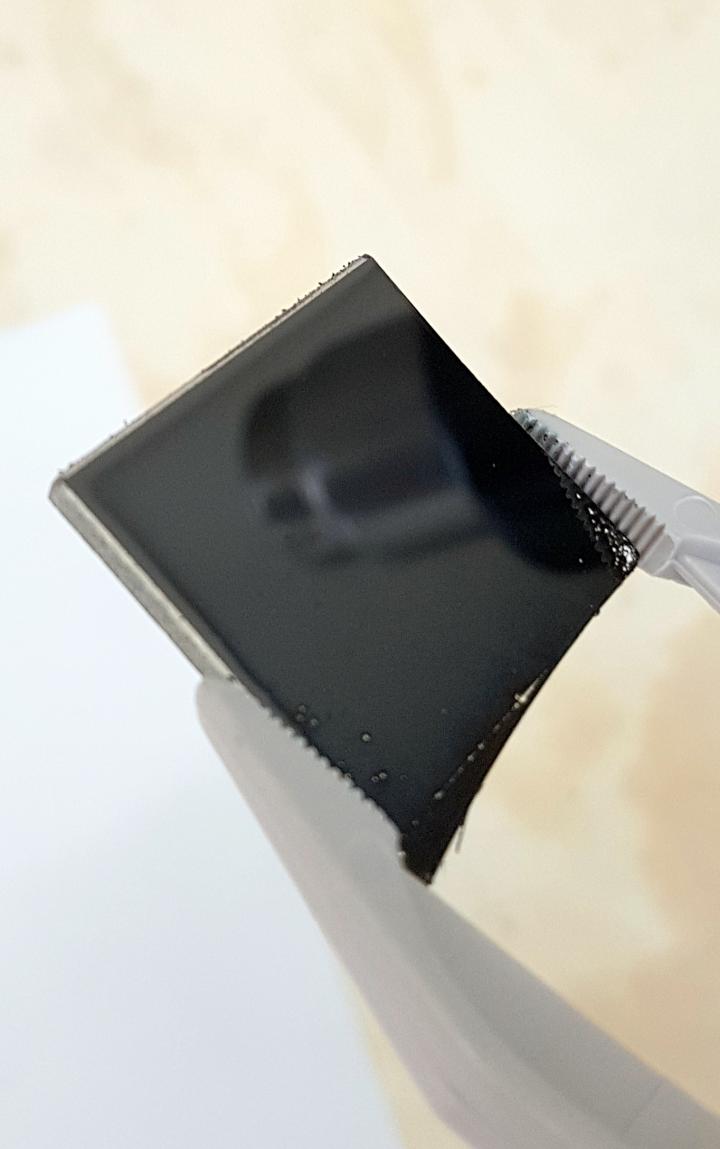
Credit: CSIRO


Australia’s national science agency, CSIRO, has created a breakthrough new form of graphitic material that’s conductive, easy to apply and offers greater control over performance than graphene.

GraphON can also be manufactured cheaper and easier, with more flexibility and less hazardous waste than comparable products.

CSIRO’s Dr John Tsanaktsidis said “GraphON has the potential to offer industries like aerospace and defence an innovative new way to conduct heat or electricity through a surface coating or composite structure.”

“Potential uses include electrostatically dissipative coatings, electromagnetic interference shielding, electrical heating (de-icing), conductive coatings, and anticorrosion coatings.”

A patented CSIRO technology, GraphON is produced by taking the well-known, mass produced polymer polyaniline dinonylnaphthalenesulfonic acid, PANI.DNNSA, and heating it to temperatures as low as 650°C.

As CSIRO’s form of this polyaniline is able to be dissolved in common organic solvents it can easily blended with other polymers and paints. In addition by coating PANI.DNNSA directly onto an object, then heating it, you’re left with a conductive graphitic coating, GraphON, without the need for additional processing steps.

“What is different about GraphON is that it comes directly with imbedded heteroatoms such as nitrogen and oxygen in the graphitised material”, added Dr Tsanaktsidis. “This unigue featute of GraphON greatly improves its dispersibility in a variety of other materials and solutions.”

The name GraphON reflects the presence of oxygen and nitrogen in the carbon based structure.”

It’s easy and cheap to produce. Manufacturing GraphON is estimated to cost less than $USD2000/kg, another factor expected to help drive uptake and the development of new applications with it.

“To ensure GraphON is made to the highest quality, we use flow chemistry to produce the polyaniline precursor”, said Dr Tsanaktsidis. “This guarantees the end product is scalable, consistent, and reproducible.”

Other possible uses of GraphON include:

  • energy capture and storage
  • printed circuit board manufacturing
  • chemical sensors
  • conductive inks
  • electrodes and supercapacitors
  • textiles/fabrics.

CSIRO is one of the world’s largest mission-driven multidisciplinary science and research organisations. It collaborates with industry, government, academia and the community to turn science into solutions.

It’s looking for commercialisation partners to help turn its GraphON technology into industrial applications.

###

Media Contact
Chris Still
[email protected]
61-405-758-171

Original Source

https://www.csiro.au/en/News/News-releases/2019/GraphON-conductive-coatings-materials

Tags: Chemistry/Physics/Materials SciencesIndustrial Engineering/ChemistryMaterials
Share12Tweet8Share2ShareShareShare2

Related Posts

Five or more hours of smartphone usage per day may increase obesity

July 25, 2019
IMAGE

NASA’s terra satellite finds tropical storm 07W’s strength on the side

July 25, 2019

NASA finds one burst of energy in weakening Depression Dalila

July 25, 2019

Researcher’s innovative flood mapping helps water and emergency management officials

July 25, 2019
Please login to join discussion

POPULAR NEWS

  • Nurses’ Views on Online Learning: Effects on Performance

    Nurses’ Views on Online Learning: Effects on Performance

    70 shares
    Share 28 Tweet 18
  • NSF funds machine-learning research at UNO and UNL to study energy requirements of walking in older adults

    70 shares
    Share 28 Tweet 18
  • MoCK2 Kinase Shapes Mitochondrial Dynamics in Rice Fungal Pathogen

    72 shares
    Share 29 Tweet 18
  • Unraveling Levofloxacin’s Impact on Brain Function

    53 shares
    Share 21 Tweet 13

About

We bring you the latest biotechnology news from best research centers and universities around the world. Check our website.

Follow us

Recent News

3D Nanolithography Via Metalens Arrays and Adaptive Illumination

Exploring Health Service Access in Southeast Nigeria’s Slums

Expert Panel Highlights Risks of Inappropriate Prescribing

Subscribe to Blog via Email

Success! An email was just sent to confirm your subscription. Please find the email now and click 'Confirm' to start subscribing.

Join 70 other subscribers
  • Contact Us

Bioengineer.org © Copyright 2023 All Rights Reserved.

Welcome Back!

Login to your account below

Forgotten Password?

Retrieve your password

Please enter your username or email address to reset your password.

Log In
No Result
View All Result
  • Homepages
    • Home Page 1
    • Home Page 2
  • News
  • National
  • Business
  • Health
  • Lifestyle
  • Science

Bioengineer.org © Copyright 2023 All Rights Reserved.