• HOME
  • NEWS
  • EXPLORE
    • CAREER
      • Companies
      • Jobs
    • EVENTS
    • iGEM
      • News
      • Team
    • PHOTOS
    • VIDEO
    • WIKI
  • BLOG
  • COMMUNITY
    • FACEBOOK
    • INSTAGRAM
    • TWITTER
Saturday, February 7, 2026
BIOENGINEER.ORG
No Result
View All Result
  • Login
  • HOME
  • NEWS
  • EXPLORE
    • CAREER
      • Companies
      • Jobs
        • Lecturer
        • PhD Studentship
        • Postdoc
        • Research Assistant
    • EVENTS
    • iGEM
      • News
      • Team
    • PHOTOS
    • VIDEO
    • WIKI
  • BLOG
  • COMMUNITY
    • FACEBOOK
    • INSTAGRAM
    • TWITTER
  • HOME
  • NEWS
  • EXPLORE
    • CAREER
      • Companies
      • Jobs
        • Lecturer
        • PhD Studentship
        • Postdoc
        • Research Assistant
    • EVENTS
    • iGEM
      • News
      • Team
    • PHOTOS
    • VIDEO
    • WIKI
  • BLOG
  • COMMUNITY
    • FACEBOOK
    • INSTAGRAM
    • TWITTER
No Result
View All Result
Bioengineer.org
No Result
View All Result
Home NEWS Science News Biology

On the land, one-quarter of vertebrates die because of humans

Bioengineer by Bioengineer
February 11, 2019
in Biology
Reading Time: 2 mins read
0
IMAGE
Share on FacebookShare on TwitterShare on LinkedinShare on RedditShare on Telegram

Our species has ‘disproportionate effect’ on others, scientists say
IMAGE

Credit: ESF


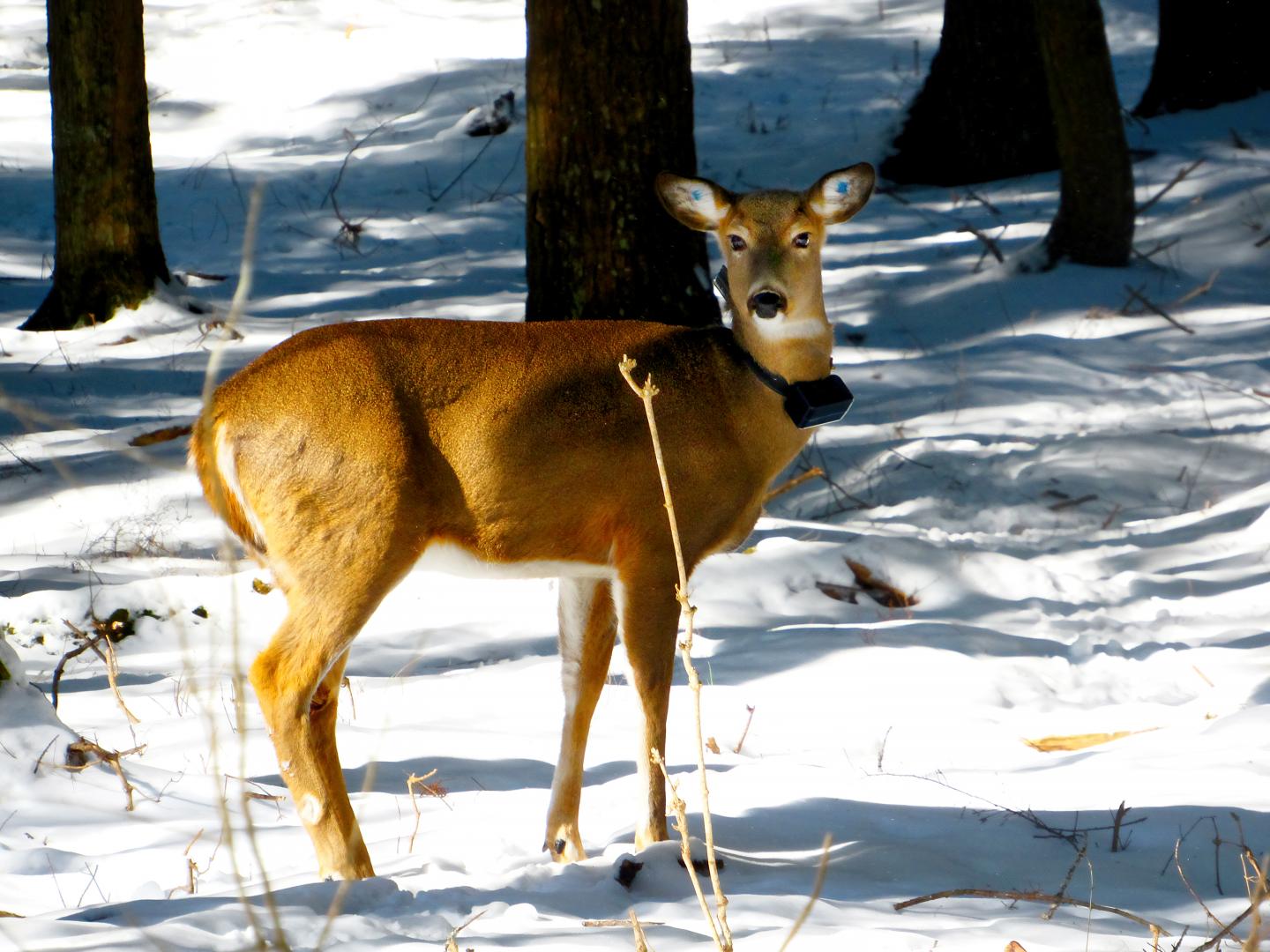
Humans have a “disproportionately huge effect” on the other species of vertebrates that share Earth’s surface with us, causing more than 25 percent of the deaths among an array of species all over the globe, according to a recently published study.

A team of scientists from the SUNY College of Environmental Science and Forestry (ESF) in Syracuse, New York, and the U.S. Department of Agriculture analyzed the deaths of 42,755 animals that were reported in 1,114 published studies. They found that 28 percent of the animals’ deaths were directly caused by humans.

The study was published in January in the journal Global Ecology and Biogeography.

“We all know humans can have a substantial effect on wildlife. That we are only one among over 35,000 species of terrestrial vertebrates worldwide yet responsible for more than one-fourth of their deaths provides perspective on how large our effect actually is,” said co-author Jerrold L. Belant, the Camp Fire Conservation Fund professor at ESF. “And that’s just direct causes. When you also consider urban growth and other land use changes that reduce habitat, it becomes clear humans have a disproportionate effect on other terrestrial vertebrates.”

Belant conducted the study with Jacob E. Hill, another ESF faculty member, and Travis L. DeVault of the USDA Animal and Plant Health Inspection Service.

The study included mammals, birds, reptiles and amphibians that died in North and South America, Europe, Asia, Africa and Oceania between 1970 and 2018. All of them had been collared or tagged as part of research projects.

The study authors analyzed deaths of known cause among 120,657 individual animals from 305 vertebrate species; some 42,000 had met a “known fate.” Overall, 28 percent of deaths were directly caused by humans; the other 72 percent died from natural sources. Predation (55 percent) and legal harvest (17 percent) were the leading sources of mortality.

Hill pointed out that humans’ impact was not equal across all the different species. “Larger animals were more likely to be killed by humans than smaller species. Adult animals were more likely than juveniles to be killed by humans,” he said.

The scientists concluded that humans are a major contributor to terrestrial vertebrate mortality, potentially impacting evolutionary processes and ecosystem functioning. The authors point out that 75 percent of Earth’s land surface is affected by human activity and that widespread extinctions of animal species are a defining trait of an era dubbed the Anthropocene.

“It’s a wake-up call,” Belant said. “Consider deforestation rates and the bleaching of coral reefs from increased sea temperatures. This is one more piece of evidence to add to the list, one more example of the effect we’re having on the planet.”

###

Media Contact
Claire B. Dunn
[email protected]
315-470-6650

Original Source

https://www.esf.edu/communications/view2.asp?newsID=7429

Tags: BiologyEcology/EnvironmentPollution/RemediationZoology/Veterinary Science
Share12Tweet8Share2ShareShareShare2

Related Posts

Florida Cane Toad: Complex Spread and Selective Evolution

Florida Cane Toad: Complex Spread and Selective Evolution

February 7, 2026
New Study Uncovers Mechanism Behind Burn Pit Particulate Matter–Induced Lung Inflammation

New Study Uncovers Mechanism Behind Burn Pit Particulate Matter–Induced Lung Inflammation

February 6, 2026

DeepBlastoid: Advancing Automated and Efficient Evaluation of Human Blastoids with Deep Learning

February 6, 2026

Navigating the Gut: The Role of Formic Acid in the Microbiome

February 6, 2026
Please login to join discussion

POPULAR NEWS

  • Robotic Ureteral Reconstruction: A Novel Approach

    Robotic Ureteral Reconstruction: A Novel Approach

    82 shares
    Share 33 Tweet 21
  • Digital Privacy: Health Data Control in Incarceration

    63 shares
    Share 25 Tweet 16
  • Study Reveals Lipid Accumulation in ME/CFS Cells

    57 shares
    Share 23 Tweet 14
  • Breakthrough in RNA Research Accelerates Medical Innovations Timeline

    53 shares
    Share 21 Tweet 13

About

We bring you the latest biotechnology news from best research centers and universities around the world. Check our website.

Follow us

Recent News

Evaluating Pediatric Emergency Care Quality in Ethiopia

TPMT Expression Predictions Linked to Azathioprine Side Effects

Improving Dementia Care with Enhanced Activity Kits

Subscribe to Blog via Email

Success! An email was just sent to confirm your subscription. Please find the email now and click 'Confirm' to start subscribing.

Join 73 other subscribers
  • Contact Us

Bioengineer.org © Copyright 2023 All Rights Reserved.

Welcome Back!

Login to your account below

Forgotten Password?

Retrieve your password

Please enter your username or email address to reset your password.

Log In
No Result
View All Result
  • Homepages
    • Home Page 1
    • Home Page 2
  • News
  • National
  • Business
  • Health
  • Lifestyle
  • Science

Bioengineer.org © Copyright 2023 All Rights Reserved.