• HOME
  • NEWS
  • EXPLORE
    • CAREER
      • Companies
      • Jobs
    • EVENTS
    • iGEM
      • News
      • Team
    • PHOTOS
    • VIDEO
    • WIKI
  • BLOG
  • COMMUNITY
    • FACEBOOK
    • INSTAGRAM
    • TWITTER
Thursday, March 26, 2026
BIOENGINEER.ORG
No Result
View All Result
  • Login
  • HOME
  • NEWS
  • EXPLORE
    • CAREER
      • Companies
      • Jobs
        • Lecturer
        • PhD Studentship
        • Postdoc
        • Research Assistant
    • EVENTS
    • iGEM
      • News
      • Team
    • PHOTOS
    • VIDEO
    • WIKI
  • BLOG
  • COMMUNITY
    • FACEBOOK
    • INSTAGRAM
    • TWITTER
  • HOME
  • NEWS
  • EXPLORE
    • CAREER
      • Companies
      • Jobs
        • Lecturer
        • PhD Studentship
        • Postdoc
        • Research Assistant
    • EVENTS
    • iGEM
      • News
      • Team
    • PHOTOS
    • VIDEO
    • WIKI
  • BLOG
  • COMMUNITY
    • FACEBOOK
    • INSTAGRAM
    • TWITTER
No Result
View All Result
Bioengineer.org
No Result
View All Result
Home NEWS Science News Health

LGBTQ youths are over-represented, have poorer outcomes in child welfare system

Bioengineer by Bioengineer
February 11, 2019
in Health
Reading Time: 2 mins read
0
IMAGE
Share on FacebookShare on TwitterShare on LinkedinShare on RedditShare on Telegram

IMAGE

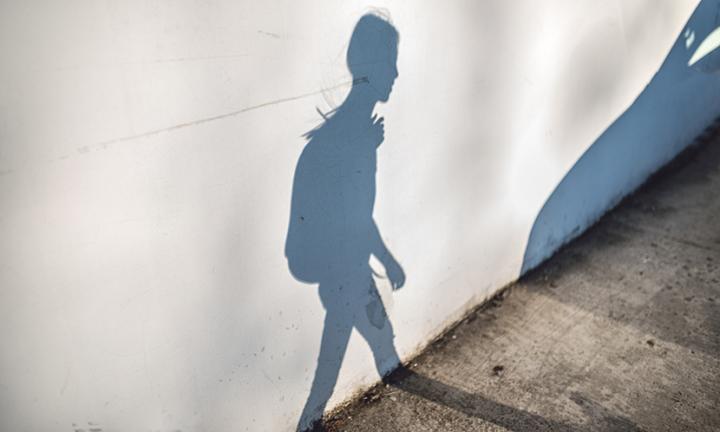
Credit: University of Texas at Austin


Lesbian, gay, bisexual, transgender and questioning (LGBTQ) youths are more likely to end up in foster care or unstable housing and suffer negative outcomes, such as substance abuse or mental health issues, while living in the child welfare system, according to new research from The University of Texas at Austin.

In a Feb. 11 paper in the journal Pediatrics, researchers looked at 593,241 youths living in California in grades 6-12. Less than 1 percent of the sample was living in foster care or unstable housing. But researchers found that more than 30 percent of the youths surveyed who were living in foster care identified as LGBTQ. More than 25 percent of those surveyed who were living in unstable housing, defined as living at a friend’s house, motel, shelter or other transitional housing, identified as LGBTQ.

“People have been concerned for some time that LGBTQ youth are over-represented in the child welfare system, but there has been little evidence — until now,” said Stephen T. Russell, chair of the Department of Human Development and Family Sciences at The University of Texas at Austin.

Researchers also found that LGBTQ youths living in foster care or unstable housing were more likely to be bullied, suffer from mental health problems, have lower grades, skip school because they felt unsafe and have higher levels of substance abuse.

“There has been a lot of concern that the child welfare system is over-burdened in the first place, and that issues like LGBTQ youth discrimination and their distinct needs are an additional complexity for youth who are already vulnerable, just by definition of being in the child welfare system,” Russell said. “We aren’t investing enough in the systems and focusing enough on the distinct needs of some of the most vulnerable kids, including LGBTQ kids.”

LGBTQ youths are probably ending up in the foster care system or unstable housing for several reasons, including rejection by their families or running away because they felt unsafe, Russell said, but more research is needed to understand why they are ending up in the foster system or unstable housing.

In a companion paper earlier this month, which appeared in the journal Child Abuse and Neglect, Russell and colleagues looked at a nationally representative sample and found that lesbian, gay and bisexual youths were nearly 2.5 times as likely to end up in the foster system as their heterosexual peers. Gender identity was not examined in that study.

Researchers pointed out that only 13 states protect youths in the child welfare system from discrimination on the basis of sexual orientation.

Laura Baams of the University of Groningen and Bianca Wilson of the University of California also contributed to the research. The research was supported by the Eunice Kennedy Shriver National Institute for Child Health and Human Development, the Communities for Just Schools Fund and the Priscilla Pond Flawn Endowment at The University of Texas at Austin.

###

Media Contact
Esther Robards-Forbes
[email protected]
512-232-0654

Related Journal Article

http://dx.doi.org/10.1542/peds.2017-4211

Tags: Adoption/Foster CareHomelessnessMental HealthSexual OrientationSocial/Behavioral Science
Share12Tweet8Share2ShareShareShare2

Related Posts

Aversive Learning Hijacks Brain Sugar Sensor

March 25, 2026

Can Psychosocial Factors Influence Cancer Risk?

March 23, 2026

Depression Factors in Elderly: Pre vs. Post-COVID Analysis

March 23, 2026

Hidden Health Crises Among US and UK Volunteers in Ukraine Uncovered in New Study

March 23, 2026
Please login to join discussion

POPULAR NEWS

  • blank

    Revolutionary AI Model Enhances Precision in Detecting Food Contamination

    96 shares
    Share 38 Tweet 24
  • Imagine a Social Media Feed That Challenges Your Views Instead of Reinforcing Them

    1003 shares
    Share 397 Tweet 248
  • Uncovering Functions of Cavernous Malformation Proteins in Organoids

    54 shares
    Share 22 Tweet 14
  • Promising Outcomes from First Clinical Trials of Gene Regulation in Epilepsy

    51 shares
    Share 20 Tweet 13

About

We bring you the latest biotechnology news from best research centers and universities around the world. Check our website.

Follow us

Recent News

In-Sensor Cryptography Links Physical Process to Digital Identity

Can Psychosocial Factors Influence Cancer Risk?

Depression Factors in Elderly: Pre vs. Post-COVID Analysis

Subscribe to Blog via Email

Success! An email was just sent to confirm your subscription. Please find the email now and click 'Confirm' to start subscribing.

Join 78 other subscribers
  • Contact Us

Bioengineer.org © Copyright 2023 All Rights Reserved.

Welcome Back!

Login to your account below

Forgotten Password?

Retrieve your password

Please enter your username or email address to reset your password.

Log In
No Result
View All Result
  • Homepages
    • Home Page 1
    • Home Page 2
  • News
  • National
  • Business
  • Health
  • Lifestyle
  • Science

Bioengineer.org © Copyright 2023 All Rights Reserved.