• HOME
  • NEWS
  • EXPLORE
    • CAREER
      • Companies
      • Jobs
    • EVENTS
    • iGEM
      • News
      • Team
    • PHOTOS
    • VIDEO
    • WIKI
  • BLOG
  • COMMUNITY
    • FACEBOOK
    • INSTAGRAM
    • TWITTER
Monday, August 17, 2026
BIOENGINEER.ORG
No Result
View All Result
  • Login
  • HOME
  • NEWS
  • EXPLORE
    • CAREER
      • Companies
      • Jobs
        • Lecturer
        • PhD Studentship
        • Postdoc
        • Research Assistant
    • EVENTS
    • iGEM
      • News
      • Team
    • PHOTOS
    • VIDEO
    • WIKI
  • BLOG
  • COMMUNITY
    • FACEBOOK
    • INSTAGRAM
    • TWITTER
  • HOME
  • NEWS
  • EXPLORE
    • CAREER
      • Companies
      • Jobs
        • Lecturer
        • PhD Studentship
        • Postdoc
        • Research Assistant
    • EVENTS
    • iGEM
      • News
      • Team
    • PHOTOS
    • VIDEO
    • WIKI
  • BLOG
  • COMMUNITY
    • FACEBOOK
    • INSTAGRAM
    • TWITTER
No Result
View All Result
Bioengineer.org
No Result
View All Result
Home NEWS Science News Biology

Anti-microRNAs are possible new therapeutic target for type 2 diabetes

Bioengineer by Bioengineer
February 7, 2019
in Biology
Reading Time: 3 mins read
0
IMAGE
Share on FacebookShare on TwitterShare on LinkedinShare on RedditShare on Telegram

IMAGE

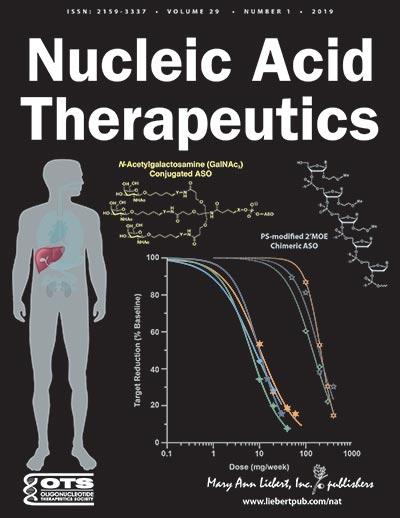
Credit: Mary Ann Liebert, Inc., publishers


New Rochelle, NY, February 7, 2019–Researchers have shown that targeted silencing of microRNA-132, which is over-expressed in type 2 diabetes, can result in improved insulin secretion and reduced blood glucose in mice and increased insulin secretion in isolated human islet cells. The new study and promising findings are reported in Nucleic Acid Therapeutics, a peer-reviewed journal from Mary Ann Liebert, Inc. publishers. Click here to read the full-text article free on the Nucleic Acid Therapeutics website through March 7, 2019.

“In Vivo Silencing of MicroRNA-132 Reduces Blood Glucose and Improves Insulin Secretion” is the title of the article coauthored by Roel Bijkerk, Johanne Ellenbroek, Yu Wah Au, Maaike Hanegraaf, Eelco de Koning, and Anton Jan van Zonneveld, Leiden University Medical Center, The Netherlands and Jonathan Esguerra and Lena Eliasson, Lund University and SIS Malmö, Malmö, Sweden.

The researchers treated mice systemically, and mouse and human islets with an agonist designed to block the expression of microRNA-132, called antagomir-132. They reported that blood glucose levels remained low in treated mice for three days following the injection of antogamiR-132. The authors encourage additional studies of this new treatment approach in additional animal models of type 2 diabetes.

“This paper provides the first proof-of-principle demonstration that in vivo silencing of microRNA-132 with antagomirs could be used as therapeutic intervention for diabetes, improving insulin secretion and decreasing blood glucose,” says Executive Editor Graham C. Parker, PhD, The Carman and Ann Adams Department of Pediatrics, Wayne State University School of Medicine, Children’s Hospital of Michigan, Detroit, MI.

###

About the Journal

Nucleic Acid Therapeutics is an authoritative peer-reviewed journal published bimonthly in print and online that focuses on cutting-edge basic research, therapeutic applications, and drug development using nucleic acids or related compounds to alter gene expression. The Journal is under the editorial leadership of Co-Editors-in-Chief Bruce A. Sullenger, PhD, Duke Translational Research Institute, Duke University Medical Center and Annemieke Aartsma-Rus, PhD, Leiden University Medical Center, and Executive Editor Graham C. Parker, PhD. Nucleic Acid Therapeutics is the official journal of the Oligonucleotide Therapeutics Society. Complete tables of content and a sample issue may be viewed on the Nucleic Acid Therapeutics website.

About the Society

The Oligonucleotide Therapeutics Society is an open, non-profit forum to foster academia- and industry-based research and development of oligonucleotide therapeutics. The society brings together the expertise from different angles of oligonucleotide research to create synergies and to bring the field of oligonucleotides to its full therapeutic potential.

About the Publisher

Mary Ann Liebert, Inc., publishers is a privately held, fully integrated media company known for establishing authoritative peer-reviewed journals in many promising areas of science and biomedical research, including Human Gene Therapy, ASSAY and Drug Development Technologies, Applied In Vitro Toxicology, and DNA and Cell Biology. Its biotechnology trade magazine, GEN (Genetic Engineering & Biotechnology News), was the first in its field and is today the industry’s most widely read publication worldwide. A complete list of the firm’s 80 journals, books, and newsmagazines is available on the Mary Ann Liebert, Inc., publishers website.

Media Contact
Kathryn Ryan
[email protected]
914-740-2250

Original Source

https://home.liebertpub.com/news/anti-micrornas-are-possible-new-therapeutic-target-for-type-2-diabetes/3504

Related Journal Article

http://dx.doi.org/10.1089/nat.2018.0763

Tags: BiologyCell BiologyDiabetesMedicine/HealthMetabolism/Metabolic Diseases
Share12Tweet8Share2ShareShareShare2

Related Posts

Strubbelig–NHL3 Receptor Complex Helps Arabidopsis Respond to Cellulose Deficiency

Strubbelig–NHL3 Receptor Complex Helps Arabidopsis Respond to Cellulose Deficiency

August 15, 2026
Bombyx mori Satellitome Analysis Reveals Evolutionary Stability, Dispersed Chromosomal Organization, Transposon Origins

Bombyx mori Satellitome Analysis Reveals Evolutionary Stability, Dispersed Chromosomal Organization, Transposon Origins

August 15, 2026

Synthetic pyrenoid reconstruction reveals EPYC1-driven carbon concentration mechanisms and evolution

August 15, 2026

Endophytic Flavobacterium boosts root hairs and drought tolerance through ERF–CEP5 signaling

August 15, 2026
Please login to join discussion

POPULAR NEWS

  • Pilot Study Examines Personal Care Use, Social Media Engagement Among NJ Students

    29 shares
    Share 12 Tweet 7
  • KAIST develops semiconductor neuron that harnesses noise to selectively process signals

    29 shares
    Share 12 Tweet 7
  • Imagining natural and extra robotic thumbs together strengthens kinesthetic sensorimotor networks

    29 shares
    Share 12 Tweet 7
  • PARP1 Drives Neuropathic Pain Through GPX4-Dependent Ferroptosis in Injured Mice’s Sensory Neurons

    29 shares
    Share 12 Tweet 7

About

We bring you the latest biotechnology news from best research centers and universities around the world. Check our website.

Follow us

Recent News

Pilot Study Examines Personal Care Use, Social Media Engagement Among NJ Students

KAIST develops semiconductor neuron that harnesses noise to selectively process signals

Imagining natural and extra robotic thumbs together strengthens kinesthetic sensorimotor networks

Subscribe to Blog via Email

Enter your email address to subscribe to this blog and receive notifications of new posts by email.

Join 85 other subscribers
  • Contact Us

Bioengineer.org © Copyright 2023 All Rights Reserved.

Welcome Back!

Login to your account below

Forgotten Password?

Retrieve your password

Please enter your username or email address to reset your password.

Log In
No Result
View All Result
  • Homepages
    • Home Page 1
    • Home Page 2
  • News
  • National
  • Business
  • Health
  • Lifestyle
  • Science

Bioengineer.org © Copyright 2023 All Rights Reserved.