• HOME
  • NEWS
  • EXPLORE
    • CAREER
      • Companies
      • Jobs
    • EVENTS
    • iGEM
      • News
      • Team
    • PHOTOS
    • VIDEO
    • WIKI
  • BLOG
  • COMMUNITY
    • FACEBOOK
    • INSTAGRAM
    • TWITTER
Sunday, August 9, 2026
BIOENGINEER.ORG
No Result
View All Result
  • Login
  • HOME
  • NEWS
  • EXPLORE
    • CAREER
      • Companies
      • Jobs
        • Lecturer
        • PhD Studentship
        • Postdoc
        • Research Assistant
    • EVENTS
    • iGEM
      • News
      • Team
    • PHOTOS
    • VIDEO
    • WIKI
  • BLOG
  • COMMUNITY
    • FACEBOOK
    • INSTAGRAM
    • TWITTER
  • HOME
  • NEWS
  • EXPLORE
    • CAREER
      • Companies
      • Jobs
        • Lecturer
        • PhD Studentship
        • Postdoc
        • Research Assistant
    • EVENTS
    • iGEM
      • News
      • Team
    • PHOTOS
    • VIDEO
    • WIKI
  • BLOG
  • COMMUNITY
    • FACEBOOK
    • INSTAGRAM
    • TWITTER
No Result
View All Result
Bioengineer.org
No Result
View All Result
Home NEWS Science News Health

Bitter rapeseed

Bioengineer by Bioengineer
January 31, 2019
in Health
Reading Time: 3 mins read
0
IMAGE
Share on FacebookShare on TwitterShare on LinkedinShare on RedditShare on Telegram

How rapeseed could be used as a protein source for human nutrition
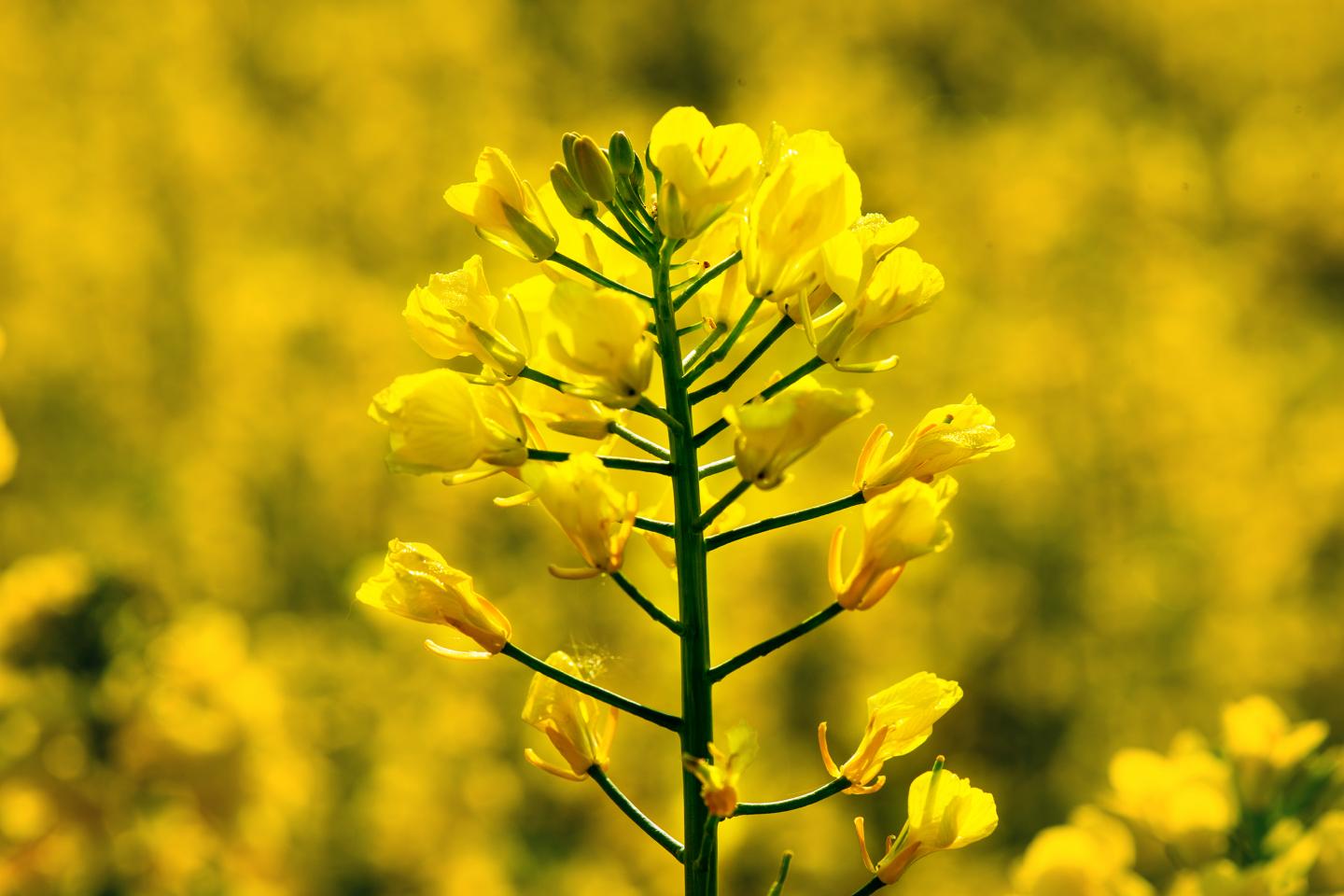
IMAGE

Credit: Andreas Heddergott / TUM


Rapeseed doesn’t just contain oil but high-quality protein, too. However, protein extracts from rapeseed have an intense, bitter off-taste. A team led by food chemist Thomas Hofmann has now identified the substance that is pivotal for the bitter taste. This is a first step towards developing rapeseed for the human protein supply.

According to the Food and Agriculture Organization of the United Nations (FAO), the demand for food will approximately double by 2050 due to the growing world population. “Bottlenecks are to be expected in this context, particularly in protein supply,” says Thomas Hofmann, who heads the Chair of Food Chemistry and Molecular Sensory Science at the Technical University of Munich (TUM).

According to Hofmann, who is also Director of the Leibniz-Institute for Food Systems Biology, it is therefore important to develop new plant protein sources for human nutrition. And rapeseed is a good local source.

Rapeseed contains high-quality protein

Rapeseed doesn’t just contain oil but high-quality protein too, which contains many essential amino acids. Worldwide around 1.12 million tons of crude protein are produced annually from rapeseed oil. Although farmers have long used this so-called rapeseed cake as a protein feed for animals, it has not played a role as a protein source in human nutrition so far.

One reason is that the accompanying substances contained in rapeseed strongly impair the taste of the obtained protein isolates. These substances include, for example, very bitter-tasting secondary plant constituents. Hofmann and his team therefore looked into the issue of which bitter substances cause the rapeseed protein’s unpleasant bad taste.

The key substance that makes rapeseed protein taste bitter

The researchers investigated three different protein isolates using mass spectrometric analysis methods and taste tests. The first isolate was an extract of all the proteins contained in rapeseed meal. The second isolate predominantly contained cruciferin and the third napin, which are the rapeseed’s two main storage proteins. All three isolates had a protein content of 80 to 90 percent.

As the investigations show for the first time, a compound called kaempferol 3-O-(2”’-O-sinapoyl-ß-sophoroside) is the key substance that makes protein extracts from rapeseed inedible. The cruciferin isolate in particular contained a large amount of this bitter substance with 390 milligrams per kilogramme. The rapeseed meal and napin isolate had less than a tenth of the quantity, but still tasted bitter in the sensory test.

Starting point for new processes

“Since we now know the cause of the bitter off-taste, it is much easier to develop suitable technological processes or breeding strategies that can be used to produce tasty, protein-rich foods from rapeseed,” said co-author Corinna Dawid, who heads the Phytometabolomics research group at TUM.

###

Further information:

The research project was funded by the Federal Ministry of Education and Research (BMBF) as part of the RaPEQ project (031B0198D). The project partner was the Pilot Pflanzenöltechnologie e.V. research institute in Magdeburg.

Publication:

C. Hald, C. Dawid, R. Tressel, T. Hofmann:

Kaempferol 3-O-(2”’-O-sinapoyl-β-sophoroside) causes the undesired bitter taste of canola/rapeseed protein isolates

J Agric Food Chem, 67: 372-378, DOI: 10.1021/acs.jafc.8b06260

Media Contact
Andreas Battenberg
[email protected]
49-892-891-0510

Original Source

https://www.tum.de/nc/en/about-tum/news/press-releases/detail/article/35222/

Related Journal Article

http://dx.doi.org/10.1021/acs.jafc.8b06260

Tags: Agricultural Production/EconomicsAgricultureBiochemistryBiologyBiotechnologyChemistry/Physics/Materials SciencesEnergy/Fuel (non-petroleum)Food/Food ScienceNutrition/NutrientsPlant Sciences
Share12Tweet8Share2ShareShareShare2

Related Posts

Calreticulin-targeted L-asparaginase–flagellin conjugate boosts Salmonella’s antitumor effectiveness

Calreticulin-targeted L-asparaginase–flagellin conjugate boosts Salmonella’s antitumor effectiveness

August 9, 2026

Short-Term Animal-Product Restriction Rapidly Alters Human Proteogenomic Profiles

August 9, 2026

UVA-Induced Hyperploidization Causes Fibrosis in Post-Mitotic Fuchs Dystrophy Corneal Cells

August 9, 2026

Healthy Vaccinee Effect Shapes Evaluation of Updated COVID-19 Vaccines in Older Adults

August 8, 2026
Please login to join discussion

POPULAR NEWS

  • How Neuroblastoma Balances Replication Stress and Genome Stability Across Chromosome 17q

    29 shares
    Share 12 Tweet 7
  • Cigar, Cigarillo, and Pipe Smoking: Lung Cancer Risk and Screening Eligibility

    29 shares
    Share 12 Tweet 7
  • How Low Gravity and Pressure Affect Space Manufacturing of Carbon-Fiber Structures

    29 shares
    Share 12 Tweet 7
  • Calreticulin-targeted L-asparaginase–flagellin conjugate boosts Salmonella’s antitumor effectiveness

    29 shares
    Share 12 Tweet 7

About

We bring you the latest biotechnology news from best research centers and universities around the world. Check our website.

Follow us

Recent News

How Neuroblastoma Balances Replication Stress and Genome Stability Across Chromosome 17q

Cigar, Cigarillo, and Pipe Smoking: Lung Cancer Risk and Screening Eligibility

How Low Gravity and Pressure Affect Space Manufacturing of Carbon-Fiber Structures

Subscribe to Blog via Email

Enter your email address to subscribe to this blog and receive notifications of new posts by email.

Join 86 other subscribers
  • Contact Us

Bioengineer.org © Copyright 2023 All Rights Reserved.

Welcome Back!

Login to your account below

Forgotten Password?

Retrieve your password

Please enter your username or email address to reset your password.

Log In
No Result
View All Result
  • Homepages
    • Home Page 1
    • Home Page 2
  • News
  • National
  • Business
  • Health
  • Lifestyle
  • Science

Bioengineer.org © Copyright 2023 All Rights Reserved.