• HOME
  • NEWS
  • EXPLORE
    • CAREER
      • Companies
      • Jobs
    • EVENTS
    • iGEM
      • News
      • Team
    • PHOTOS
    • VIDEO
    • WIKI
  • BLOG
  • COMMUNITY
    • FACEBOOK
    • INSTAGRAM
    • TWITTER
Saturday, February 7, 2026
BIOENGINEER.ORG
No Result
View All Result
  • Login
  • HOME
  • NEWS
  • EXPLORE
    • CAREER
      • Companies
      • Jobs
        • Lecturer
        • PhD Studentship
        • Postdoc
        • Research Assistant
    • EVENTS
    • iGEM
      • News
      • Team
    • PHOTOS
    • VIDEO
    • WIKI
  • BLOG
  • COMMUNITY
    • FACEBOOK
    • INSTAGRAM
    • TWITTER
  • HOME
  • NEWS
  • EXPLORE
    • CAREER
      • Companies
      • Jobs
        • Lecturer
        • PhD Studentship
        • Postdoc
        • Research Assistant
    • EVENTS
    • iGEM
      • News
      • Team
    • PHOTOS
    • VIDEO
    • WIKI
  • BLOG
  • COMMUNITY
    • FACEBOOK
    • INSTAGRAM
    • TWITTER
No Result
View All Result
Bioengineer.org
No Result
View All Result
Home NEWS Science News Biology

Insecticide resistance genes affect vector competence for West Nile virus

Bioengineer by Bioengineer
January 31, 2019
in Biology
Reading Time: 2 mins read
0
IMAGE
Share on FacebookShare on TwitterShare on LinkedinShare on RedditShare on Telegram

IMAGE

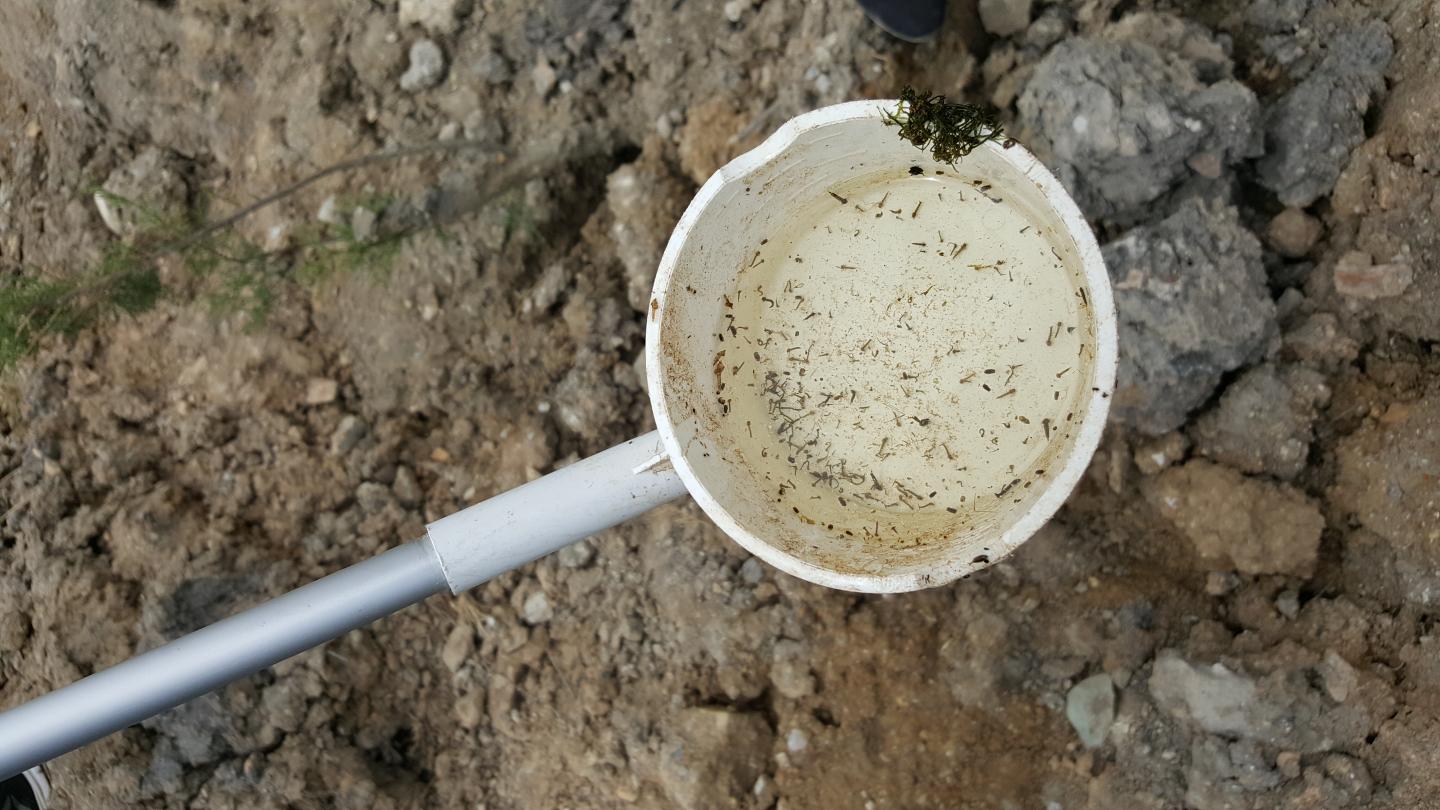
Credit: (c) Institut Pasteur

In a context of overuse of insecticides, which leads to the selection of resistant mosquitoes, it is already known that this resistance to insecticides affects interactions between mosquitoes and the pathogens they transmit. Researchers from the Institut Pasteur (Paris) and its partners prove that mechanisms of insecticide resistance, observed in Culex quinquefasciatus vector, impact the transmission of West Nile virus.

Over the last decades, arthropod-borne viruses (arboviruses) that affect human health such as dengue, chikungunya, Zika or West Nile viruses have taken the center stage owing to epidemic outbreaks or even pandemics affecting the world. In the absence of vaccines and therapeutic treatments, the control of arboviruses relies mainly on the control of mosquito populations.

The consequences of the overuse of insecticides

The use of insecticides has long been the unique method to reduce mosquito densities and thus interrupt the transmission of arboviruses. However, the overuse of insecticides leads to the selection of mosquitoes with insecticide resistance genes. Insecticide resistance has been reported to affect interactions between mosquitoes and the pathogens they transmit.

“We provide the first evidence of the impact of two main mechanisms of insecticide resistance on arbovirus transmission”, explains Anna-Bella Failloux, Head of the Arboviruses and Insect Vectors laboratory at the Institut Pasteur.

Vector competence to two arboviruses

“Using experimental infections, we compared the vector competence of insecticide-resistant and -susceptible Culex quinquefasciatus mosquitoes (target modification and overproduction of detoxification enzymes) to two arboviruses, Rift Valley fever virus (RVFV) and West Nile Virus (WNV).” For RVFV, vector competence remains unchanged whether the mosquito is resistant or susceptible. However, resistant mosquitoes transmit better WNV than susceptible mosquitoes.

“Our results underscore the importance of understanding the effects of insecticide resistance on vector competence and require reconsidering vector control strategies by limiting the production of insecticide-resistant mosquitoes.”

###

Media Contact
Aurélie Perthuison
[email protected]

Original Source

https://www.pasteur.fr/en/research-journal/insecticide-resistance-genes-affect-vector-competence-west-nile-virus

Related Journal Article

http://dx.doi.org/10.1098/rspb.2018.2273

Tags: AgricultureBiologyEcology/EnvironmentEntomologyEnvironmental HealthFertilizers/Pest ManagementVirology
Share12Tweet8Share2ShareShareShare2

Related Posts

New Study Uncovers Mechanism Behind Burn Pit Particulate Matter–Induced Lung Inflammation

New Study Uncovers Mechanism Behind Burn Pit Particulate Matter–Induced Lung Inflammation

February 6, 2026

DeepBlastoid: Advancing Automated and Efficient Evaluation of Human Blastoids with Deep Learning

February 6, 2026

Navigating the Gut: The Role of Formic Acid in the Microbiome

February 6, 2026

AI-Enhanced Optical Coherence Photoacoustic Microscopy Revolutionizes 3D Cancer Model Imaging

February 6, 2026
Please login to join discussion

POPULAR NEWS

  • Robotic Ureteral Reconstruction: A Novel Approach

    Robotic Ureteral Reconstruction: A Novel Approach

    82 shares
    Share 33 Tweet 21
  • Digital Privacy: Health Data Control in Incarceration

    63 shares
    Share 25 Tweet 16
  • Study Reveals Lipid Accumulation in ME/CFS Cells

    57 shares
    Share 23 Tweet 14
  • Breakthrough in RNA Research Accelerates Medical Innovations Timeline

    53 shares
    Share 21 Tweet 13

About

We bring you the latest biotechnology news from best research centers and universities around the world. Check our website.

Follow us

Recent News

Succinate Receptor 1 Limits Blood Cell Formation, Leukemia

Palmitoylation of Tfr1 Drives Platelet Ferroptosis and Exacerbates Liver Damage in Heat Stroke

Oxygen-Enhanced Dual-Section Microneedle Patch Improves Drug Delivery and Boosts Photodynamic and Anti-Inflammatory Treatment for Psoriasis

Subscribe to Blog via Email

Enter your email address to subscribe to this blog and receive notifications of new posts by email.

Join 73 other subscribers
  • Contact Us

Bioengineer.org © Copyright 2023 All Rights Reserved.

Welcome Back!

Login to your account below

Forgotten Password?

Retrieve your password

Please enter your username or email address to reset your password.

Log In
No Result
View All Result
  • Homepages
    • Home Page 1
    • Home Page 2
  • News
  • National
  • Business
  • Health
  • Lifestyle
  • Science

Bioengineer.org © Copyright 2023 All Rights Reserved.