• HOME
  • NEWS
  • EXPLORE
    • CAREER
      • Companies
      • Jobs
    • EVENTS
    • iGEM
      • News
      • Team
    • PHOTOS
    • VIDEO
    • WIKI
  • BLOG
  • COMMUNITY
    • FACEBOOK
    • INSTAGRAM
    • TWITTER
Saturday, February 7, 2026
BIOENGINEER.ORG
No Result
View All Result
  • Login
  • HOME
  • NEWS
  • EXPLORE
    • CAREER
      • Companies
      • Jobs
        • Lecturer
        • PhD Studentship
        • Postdoc
        • Research Assistant
    • EVENTS
    • iGEM
      • News
      • Team
    • PHOTOS
    • VIDEO
    • WIKI
  • BLOG
  • COMMUNITY
    • FACEBOOK
    • INSTAGRAM
    • TWITTER
  • HOME
  • NEWS
  • EXPLORE
    • CAREER
      • Companies
      • Jobs
        • Lecturer
        • PhD Studentship
        • Postdoc
        • Research Assistant
    • EVENTS
    • iGEM
      • News
      • Team
    • PHOTOS
    • VIDEO
    • WIKI
  • BLOG
  • COMMUNITY
    • FACEBOOK
    • INSTAGRAM
    • TWITTER
No Result
View All Result
Bioengineer.org
No Result
View All Result
Home NEWS Science News Biology

UAlberta scientists first to pinpoint a cause of pigmentary glaucoma

Bioengineer by Bioengineer
January 31, 2019
in Biology
Reading Time: 3 mins read
0
IMAGE
Share on FacebookShare on TwitterShare on LinkedinShare on RedditShare on Telegram

Discovery identifies gene that causes common form of blindness worldwide, potentially leading to new treatment for glaucoma.
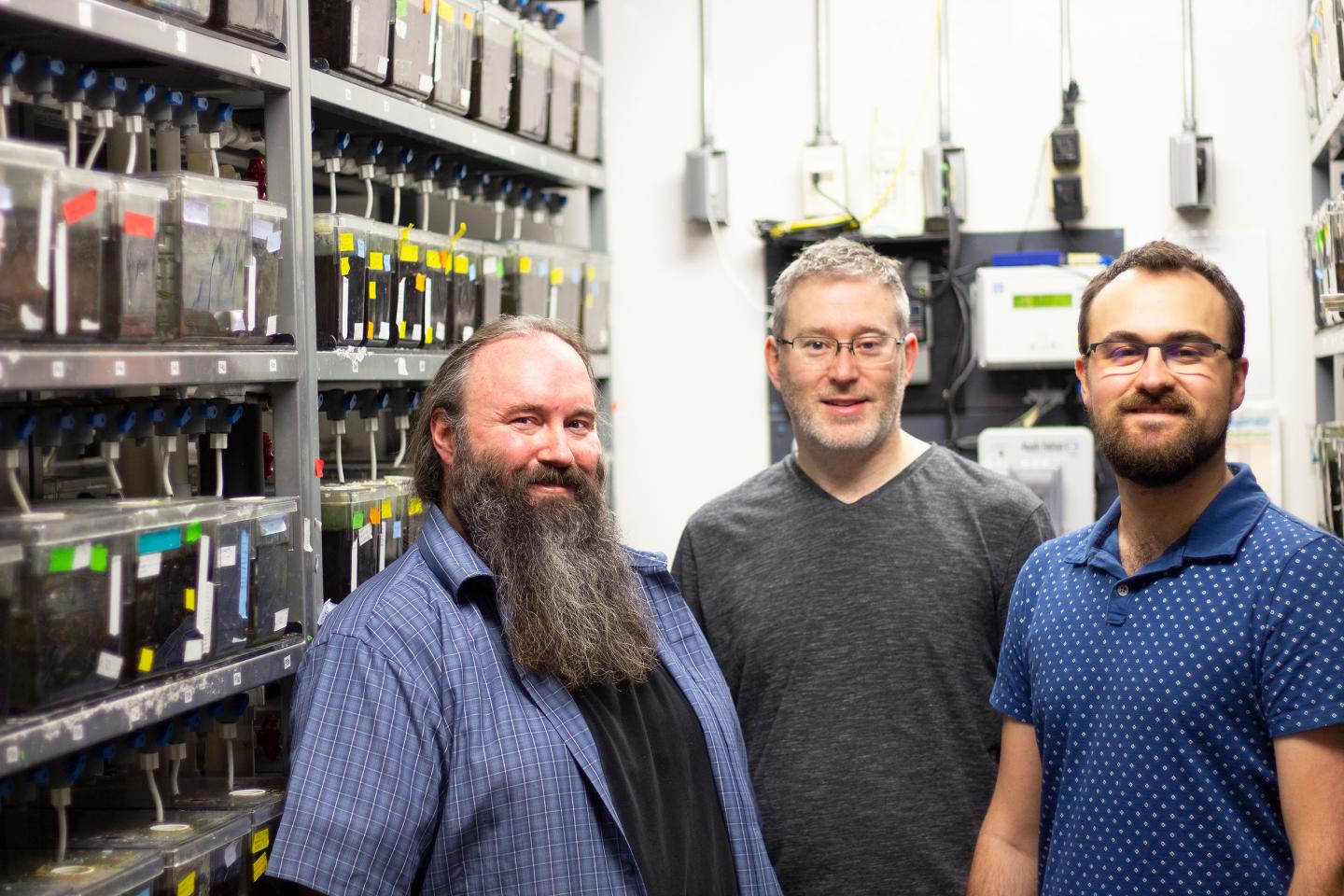
IMAGE

Credit: Jordan Carson


An international team of researchers has identified a gene responsible for the onset of pigmentary glaucoma, which may lead to new therapies for the condition.

“People who traditionally we wouldn’t think of having glaucoma–young males in their 20s and 30s–are at particular risk for this form of the disease and of losing their vision,” said Michael Walter, professor and chair of medical genetics at the University of Alberta.

It is the first time a cause of the disease has been identified.

Pigmentary glaucoma (PG) occurs when the pigment on the back of the iris gets deposited into the front part of the eye, causing vision loss and eventually blindness if left untreated. It’s estimated that at least 150,000 people in North America are affected by the condition.

The study, led by Walter, also involved researchers at Harvard University and Flinders University in Australia. The team, using data from two individual families with a predisposition toward PG, used a technique known as whole exome sequencing to identify the premelanosome protein (PMEL) gene as one associated with pigmentary glaucoma. The finding was further confirmed through detection of more PMEL gene mutations following the examination of 400 additional patient samples.

The researchers determined the mutations in the PMEL gene had biological consequences, using a series of biochemical and cell biology tests to show that most of the mutations significantly altered human cells. Collaborating with Ted Allison, an associate professor of medical genetics at the U of A, the team used gene-editing technology called CRISPR Cas9 to introduce the mutations into the DNA of zebrafish.

“We found that these fish had altered pigmentation and eye defects which were very reminiscent of human glaucoma,” said Walter. “Altogether, the findings showed us quite clearly that we have identified a new gene that causes glaucoma.

“I think the collaborative effort we’ve had in this research has really let us explore this more fully than any one lab could have done.”

Walter, who is also a member of Alberta Vision Net, which brings together researchers from the universities of Alberta and Calgary to advance the understanding and treatment of ocular disease, is now focused on efforts to better understand how the mutations lead to pigmentary glaucoma. He said the research also identified unexpected similarities to other neurodegenerative diseases such as Alzheimer’s, which could lead to exciting new possibilities for treatment.

“It opens up awareness about other approaches we could take,” said Walter. “Potentially some of the methods that are currently being used to think about treating Alzheimer’s might even be applied to treat glaucoma.”

###

The research, which was published in Human Molecular Genetics, was supported by funding from the Royal Alexandra Hospital Foundation, Canadian Glaucoma Research Society, Alberta Vision Network, Canadian Institutes of Health Research, Maternal and Child Health Student Support, the BrightFocus Foundation, the March of Dimes Foundation and the National Institutes of Health.

Media Contact
Ross Neitz
[email protected]
780-492-5986

Original Source

https://www.folio.ca/u-of-a-scientists-first-to-pinpoint-a-cause-of-pigmentary-glaucoma/

Related Journal Article

http://dx.doi.org/10.1093/hmg/ddy429

Tags: BiochemistryCell BiologyGenesGeneticsMedicine/HealthOphthalmology
Share12Tweet8Share2ShareShareShare2

Related Posts

Florida Cane Toad: Complex Spread and Selective Evolution

Florida Cane Toad: Complex Spread and Selective Evolution

February 7, 2026
New Study Uncovers Mechanism Behind Burn Pit Particulate Matter–Induced Lung Inflammation

New Study Uncovers Mechanism Behind Burn Pit Particulate Matter–Induced Lung Inflammation

February 6, 2026

DeepBlastoid: Advancing Automated and Efficient Evaluation of Human Blastoids with Deep Learning

February 6, 2026

Navigating the Gut: The Role of Formic Acid in the Microbiome

February 6, 2026
Please login to join discussion

POPULAR NEWS

  • Robotic Ureteral Reconstruction: A Novel Approach

    Robotic Ureteral Reconstruction: A Novel Approach

    82 shares
    Share 33 Tweet 21
  • Digital Privacy: Health Data Control in Incarceration

    63 shares
    Share 25 Tweet 16
  • Study Reveals Lipid Accumulation in ME/CFS Cells

    57 shares
    Share 23 Tweet 14
  • Breakthrough in RNA Research Accelerates Medical Innovations Timeline

    53 shares
    Share 21 Tweet 13

About

We bring you the latest biotechnology news from best research centers and universities around the world. Check our website.

Follow us

Recent News

Improving Dementia Care with Enhanced Activity Kits

Decoding Prostate Cancer Origins via snFLARE-seq, mxFRIZNGRND

Digital Health Perspectives from Baltic Sea Experts

Subscribe to Blog via Email

Enter your email address to subscribe to this blog and receive notifications of new posts by email.

Join 73 other subscribers
  • Contact Us

Bioengineer.org © Copyright 2023 All Rights Reserved.

Welcome Back!

Login to your account below

Forgotten Password?

Retrieve your password

Please enter your username or email address to reset your password.

Log In
No Result
View All Result
  • Homepages
    • Home Page 1
    • Home Page 2
  • News
  • National
  • Business
  • Health
  • Lifestyle
  • Science

Bioengineer.org © Copyright 2023 All Rights Reserved.