• HOME
  • NEWS
  • EXPLORE
    • CAREER
      • Companies
      • Jobs
    • EVENTS
    • iGEM
      • News
      • Team
    • PHOTOS
    • VIDEO
    • WIKI
  • BLOG
  • COMMUNITY
    • FACEBOOK
    • INSTAGRAM
    • TWITTER
Sunday, October 4, 2026
BIOENGINEER.ORG
No Result
View All Result
  • Login
  • HOME
  • NEWS
  • EXPLORE
    • CAREER
      • Companies
      • Jobs
        • Lecturer
        • PhD Studentship
        • Postdoc
        • Research Assistant
    • EVENTS
    • iGEM
      • News
      • Team
    • PHOTOS
    • VIDEO
    • WIKI
  • BLOG
  • COMMUNITY
    • FACEBOOK
    • INSTAGRAM
    • TWITTER
  • HOME
  • NEWS
  • EXPLORE
    • CAREER
      • Companies
      • Jobs
        • Lecturer
        • PhD Studentship
        • Postdoc
        • Research Assistant
    • EVENTS
    • iGEM
      • News
      • Team
    • PHOTOS
    • VIDEO
    • WIKI
  • BLOG
  • COMMUNITY
    • FACEBOOK
    • INSTAGRAM
    • TWITTER
No Result
View All Result
Bioengineer.org
No Result
View All Result
Home NEWS Science News Chemistry

4D imaging with liquid crystal microlenses

Bioengineer by Bioengineer
November 20, 2019
in Chemistry
Reading Time: 2 mins read
0
IMAGE
Share on FacebookShare on TwitterShare on LinkedinShare on RedditShare on Telegram

IMAGE

Credit: Adapted from ACS Nano 2019, DOI: 10.1021/acsnano.9b07104


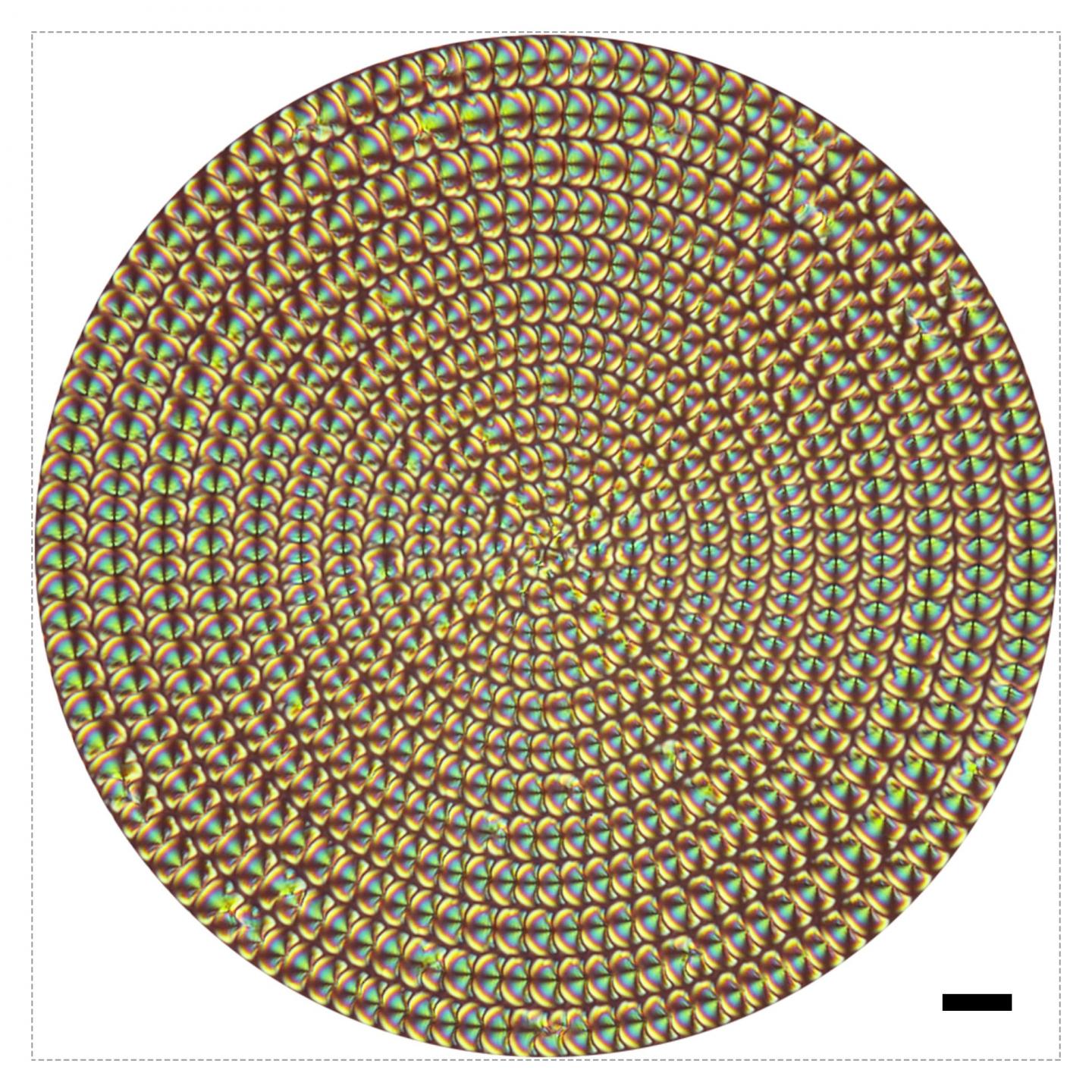
Most images captured by a camera lens are flat and two dimensional. Increasingly, 3D imaging technologies are providing the crucial context of depth for scientific and medical applications. 4D imaging, which adds information on light polarization, could open up even more possibilities, but usually the equipment is bulky, expensive and complicated. Now, researchers reporting in ACS Nano have developed self-assembling liquid crystal microlenses that can reveal 4D information in one snapshot.

Polarized light contains waves that undulate in a single plane, whereas unpolarized light, such as that from the sun, contains waves that move in every direction. Light can become polarized by reflecting off objects, and detecting this type of light could reveal hidden information. For example, cancer cells can reflect polarized light differently than healthy tissues. Wei Hu, Yan-Qing Lu and colleagues wanted to develop a portable, inexpensive and easy-to-use microlens to simultaneously acquire 3D space and polarization information, thereby producing 4D images.

To make their microlenses, the researchers used liquid crystals, materials found in most electronic displays. With a self-assembly process, they patterned arrays of liquid crystal microlenses into concentric circles. The researchers used a polarized optical microscope to image objects, such as a cross or the letter “E,” under different directions of linearly polarized light. Microlenses in the array imaged the object differently, depending on their distance from the object (depth) and the direction of polarized light, producing 4D information. Although the resolution needs to be improved, the technique could someday be used in applications such as medical imaging, communications, displays, information encryption and remote sensing, the researchers say.

###

The authors acknowledge funding from the National Key Research and Development Program of China, the National Natural Science Foundation of China, the Scientific Research Foundation of Graduate School of Nanjing University, the Distinguished Young Scholars Fund of Jiangsu Province and the Tang Scholar Program.

The paper’s abstract will be available on November 20 at 8 a.m. Eastern time here: http://pubs.acs.org/doi/abs/10.1021/acsnano.9b07104

The American Chemical Society, the world’s largest scientific society, is a nonprofit organization chartered by the U.S. Congress. ACS is a global leader in providing access to chemistry-related information and research through its multiple databases, peer-reviewed journals and scientific conferences. ACS does not conduct research, but publishes and publicizes peer-reviewed scientific studies. Its main offices are in Washington, D.C., and Columbus, Ohio.

To automatically receive news releases from the American Chemical Society, contact [email protected].

Follow us: Twitter | Facebook

Media Contact
Katie Cottingham
[email protected]
301-775-8455

Tags: Chemistry/Physics/Materials SciencesNanotechnology/MicromachinesResearch/Development
Share12Tweet8Share2ShareShareShare2

Related Posts

Physicists sculpt 3D light fields to steer electrons into new quantum states

Physicists sculpt 3D light fields to steer electrons into new quantum states

October 4, 2026
Alcohol-Powered Fuel Cells Edge Closer to Market as Engineers Tame Leaky Membranes and Costly Catalysts

Alcohol-Powered Fuel Cells Edge Closer to Market as Engineers Tame Leaky Membranes and Costly Catalysts

October 4, 2026

Banana Peels Turn Into Catalysts That Boost Bio-Oil From Sewage Sludge

October 4, 2026

Squeezing Polypropylene Flips Its Insulation From Rubbery to Glassy Conduction

October 4, 2026
Please login to join discussion

POPULAR NEWS

  • Alloys That Shrink Their Own Grains: New PIX Mechanism Refines Metals With Heat Alone

    Alloys That Shrink Their Own Grains: New PIX Mechanism Refines Metals With Heat Alone

    29 shares
    Share 12 Tweet 7
  • Endurance Exercise Reshapes the Liver in Males and Females Through Distinct Molecular Routes

    29 shares
    Share 12 Tweet 7
  • Single Transcription Factor PU.1 Rapidly Converts Fibroblasts into Macrophage-Lineage Cells

    29 shares
    Share 12 Tweet 7
  • New Scale Measures How Ready Nurse Educators Really Are for the AI Era

    29 shares
    Share 12 Tweet 7

About

We bring you the latest biotechnology news from best research centers and universities around the world. Check our website.

Follow us

Recent News

Alloys That Shrink Their Own Grains: New PIX Mechanism Refines Metals With Heat Alone

Endurance Exercise Reshapes the Liver in Males and Females Through Distinct Molecular Routes

Single Transcription Factor PU.1 Rapidly Converts Fibroblasts into Macrophage-Lineage Cells

Subscribe to Blog via Email

Success! An email was just sent to confirm your subscription. Please find the email now and click 'Confirm' to start subscribing.

Join 85 other subscribers
  • Contact Us

Bioengineer.org © Copyright 2023 All Rights Reserved.

Welcome Back!

Login to your account below

Forgotten Password?

Retrieve your password

Please enter your username or email address to reset your password.

Log In
No Result
View All Result
  • Homepages
    • Home Page 1
    • Home Page 2
  • News
  • National
  • Business
  • Health
  • Lifestyle
  • Science

Bioengineer.org © Copyright 2023 All Rights Reserved.