Credit: Children's National Health System
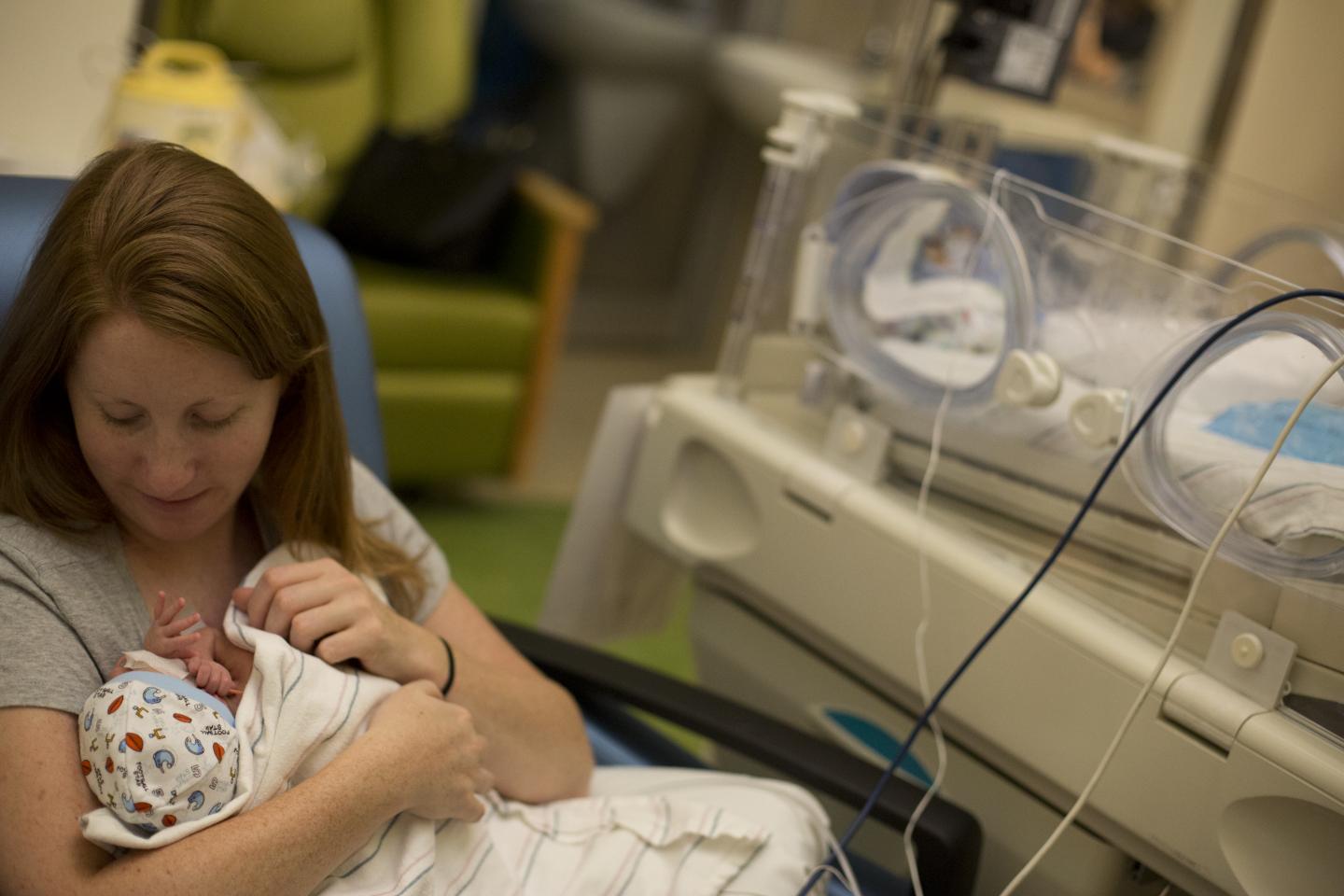
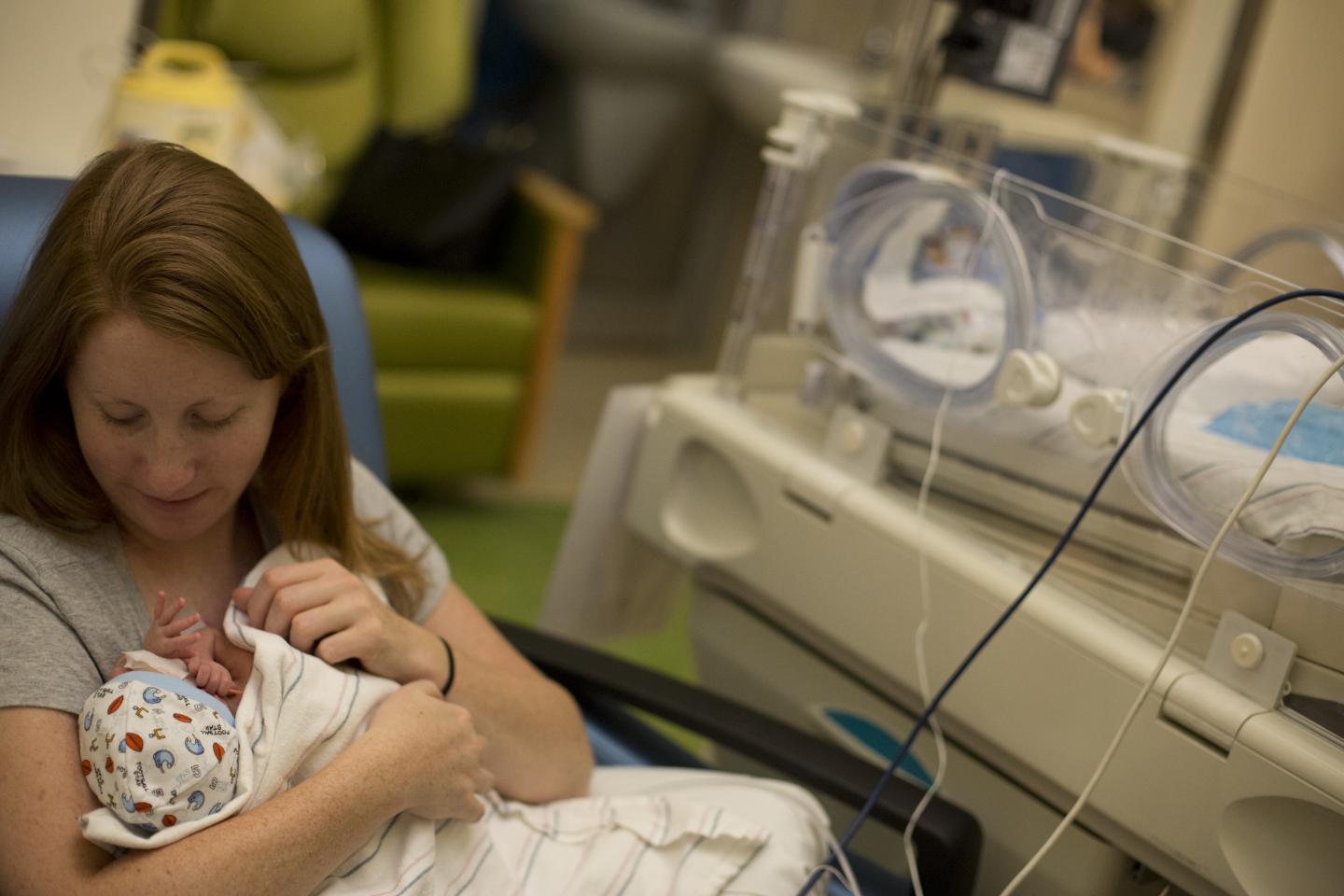
CHICAGO–Almost half of parents whose children were admitted to Children's National Health System's neonatal intensive care unit (NICU) experienced postpartum depressive symptoms, anxiety and stress when their newborns were discharged from the hospital. And parents who were the most anxious also were the most depressed, according to research presented during the 2017 American Academy of Pediatrics (AAP) national conference.
The Centers for Disease Control and Prevention has found that one in 10 infants born in the United States each year is born preterm, or before 37 weeks' gestation. Because fetuses undergo dramatic growth in the final weeks of pregnancy, readying them for life outside of the womb, tiny preemies often need help in the NICU with such essentials as breathing, eating and regulating their body temperature. Some very sick newborns die.
Because their infants' lives hang in the balance, NICU parents are at particular risk for poor emotional function, including mood disorders, anxiety and distress. Children's National Neonatologist Lamia Soghier, M.D., and the study team tried to determine factors closely associated with poor emotional function in order to identify at-risk parents most in need of mental health support.
The study team enrolled 300 parents and infants in a randomized controlled clinical trial that explored the impact of providing peer-to-peer support to parents after their newborns are discharged from the NICU. The researchers relied on a 10-item tool to assess depressive symptoms and a 46-question tool to describe the degree of parental stress. They used regression and partial correlation to characterize the relationship between depressive symptoms, stress, gender and educational status with such factors as the infant's gestational age at birth, birth weight and length of stay.
Some 58 percent of the infants in the study were male; 58 percent weighed less than 2,500 grams at birth; and the average length of stay for 54 percent of infants was less than two weeks. Eighty-nine percent of parents who completed the surveys were mothers; 44 percent were African American; and 45 percent reported having attained at least a college degree. Forty-three percent were first-time parents.
About 45 percent of NICU parents had elevated Center for Epidemiological Studies Depression Scale (CES-D) scores.
"The baby's gender, gestational age at birth and length of NICU stay were associated with the parents having more pronounced depressive symptoms," Dr. Soghier says. "Paradoxically, parents whose newborns were close to full-term at delivery had 6.6-fold increased odds of having elevated CES-D scores compared with parents of preemies born prior to 28 weeks' gestation. Stress levels were higher in mothers compared with fathers, but older parents had lower levels of stress than younger parents."
Dr. Soghier says the results presented at AAP are an interim analysis. The longer-term PCORI-funded study continues and explores the impact of providing peer support for parents after NICU discharge.
AAP 2017 presentations: Friday, Sept. 15, 2017
* "Postpartum depressive symptoms in parents at discharge from the neonatal intensive care unit: Risk factors and association with parental stress" 6 p.m. to 8 p.m. (CT)
Lamia Soghier M.D.; Katherine I. Kritikos, M.P.H.; Cara L. Carty, Ph.D.; Lisa K. Tuchman, M.D., M.P.H.; Randi Streisand, Ph.D.; and Karen R. Fratantoni, M.D., M.P.H.
###
Media Contact
Diedtra Henderson
[email protected]
443-610-9826
http://www.childrensnational.org/