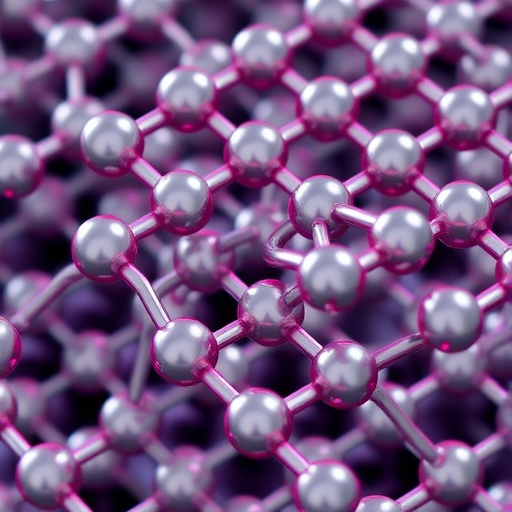
A groundbreaking advancement in air sterilization technology has emerged from a dedicated team at the School of Materials Science and Engineering, Ocean University of China. They have pioneered a template-directed growth method to engineer a three-dimensional hierarchical superstructure composed of well-aligned bimetallic metal-organic framework (MOF) arrays. This innovative material demonstrates extraordinary potential for electrocatalytic air sterilization, ushering in a new era of efficient and cost-effective air purification solutions. Recently disseminated in the prestigious journal Engineering, their study unveils the sophisticated design, thorough characterization, and remarkable air disinfecting capabilities of an electrode material denoted 0.3Co-MOF/Cu@Cu.
In confronting the surging global challenges posed by escalating air pollution and heightened risks of microbial contamination, the research focuses heavily on metal-organic frameworks with tailored bimetallic coordination and spatially complex 3D architectures. These materials offer promising avenues for improved catalytic activity and environmental robustness. Copper mesh was strategically chosen as the foundational substrate in this innovation, capitalizing on its inherently superior electrical conductivity and permeability. By integrating cobalt and copper ions as metal coordination centers, the researchers successfully synthesized the Co-MOF/Cu@Cu architecture with enhanced functional properties.
The intricate balance between structural design and chemical composition was rigorously validated through advanced computational methods, including density functional theory (DFT) calculations, alongside exhaustive electrochemical testing. Among various configurations, the 0.3Co-MOF/Cu@Cu formulation emerged as optimal, exhibiting superior water stability—a critical attribute for long-term operation in humid environments—and accelerated electrochemical reaction kinetics. Notably, an elevated content of trivalent cobalt (Co³⁺) within the crystal lattice was identified, an element correlated with enhanced framework stability and catalytic endurance.
Morphological investigations revealed that the material assembles into a distinctive wolf-tooth-shaped nanorod morphology, overlaid with ultrathin nanosheets. This peculiar nanostructure promotes a large specific surface area and facilitates facile electron transfer due to minimal charge transfer resistance. Elemental mapping confirmed uniform distribution of constituent elements, while X-ray diffraction analyses highlighted a crystal phase predominantly governed by Co-MOF with subtle copper incorporation. The electrochemical surface area, as inferred from a substantial electrochemical double-layer capacitance value of 18.49 mF·cm⁻², reflects a high density of exposed active sites conducive to catalytic processes.
Longitudinal assessments of durability were conducted under alkaline conditions, where chronopotentiometric measurements sustained a current density of 10 mA·cm⁻² over 25 hours, underscoring the material’s remarkable stability and endurance under realistic operating conditions. The capacity to maintain structural integrity and catalytic efficacy over extended periods is pivotal for practical applications in air sterilization devices.
When tested for electrocatalytic sterilization efficiency against Escherichia coli, a representative Gram-negative bacterium, the 0.3Co-MOF/Cu@Cu electrode performed exceptionally under humidified air (65% relative humidity). Operating at an air velocity of 1.5 meters per second and driven by an alternating current voltage of 24 volts, the material achieved a sterilization efficacy exceeding 99.5% within a mere 0.0026 seconds of exposure. This astonishing performance is attributed to a synergistic mechanism combining bacterial membrane electroporation and reactive oxygen species (ROS) generation.
The external electric field significantly amplifies the local electric intensity around the 3D MOF nanostructure, inducing electroporation in bacterial membranes, effectively disrupting their integrity. Simultaneously, oxygen vacancies on the material surface act as active sites facilitating the adsorption of oxygen molecules, expediting their reduction to superoxide anions (O₂⁻). These reactive oxygen species penetrate and damage bacterial intracellular components. Moreover, the free electrons localized on the material surface interfere with bacterial physiological processes by generating endogenous ROS, culminating in efficient microbial eradication.
Beyond its microbial deactivation capabilities, the electrocatalytic activity fosters an increase in atmospheric negative ion concentrations. These ions are posited to enhance indoor air quality and occupant comfort by neutralizing airborne pollutants and modulating electrostatic environments, thus conferring additional health benefits in enclosed spaces.
The holistic design ethos of this new electrode encompasses both structural complexity and compositional finesse, enabling rapid, high-efficiency air sterilization at impressively low voltages and unprecedentedly brief treatment durations. Such a paradigm signifies a leap forward in the functional development of air purification systems, with prospective integration into HVAC systems, especially air conditioning units, to combat the microorganisms threatening indoor environments.
This trailblazing research project culminates in substantial insights that are not only academically profound but also practically transformative. Potential large-scale adaptation could redefine public health standards by furnishing economically viable, durable, and high-performance solutions for air disinfection, essential in a world increasingly conscious of airborne pathogens.
The article titled “Template-Directed Growth of a 3D Hierarchical Structure of Well-Aligned Bimetallic MOF Arrays for High-Efficiency Electrocatalytic Air Sterilization” authored by Liting Dong, Shougang Chen, and colleagues, rigorously documents these advancements. Their publication opens a promising chapter for materials science targeting environmental health, accessible openly in the Engineering journal, paving methodologies for further elaboration and industrial application.
This remarkable innovation epitomizes the intersection of material science acumen and environmental urgency, demonstrating how precise nano-engineering and electrochemical mastery can deliver swift and comprehensive solutions to the ongoing quest for clean air. Its scientific significance and potential societal impact render it a precedent in electrocatalytic sterilization research and a beacon for future multidisciplinary efforts.
Subject of Research: Development of a 3D hierarchical bimetallic metal-organic framework (MOF) array for high-efficiency electrocatalytic air sterilization.
Article Title: Template-Directed Growth of a 3D Hierarchical Structure of Well-Aligned Bimetallic MOF Arrays for High-Efficiency Electrocatalytic Air Sterilization
News Publication Date: 29-Jan-2026
Web References:
Article DOI: https://doi.org/10.1016/j.eng.2025.05.020
Journal website: https://www.sciencedirect.com/journal/engineering
Image Credits: Liting Dong, Shougang Chen et al.
Keywords
Materials Science, Metal-Organic Frameworks, Electrocatalysis, Air Sterilization, Bimetallic Coordination, Nanostructure, Reactive Oxygen Species, Indoor Air Quality, Electroporation, Copper Mesh Substrate
Tags: 3D bimetallic metal-organic frameworksadvanced materials for environmental remediationair purification via electrocatalysiscobalt-copper coordination in MOFscopper mesh substrates for MOFscost-effective air sterilization solutionsdensity functional theory in MOF designelectrocatalytic air sterilization technologyhierarchical MOF superstructureshigh-efficiency air disinfecting electrodesmetal-organic frameworks for microbial contamination controltemplate-directed MOF growth