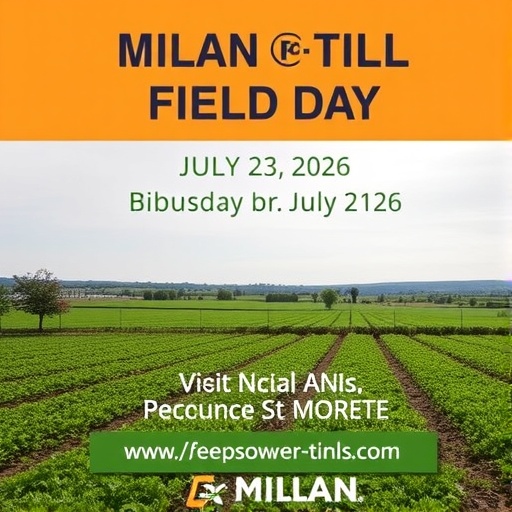
The 34th Milan No-Till Field Day, a cornerstone event in the landscape of sustainable agriculture and soil conservation, will take place on Thursday, July 23, from 8 a.m. to 1 p.m. CDT at the AgResearch and Education Center in Milan, Tennessee. This annual tradition is distinguished as one of the largest gatherings in the United States that specifically focuses on the science and practice of conservation tillage—a method of farming that eschews traditional plowing to preserve soil structure, reduce erosion, and enhance long-term productivity. With no virtual alternatives this year, the event offers a rare opportunity for in-person engagement and hands-on learning about cutting-edge agricultural techniques.
No-till farming represents a paradigm shift in agronomy that profoundly impacts soil health, moisture retention, and microbial ecology. The field day will deliver comprehensive presentations that delve into agronomic strategies pivotal to optimizing no-till systems. Attendees can expect detailed discussions on the integration of cover crops, which serve as living soil armor, suppressing weeds, augmenting organic matter, and cycling nutrients. These sessions also cover updates on pesticide usage within a no-till context, balancing pest control efficacy with environmental stewardship, and the latest advances in nutrient management tailored for reduced soil disturbance.
The event further bridges research and practical application through guided tours of active research trials at the AgResearch Center. These field demonstrations are designed to illuminate how no-till farming influences crop response, soil microbial activity, and biophysical properties under different management regimes. Participants gain insight into the dynamic interplay of weed, insect, and disease pressures in no-till systems, and how integrated pest management (IPM) tactics can be optimized to reduce chemical inputs while maintaining crop health and yield potential.
In addition to scientific presentations, the Milan No-Till Field Day will feature a trade show that brings together agricultural organizations and technology providers. This exhibit provides a panoramic view of contemporary tools and innovations advancing sustainable crop production. From precision agriculture technologies that enhance spatial nutrient management to bio-based pesticides and herbicides aligned with no-till principles, the event serves as a nexus between academic insight and commercial application.
Highlighting Tennessee’s rich agricultural heritage, the 2026 program will also include an antique tractor show and sessions on traditional agricultural skills such as blacksmithing and cotton ginning. These exhibits contextualize modern conservation techniques within the broader history of farming evolution, fostering appreciation for how past practices inform present-day sustainability efforts. Importantly, these cultural activities are accessible to producers and general audiences alike, underscoring the event’s commitment to community engagement and education.
The logistics of the event have been thoughtfully adapted to enhance participant experience. Unlike previous years, presentations and field tours will commence in sheds adjacent to the lake, providing sheltered environments conducive to learning even in inclement weather. Traditional skills demonstrations and the antique tractor exhibits will take place near the West Tennessee Agricultural Museum, with visitor parking conveniently located in the field behind the museum building. This spatial organization facilitates seamless movement between scientific sessions and cultural showcases.
Since its inception in 1981, Milan No-Till Field Day has passionately advocated for the benefits of no-till systems over conventional tillage, emphasizing their role in minimizing soil erosion, preserving organic matter, and boosting economic returns. Held biennially, this event consistently draws thousands of producers, researchers, extension agents, and agricultural enthusiasts from across the United States, attesting to its influence on advancing conservation agriculture practices nationwide.
One of the keystones of the event’s value proposition is its offering of professional development credits. Certified Crop Adviser (CCA) credits and pesticide recertification points are available to attendees engaging in approved sessions, underscoring the event’s integration with ongoing agricultural credentialing and regulatory compliance efforts. These incentives enhance the educational worth of the day, encouraging adoption of best management practices supported by robust scientific evidence.
The AgResearch and Education Center at Milan, part of the University of Tennessee’s Institute of Agriculture, stands geographically and intellectually at the forefront of agricultural innovation. Located at 3 Ledbetter Gate Road, the facility houses state-of-the-art laboratories and test plots where longstanding and emerging agricultural challenges are addressed through multidisciplinary research. The Center’s involvement ensures that the educational content presented during the field day is deeply rooted in empirical data and peer-reviewed science.
Sponsorship and participation opportunities remain open for agricultural companies and local organizations wishing to exhibit or contribute to this significant event. Interested parties can contact LesLee Smelser at 731-686-7362 for details on supporting or attending the event. Such partnerships bolster the collaborative ecosystem essential for advancing sustainable agricultural development.
The University of Tennessee Institute of Agriculture encompasses several key entities, including the Herbert College of Agriculture, UT College of Veterinary Medicine, UT AgResearch, and UT Extension. Through its tripartite land-grant mission—teaching, research, and outreach—the Institute delivers impactful, science-based solutions that improve the livelihoods of Tennessee farmers and extend benefits well beyond state borders. This event exemplifies the Institute’s commitment to “Real. Life. Solutions.” in agricultural sustainability and innovation.
The Milan No-Till Field Day not only fosters dissemination of advanced agronomic strategies but also cultivates community awareness of the vital role that conservation tillage plays in global food security and environmental resilience. By uniting cutting-edge science with heritage and practical application, the event offers a comprehensive narrative demonstrating how intentional soil stewardship can yield both ecological and economic dividends in modern farming systems.
Subject of Research: Sustainable agriculture, no-till farming, soil conservation, agronomic strategies
Article Title: Advancing Soil Conservation: The 34th Milan No-Till Field Day Spotlights Sustainable Agronomy and Agricultural Heritage
News Publication Date: July 23, 2026
Web References:
Institute of Agriculture
Image Credits: Photo by H. Harbin, courtesy UTIA.
Keywords: no-till farming, soil conservation, crop production, nutrient management, cover crops, pesticide updates, weed control, agricultural innovation, sustainable agronomy, conservation tillage, crop yields, pest management
Tags: agricultural field day eventsconservation tillage benefitscover crops in no-till systemshands-on farming educationmicrobial ecology in agricultureno-till farming techniquesnutrient management for soil healthpesticide management in no-till farmingsoil conservation methodssoil erosion prevention strategiessustainable agriculture practicessustainable crop production methods