• HOME
  • NEWS
  • EXPLORE
    • CAREER
      • Companies
      • Jobs
    • EVENTS
    • iGEM
      • News
      • Team
    • PHOTOS
    • VIDEO
    • WIKI
  • BLOG
  • COMMUNITY
    • FACEBOOK
    • INSTAGRAM
    • TWITTER
Thursday, March 26, 2026
BIOENGINEER.ORG
No Result
View All Result
  • Login
  • HOME
  • NEWS
  • EXPLORE
    • CAREER
      • Companies
      • Jobs
        • Lecturer
        • PhD Studentship
        • Postdoc
        • Research Assistant
    • EVENTS
    • iGEM
      • News
      • Team
    • PHOTOS
    • VIDEO
    • WIKI
  • BLOG
  • COMMUNITY
    • FACEBOOK
    • INSTAGRAM
    • TWITTER
  • HOME
  • NEWS
  • EXPLORE
    • CAREER
      • Companies
      • Jobs
        • Lecturer
        • PhD Studentship
        • Postdoc
        • Research Assistant
    • EVENTS
    • iGEM
      • News
      • Team
    • PHOTOS
    • VIDEO
    • WIKI
  • BLOG
  • COMMUNITY
    • FACEBOOK
    • INSTAGRAM
    • TWITTER
No Result
View All Result
Bioengineer.org
No Result
View All Result
Home NEWS Science News Biology

2.5 grammes of pure cocoa found to improve visual acuity in daylight

Bioengineer by Bioengineer
September 6, 2025
in Biology
Reading Time: 2 mins read
0
IMAGE
Share on FacebookShare on TwitterShare on LinkedinShare on RedditShare on Telegram

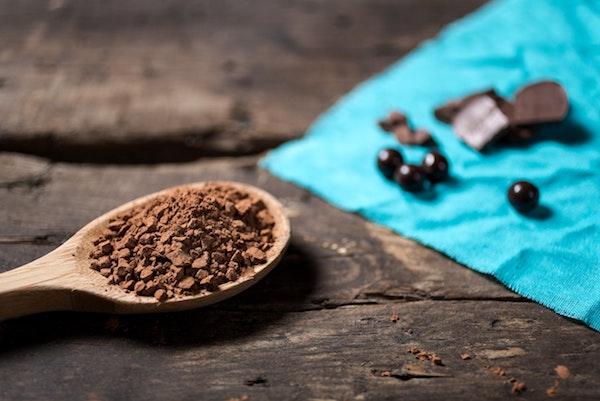
Eating 2.5 grams of pure natural cocoa powder serves to improve visual acuity in healthy young adults and in daylight conditions, according to research by the Universidad Complutense de Madrid (UCM) and the ICTAN (Institute of Food and Nutrition Science and Technology) of the CSIC.

The study, published in the Journal of Functional Foods, analyse the effects of two dietary polyphenols: cocoa flavanols and red berry anthocyanins.

“Although this was the baseline hypothesis, we did not see any effect either on adaptation to darkness or on visual acuity measured in low light conditions (mesopic vision), either with cocoa or with berries,” indicates María Cinta Puell Marín, researcher at the Optometry and Vision Department and Director of the Applied Vision Group at the UCM.

The researchers attributed the positive effects on photopic visual acuity to improved attention or processing of visual information thanks to the flavanols and theobromine, a group of alkaloids which stimulate the central nervous system and are found in cocoa, similar to caffeine in coffee.

In order to conduct the study, the volunteers drank a glass of milk with cocoa, berries, or just milk on three separate visits to provide an intervening washout period (time to eliminate the traces of each foodstuff). The levels of polyphenols in their urine were measured after three hours.

To measure visual acuity, letter charts were placed four metres from the individuals in different lighting conditions, one high (photopic) and one low (mesopic). Adaptation to darkness employed a psychophysical method measuring the sensitivity recovery dynamic subsequent to the whitening of the retinal photopigments.

Before these tests, a series of questionnaires and eye examinations were conducted to demonstrate the absence of any dietary factor or prior pathology which could give rise to any error in the analysis of the results and the conclusions drawn.

“We need to conduct certain further studies as proof of concept to confirm that the effect is real and that the results could be applied to the design of products which could help to improve visual acuity and attention in defined populations,” adds Sonia de Pascual-Teresa of the ICTAN-CSIC.

###

Media Contact
María Milán
[email protected]

Original Source

https://www.sciencedirect.com/science/article/pii/S1756464621000840?via%3Dihub

Related Journal Article

http://dx.doi.org/10.1016/j.jff.2021.104435

Tags: cocoa health benefitsdietary polyphenolsflavanols researchMedicine/HealthNutrition/NutrientsOphthalmologyphotopic visionvisual acuity improvement
Share12Tweet8Share2ShareShareShare2

Related Posts

How to sway group opinions: Encourage opponents to stay undecided

How to sway group opinions: Encourage opponents to stay undecided

March 23, 2026
Deep Learning Model Maps How Individual Cells Shape Disease Outcomes

Deep Learning Model Maps How Individual Cells Shape Disease Outcomes

March 20, 2026

Removing only 15 female sharks annually could endanger the entire population, scientists warn

March 20, 2026

Scientists Urge Fragrance Industry to Transition from Sustainability Talk to Active Funding of Plant Conservation

March 20, 2026
Please login to join discussion

POPULAR NEWS

  • blank

    Revolutionary AI Model Enhances Precision in Detecting Food Contamination

    96 shares
    Share 38 Tweet 24
  • Imagine a Social Media Feed That Challenges Your Views Instead of Reinforcing Them

    1003 shares
    Share 397 Tweet 248
  • Uncovering Functions of Cavernous Malformation Proteins in Organoids

    54 shares
    Share 22 Tweet 14
  • Promising Outcomes from First Clinical Trials of Gene Regulation in Epilepsy

    51 shares
    Share 20 Tweet 13

About

We bring you the latest biotechnology news from best research centers and universities around the world. Check our website.

Follow us

Recent News

In-Sensor Cryptography Links Physical Process to Digital Identity

Can Psychosocial Factors Influence Cancer Risk?

Depression Factors in Elderly: Pre vs. Post-COVID Analysis

Subscribe to Blog via Email

Success! An email was just sent to confirm your subscription. Please find the email now and click 'Confirm' to start subscribing.

Join 78 other subscribers
  • Contact Us

Bioengineer.org © Copyright 2023 All Rights Reserved.

Welcome Back!

Login to your account below

Forgotten Password?

Retrieve your password

Please enter your username or email address to reset your password.

Log In
No Result
View All Result
  • Homepages
    • Home Page 1
    • Home Page 2
  • News
  • National
  • Business
  • Health
  • Lifestyle
  • Science

Bioengineer.org © Copyright 2023 All Rights Reserved.