• HOME
  • NEWS
  • EXPLORE
    • CAREER
      • Companies
      • Jobs
    • EVENTS
    • iGEM
      • News
      • Team
    • PHOTOS
    • VIDEO
    • WIKI
  • BLOG
  • COMMUNITY
    • FACEBOOK
    • INSTAGRAM
    • TWITTER
Thursday, July 2, 2026
BIOENGINEER.ORG
No Result
View All Result
  • Login
  • HOME
  • NEWS
  • EXPLORE
    • CAREER
      • Companies
      • Jobs
        • Lecturer
        • PhD Studentship
        • Postdoc
        • Research Assistant
    • EVENTS
    • iGEM
      • News
      • Team
    • PHOTOS
    • VIDEO
    • WIKI
  • BLOG
  • COMMUNITY
    • FACEBOOK
    • INSTAGRAM
    • TWITTER
  • HOME
  • NEWS
  • EXPLORE
    • CAREER
      • Companies
      • Jobs
        • Lecturer
        • PhD Studentship
        • Postdoc
        • Research Assistant
    • EVENTS
    • iGEM
      • News
      • Team
    • PHOTOS
    • VIDEO
    • WIKI
  • BLOG
  • COMMUNITY
    • FACEBOOK
    • INSTAGRAM
    • TWITTER
No Result
View All Result
Bioengineer.org
No Result
View All Result
Home NEWS Science News Biology

$1.2 million grant to study evolution of Central American lizards

Bioengineer by Bioengineer
April 8, 2020
in Biology
Reading Time: 2 mins read
0
IMAGE
Share on FacebookShare on TwitterShare on LinkedinShare on RedditShare on Telegram

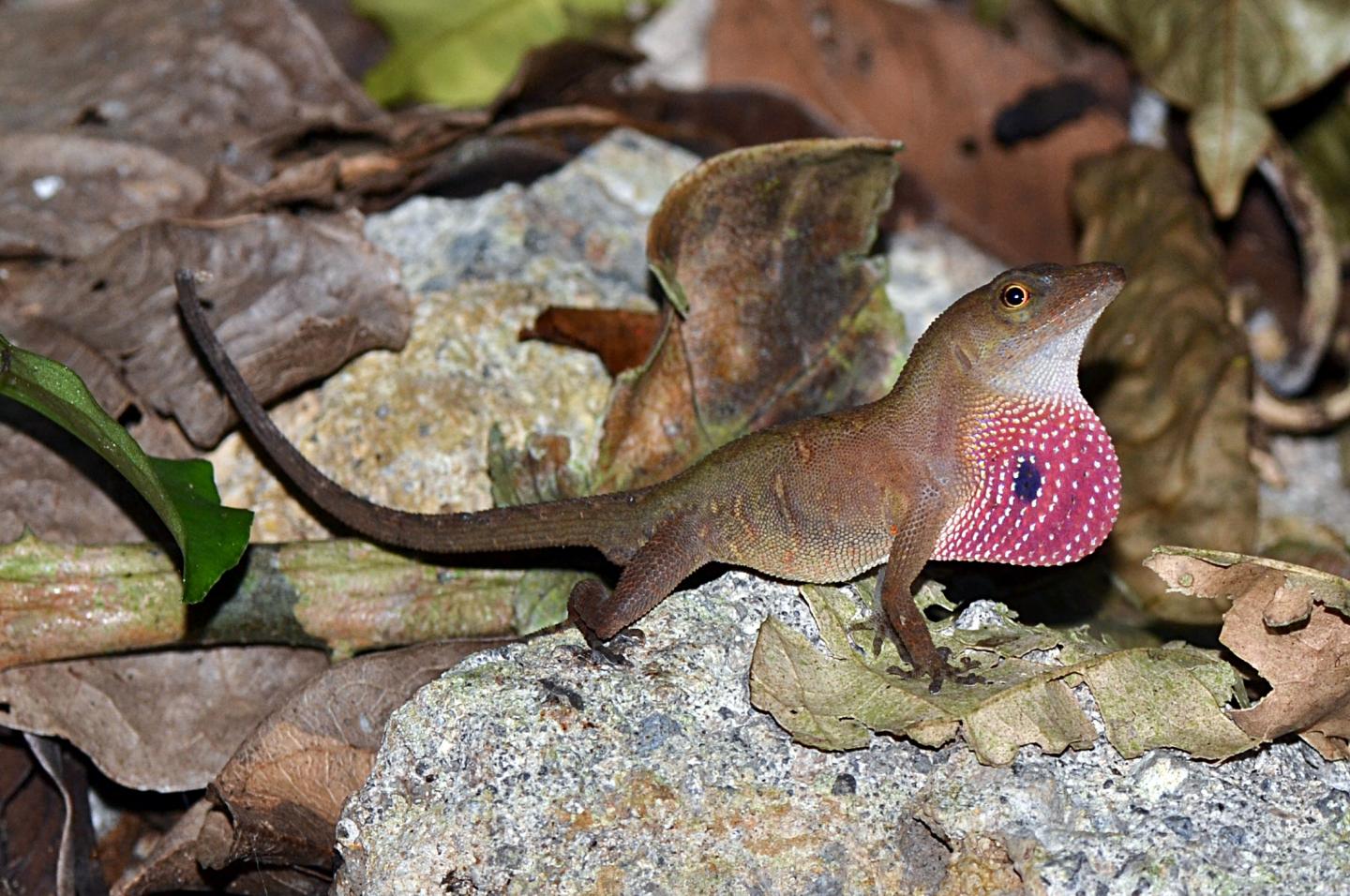
IMAGE

Credit: Jonathan Losos, Washington University in St. Louis

A research team led by a Washington University in St. Louis biologist was awarded $1.2 million for a CRISPR-based gene editing study of Anolis lizards.

Jonathan Losos, the William H. Danforth Distinguished Professor and professor of biology in Arts & Sciences, was awarded the three-year grant from the Human Frontier Science Program Organization, based in Strasbourg, France. His grant is one of only 28 selected from a candidate pool of more than 700 teams involving scientists with laboratories in more than 50 different countries.

“Thanks to breakthroughs in the ability to sequence DNA at large scale, many researchers are comparing the genomes of different species to try to identify the genes responsible for evolutionary adaptation,” Losos said. “Our project combines this approach with recent advances in gene editing to not only identify candidate genes, but to actually test their effects.

“Because of the extensive body of knowledge about their evolutionary ecology, Anolis lizards are the ideal group to combine genomic and organismal studies at multiple levels — including anatomy, physiology and behavior,” Losos said. “We now have the capability to identify genes potentially involved in adaptation and then to assess the traits they produce and how those traits may be beneficial in the species’ particular environment.”

Team member Doug Menke, an associate professor at the University of Georgia, developed techniques for creating the world’s first gene-edited reptiles: albino lizards. This new study will continue to advance the techniques.

First, the researchers will sequence the genomes of 200 species of Anolis lizards — primarily those from Central America — a group that Losos has spent his career studying. Species of anoles, as they are called, are renowned for evolving similar features when faced with similar environmental challenges.

By comparing species that live in similar circumstances — such as cool mountain forests — the researchers will look for DNA changes that have occurred only in those species and not in others. Those genetic changes potentially are the ones that have produced adaptation to the environmental condition shared by those species.

Then, using CRISPR, those changes will be introduced in the laboratory to eggs of one species, the brown anole, to see if the resulting individuals exhibit the trait in question — such as the ability to be active at low temperatures.

Finally, the individual brown anoles will be monitored in experimental conditions to see if the genetic trait leads to better growth or survival.

In addition to Menke, the team includes researchers from Tohoku University in Sendai, Japan, and Macquarie University in Sydney, Australia.

Losos is the director of the Living Earth Collaborative, a center dedicated to advancing the study of biodiversity to help ensure the future of Earth’s species in their many forms. He also leads an active research laboratory focused on the behavioral and evolutionary ecology of lizards.

###

Media Contact
Talia Ogliore
[email protected]

Original Source

https://source.wustl.edu/2020/04/1-2m-grant-to-study-evolution-of-central-american-lizards/

Tags: BiologyEvolutionGenesGenetics
Share12Tweet8Share2ShareShareShare2

Related Posts

New Study Reveals How to Reduce Risk of Dangerous Wildlife Encounters This Summer — Biology

New Study Reveals How to Reduce Risk of Dangerous Wildlife Encounters This Summer

July 2, 2026
Hepatic IFRD1 Alleviates Metabolic Dysfunction-Linked Steatohepatitis Through the GLUD1/α-KG Pathway — Biology

Hepatic IFRD1 Alleviates Metabolic Dysfunction-Linked Steatohepatitis Through the GLUD1/α-KG Pathway

July 2, 2026

Intricate Food Webs Support Ecosystem Health and Stability

July 2, 2026

Fatty Liver Accelerates Aggressive Cancer Metastasis

July 2, 2026
Please login to join discussion

POPULAR NEWS

  • Detection of EDCs in Breast Milk and Infant Urine Up to Six Months Highlights Early Exposure Risks

    77 shares
    Share 31 Tweet 19
  • Saying Goodbye to PGY-6: Pediatric Fellowship Realities

    103 shares
    Share 41 Tweet 26
  • New Drug Candidate Developed at McMaster Shows Potential for Treating Brain Cancer

    58 shares
    Share 23 Tweet 15
  • KTU Researchers Explore Ultrasound’s Role in Enhancing Blood Flow Beyond Diagnostics

    53 shares
    Share 21 Tweet 13

About

We bring you the latest biotechnology news from best research centers and universities around the world. Check our website.

Follow us

Recent News

Apelin-APLNR Pathway: Endothelial Roles in Health

Cross-Stage, Cross-Species Malaria CD8+ T Cell Antigens Identified

Food Web Complexity Drives Biodiversity Impact

Subscribe to Blog via Email

Enter your email address to subscribe to this blog and receive notifications of new posts by email.

Join 82 other subscribers
  • Contact Us

Bioengineer.org © Copyright 2023 All Rights Reserved.

Welcome Back!

Login to your account below

Forgotten Password?

Retrieve your password

Please enter your username or email address to reset your password.

Log In
No Result
View All Result
  • Homepages
    • Home Page 1
    • Home Page 2
  • News
  • National
  • Business
  • Health
  • Lifestyle
  • Science

Bioengineer.org © Copyright 2023 All Rights Reserved.