• HOME
  • NEWS
  • EXPLORE
    • CAREER
      • Companies
      • Jobs
    • EVENTS
    • iGEM
      • News
      • Team
    • PHOTOS
    • VIDEO
    • WIKI
  • BLOG
  • COMMUNITY
    • FACEBOOK
    • INSTAGRAM
    • TWITTER
Monday, December 22, 2025
BIOENGINEER.ORG
No Result
View All Result
  • Login
  • HOME
  • NEWS
  • EXPLORE
    • CAREER
      • Companies
      • Jobs
        • Lecturer
        • PhD Studentship
        • Postdoc
        • Research Assistant
    • EVENTS
    • iGEM
      • News
      • Team
    • PHOTOS
    • VIDEO
    • WIKI
  • BLOG
  • COMMUNITY
    • FACEBOOK
    • INSTAGRAM
    • TWITTER
  • HOME
  • NEWS
  • EXPLORE
    • CAREER
      • Companies
      • Jobs
        • Lecturer
        • PhD Studentship
        • Postdoc
        • Research Assistant
    • EVENTS
    • iGEM
      • News
      • Team
    • PHOTOS
    • VIDEO
    • WIKI
  • BLOG
  • COMMUNITY
    • FACEBOOK
    • INSTAGRAM
    • TWITTER
No Result
View All Result
Bioengineer.org
No Result
View All Result
Home NEWS Science News Cancer

Using DNA to build tool that may literally shine light on cancer

Bioengineer by Bioengineer
May 7, 2014
in Cancer
Reading Time: 2 mins read
0
Share on FacebookShare on TwitterShare on LinkedinShare on RedditShare on Telegram

Bioengineers at the University of Rome Tor Vergata and the University of Montreal have used DNA to develop a tool that detects and reacts to chemical changes caused by cancer cells and that may one day be used to deliver drugs to tumor cells.
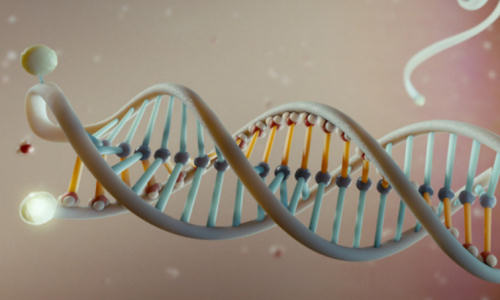
Using DNA to build tool that may literally shine light on cancer

The researchers’ nanosensor measures pH variations at the nanoscale — how acidic (a higher pH level) or alkaline (a lower pH level) it is. Many biomolecules, such as enzymes and proteins, are strongly regulated by small pH changes. These changes affect in turn biological activities such as enzyme catalysis, protein assembly, membrane function and cell death. There is also a strong relation between cancer and pH.

Cancer cells often display a lower pH compared to normal cells: the pH level inside cancer cells is higher than it is outside. “In living organisms, these small pH changes typically occur in tiny areas measuring only few hundred nanometers,” says senior author Prof. Francesco Ricci. “Developing sensors or nanomachines that can measure pH changes at this scale should prove of utility for several applications in the fields of in-vivo imaging, clinical diagnostics and drug-delivery.”

“DNA represents an ideal material to build sensors or nanomachines at the nanometer scale” says senior author Prof. Vallée-Bélisle. “By taking advantage of a specific DNA sequences that form pH-sensitive triple helix, we have designed a versatile nanosensor that can be programmed to fluoresce only at specific pH values.” Fluorescence is the emission of radiation, including visible light, caused by an exchange of energy. “This programming ability represents a key feature for clinical applications -we can design a specific sensor to send a fluorescent signal only when the pH reaches a specific value which is, for example, characteristic of a specific disease,” adds first author Andrea Idili.

In the future, this recently patented nanotechnology may also find applications in the development of novel drug-delivery platforms that release chemio-therapeutic drugs only in the viscinity of tumor cells.

Story Source:

The above story is based on materials provided by Universite de Montreal.
Share12Tweet8Share2ShareShareShare2

Related Posts

Evaluating Language Models in Oral Health Reporting

December 20, 2025

Zolbetuximab and Chemotherapy Show Promise for Advanced Gastric Cancer

December 18, 2025

Exploring Microbiota’s Impact on Gastrointestinal Cancer

December 18, 2025

CD44: Puerarin’s Potential Target Revealed in Analysis

December 18, 2025
Please login to join discussion

POPULAR NEWS

  • Nurses’ Views on Online Learning: Effects on Performance

    Nurses’ Views on Online Learning: Effects on Performance

    70 shares
    Share 28 Tweet 18
  • NSF funds machine-learning research at UNO and UNL to study energy requirements of walking in older adults

    71 shares
    Share 28 Tweet 18
  • Unraveling Levofloxacin’s Impact on Brain Function

    54 shares
    Share 22 Tweet 14
  • Exploring Audiology Accessibility in Johannesburg, South Africa

    51 shares
    Share 20 Tweet 13

About

We bring you the latest biotechnology news from best research centers and universities around the world. Check our website.

Follow us

Recent News

Parkinson’s Alters Brain DNA Methylation Patterns

Probiotics in Low Birth Weight Infants: Safety, Impact

Non-Invasive Biomarkers for Pediatric MASLD: GGT and FIB-4

Subscribe to Blog via Email

Enter your email address to subscribe to this blog and receive notifications of new posts by email.

Join 70 other subscribers
  • Contact Us

Bioengineer.org © Copyright 2023 All Rights Reserved.

Welcome Back!

Login to your account below

Forgotten Password?

Retrieve your password

Please enter your username or email address to reset your password.

Log In
No Result
View All Result
  • Homepages
    • Home Page 1
    • Home Page 2
  • News
  • National
  • Business
  • Health
  • Lifestyle
  • Science

Bioengineer.org © Copyright 2023 All Rights Reserved.