• HOME
  • NEWS
  • EXPLORE
    • CAREER
      • Companies
      • Jobs
    • EVENTS
    • iGEM
      • News
      • Team
    • PHOTOS
    • VIDEO
    • WIKI
  • BLOG
  • COMMUNITY
    • FACEBOOK
    • INSTAGRAM
    • TWITTER
Saturday, January 10, 2026
BIOENGINEER.ORG
No Result
View All Result
  • Login
  • HOME
  • NEWS
  • EXPLORE
    • CAREER
      • Companies
      • Jobs
        • Lecturer
        • PhD Studentship
        • Postdoc
        • Research Assistant
    • EVENTS
    • iGEM
      • News
      • Team
    • PHOTOS
    • VIDEO
    • WIKI
  • BLOG
  • COMMUNITY
    • FACEBOOK
    • INSTAGRAM
    • TWITTER
  • HOME
  • NEWS
  • EXPLORE
    • CAREER
      • Companies
      • Jobs
        • Lecturer
        • PhD Studentship
        • Postdoc
        • Research Assistant
    • EVENTS
    • iGEM
      • News
      • Team
    • PHOTOS
    • VIDEO
    • WIKI
  • BLOG
  • COMMUNITY
    • FACEBOOK
    • INSTAGRAM
    • TWITTER
No Result
View All Result
Bioengineer.org
No Result
View All Result
Home NEWS Science News Cancer

Understanding How Neuro Cells Turn Cancerous

Bioengineer by Bioengineer
July 23, 2014
in Cancer
Reading Time: 2 mins read
0
Share on FacebookShare on TwitterShare on LinkedinShare on RedditShare on Telegram

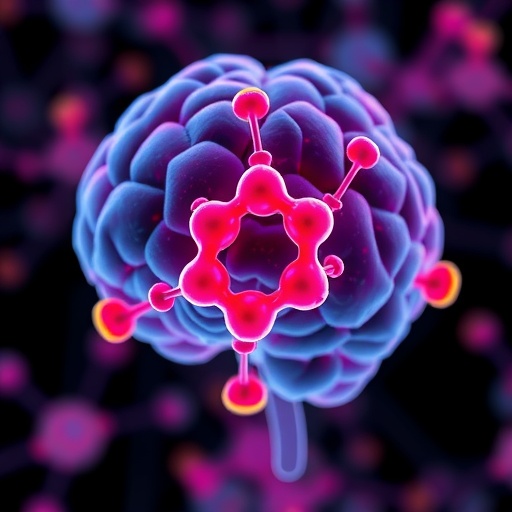
A new understanding of the mechanism that makes neuro cells turn cancerous brings us nearer to a treatment for brain/neuro tumours
Understanding How Neuro Cells Turn Cancerous

Scientists from the Sloan-Kettering Institute for Cancer Research in New York with the help of Plymouth University Peninsula Schools of Medicine and Dentistry have completed research which for the first time brings us nearer to understanding how some cells in the brain and nervous system become cancerous.

The results of their study are published in the prestigious journal Cancer Cell.

The research team led by Sloan-Kettering researchers studied a tumour suppressor called Merlin.

The results of the study have identified a new mechanism whereby Merlin suppresses tumours, and that the mechanism operates within the nucleus. The research team has discovered that unsuppressed tumour cells increase via a core signalling system, the hippo pathway, and they have identified the route and method by which this signalling occurs.

By identifying the signalling system and understanding how, when present, Merlin suppresses it, the way is open for research into drug therapies which may suppress the signalling in a similar way to Merlin.

Tumour suppressors exist in cells to prevent abnormal cell division in our bodies. The loss of Merlin leads to tumours in many cell types within our nervous systems. There are two copies of a tumour suppressor, one on each chromosome that we inherit from our parents. The loss of Merlin can be caused by random loss of both copies in a single cell, causing sporadic tumours, or by inheriting one abnormal copy and losing the second copy throughout our lifetime as is seen in the inherited condition of neurofibromatosis type 2 (NF2).

No effective therapy for these tumours exists, other than repeated invasive surgery aiming at a single tumour at a time and which is unlikely to eradicate the full extent of the tumours, or radiotherapy.

Story Source:

The above story is based on materials provided by University of Plymouth.
Share12Tweet8Share2ShareShareShare2

Related Posts

Advancements in Leptomeningeal Metastasis Treatment for NSCLC

January 9, 2026

GRIm Score Predicts Nivolumab Efficacy in Melanoma

January 9, 2026

Hindbrain Herniation Grading in Fetal MRI: A Study

January 9, 2026

Lemierre Syndrome in Teen: Rare Complication Revealed

January 9, 2026
Please login to join discussion

POPULAR NEWS

  • Enhancing Spiritual Care Education in Nursing Programs

    154 shares
    Share 62 Tweet 39
  • PTSD, Depression, Anxiety in Childhood Cancer Survivors, Parents

    145 shares
    Share 58 Tweet 36
  • Impact of Vegan Diet and Resistance Exercise on Muscle Volume

    46 shares
    Share 18 Tweet 12
  • SARS-CoV-2 Subvariants Affect Outcomes in Elderly Hip Fractures

    45 shares
    Share 18 Tweet 11

About

We bring you the latest biotechnology news from best research centers and universities around the world. Check our website.

Follow us

Recent News

PLCG2’s Role in Disease: Genetics, Signaling, Impacts

Exploring Hemoptysis in Elderly Patients: A Study

Advancing Research on Aging and Healthcare Transitions

Subscribe to Blog via Email

Enter your email address to subscribe to this blog and receive notifications of new posts by email.

Join 71 other subscribers
  • Contact Us

Bioengineer.org © Copyright 2023 All Rights Reserved.

Welcome Back!

Login to your account below

Forgotten Password?

Retrieve your password

Please enter your username or email address to reset your password.

Log In
No Result
View All Result
  • Homepages
    • Home Page 1
    • Home Page 2
  • News
  • National
  • Business
  • Health
  • Lifestyle
  • Science

Bioengineer.org © Copyright 2023 All Rights Reserved.