• HOME
  • NEWS
  • EXPLORE
    • CAREER
      • Companies
      • Jobs
    • EVENTS
    • iGEM
      • News
      • Team
    • PHOTOS
    • VIDEO
    • WIKI
  • BLOG
  • COMMUNITY
    • FACEBOOK
    • INSTAGRAM
    • TWITTER
Tuesday, February 3, 2026
BIOENGINEER.ORG
No Result
View All Result
  • Login
  • HOME
  • NEWS
  • EXPLORE
    • CAREER
      • Companies
      • Jobs
        • Lecturer
        • PhD Studentship
        • Postdoc
        • Research Assistant
    • EVENTS
    • iGEM
      • News
      • Team
    • PHOTOS
    • VIDEO
    • WIKI
  • BLOG
  • COMMUNITY
    • FACEBOOK
    • INSTAGRAM
    • TWITTER
  • HOME
  • NEWS
  • EXPLORE
    • CAREER
      • Companies
      • Jobs
        • Lecturer
        • PhD Studentship
        • Postdoc
        • Research Assistant
    • EVENTS
    • iGEM
      • News
      • Team
    • PHOTOS
    • VIDEO
    • WIKI
  • BLOG
  • COMMUNITY
    • FACEBOOK
    • INSTAGRAM
    • TWITTER
No Result
View All Result
Bioengineer.org
No Result
View All Result
Home NEWS Science News Stem Cells

Stem cells are a soft touch for nano-engineered biomaterials

Bioengineer by Bioengineer
June 9, 2014
in Stem Cells
Reading Time: 2 mins read
0
Share on FacebookShare on TwitterShare on LinkedinShare on RedditShare on Telegram

Scientists from Queen Mary University of London have shown that stem cell behaviour can be modified by manipulating the nanoscale properties of the material they are grown on – improving the potential of regenerative medicine and tissue engineering as a result.
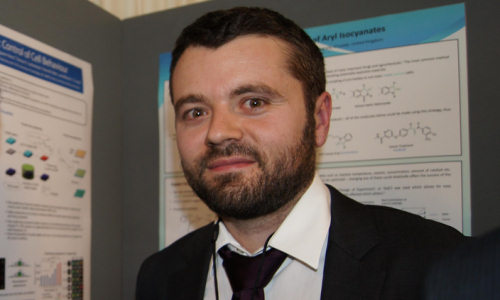
Stem cells are a soft touch for nano-engineered biomaterials

Stem cells are special because they are essential to the normal function of our organs and tissues. Previous research shows stem cells grown on hard substrates go on to multiply but do not differentiate: a process by which the cells specialise to perform specific functions in the body. In contrast, stem cells grown on softer surfaces do go on to differentiate.

In this new study, published in the journal Nano Letters, the researchers used tiny material patches known as nanopatches to alter the surface of the substrate and mimic the properties of a softer material.

“By changing the surface properties like the shape of the substrate at the nanoscale level, we tricked the stem cells to behave differently,” explains co-author Dr Julien Gautrot, from QMUL’s School of Engineering and Materials Science and the Institute of Bioengineering.

The team tested different sizes of nanopatches – from 3 microns to 100 nanometres (about one thousandth of the diameter of a hair). The stem cells behaved as if they were on a soft surface when in contact with the smallest patches because they can’t firmly grip them.

Dr Gautrot added: “This development will be useful when there’s a need to create a rigid implant to be inserted into the body. Potentially, such nanopatches could provide a soft touch to the surface of the implant so that cells from the neighbouring tissues are not perturbed by such a hard material.”

Story Source:

The above story is based on materials provided by Queen Mary, University of London.
Share14Tweet9Share3ShareShareShare2

Related Posts

Human stem cells treat spinal cord injury side effects in mice

October 4, 2016

Research into fly development provides insights into blood vessel formation

September 30, 2016

Fertility genes required for sperm stem cells

September 28, 2016

Regulatory RNA essential to DNA damage response

September 27, 2016
Please login to join discussion

POPULAR NEWS

  • Enhancing Spiritual Care Education in Nursing Programs

    157 shares
    Share 63 Tweet 39
  • Robotic Ureteral Reconstruction: A Novel Approach

    81 shares
    Share 32 Tweet 20
  • Digital Privacy: Health Data Control in Incarceration

    63 shares
    Share 25 Tweet 16
  • Study Reveals Lipid Accumulation in ME/CFS Cells

    57 shares
    Share 23 Tweet 14

About

We bring you the latest biotechnology news from best research centers and universities around the world. Check our website.

Follow us

Recent News

AI Multiomics Enhances Personalized Cardiovascular Disease Prediction

Theoretical Insights into Cluster Radioactivity Under Intense Laser Fields

Integrated Skin NTDs: Breaking Transmission, Bridging Knowledge Gaps

Subscribe to Blog via Email

Success! An email was just sent to confirm your subscription. Please find the email now and click 'Confirm' to start subscribing.

Join 73 other subscribers
  • Contact Us

Bioengineer.org © Copyright 2023 All Rights Reserved.

Welcome Back!

Login to your account below

Forgotten Password?

Retrieve your password

Please enter your username or email address to reset your password.

Log In
No Result
View All Result
  • Homepages
    • Home Page 1
    • Home Page 2
  • News
  • National
  • Business
  • Health
  • Lifestyle
  • Science

Bioengineer.org © Copyright 2023 All Rights Reserved.