• HOME
  • NEWS
  • EXPLORE
    • CAREER
      • Companies
      • Jobs
    • EVENTS
    • iGEM
      • News
      • Team
    • PHOTOS
    • VIDEO
    • WIKI
  • BLOG
  • COMMUNITY
    • FACEBOOK
    • INSTAGRAM
    • TWITTER
Monday, December 22, 2025
BIOENGINEER.ORG
No Result
View All Result
  • Login
  • HOME
  • NEWS
  • EXPLORE
    • CAREER
      • Companies
      • Jobs
        • Lecturer
        • PhD Studentship
        • Postdoc
        • Research Assistant
    • EVENTS
    • iGEM
      • News
      • Team
    • PHOTOS
    • VIDEO
    • WIKI
  • BLOG
  • COMMUNITY
    • FACEBOOK
    • INSTAGRAM
    • TWITTER
  • HOME
  • NEWS
  • EXPLORE
    • CAREER
      • Companies
      • Jobs
        • Lecturer
        • PhD Studentship
        • Postdoc
        • Research Assistant
    • EVENTS
    • iGEM
      • News
      • Team
    • PHOTOS
    • VIDEO
    • WIKI
  • BLOG
  • COMMUNITY
    • FACEBOOK
    • INSTAGRAM
    • TWITTER
No Result
View All Result
Bioengineer.org
No Result
View All Result
Home NEWS Science News Cancer

Researchers identify potential new strategy to treat ovarian cancer

Bioengineer by Bioengineer
April 28, 2014
in Cancer
Reading Time: 2 mins read
0
Share on FacebookShare on TwitterShare on LinkedinShare on RedditShare on Telegram

Scientists studying cancerous tumour tissues in a laboratory believe they have identified a potential new strategy to treat ovarian cancer.
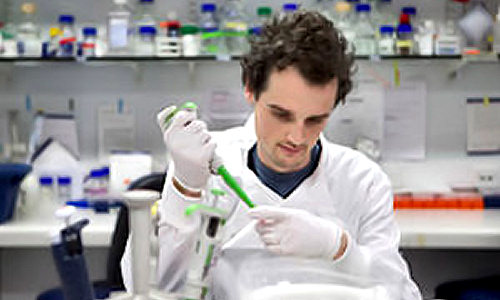
Researchers identify potential new strategy to treat ovarian cancer

Recently developed drugs have increased patient survival rates by targeting a tumour’s blood vessels that supply essential nutrients and oxygen to cancer cells.

However, many patients go on to develop resistance to these therapies and grow new blood vessels that spread the cancer again.

A team from The University of Manchester – part of the Manchester Cancer Research Centre – say blocking several avenues that tumour cells use to escape eradication at the same time is now the way forward rather than current drugs, which target only one molecule.

The research gives scientists the opportunity to develop new anticancer drugs that target ovarian tumour growth through the inhibition of the development of new tumour blood vessels.

Ovarian cancer is the deadliest of all gynaecological cancers, and since the majority of patients are diagnosed when the disease is at an advanced stage, prognosis is generally poor. Currently 7,000 women are diagnosed with the disease in the UK each year. Of those, more than 4,000 are not expected to survive but if women are diagnosed earlier 90% of those cases could beat the disease.

Scientists looked at the role of a particular set of molecules in controlling the activity of growth factors, proteins that are responsible for the stimulation of blood vessel growth.

Dr Egle Avizienyte, who co-led the research with Professor Gordon Jayson, said: “We know that a molecule called heparan sulphate (HS) is involved in blood vessel growth through facilitating interactions between the growth factors and their receptors that induce the development of new blood vessels. This is controlled by proteins known as HS6STs which regulate HS structure. By knocking down these proteins – reducing their levels in cancer cells – we were able to reduce activity of growth factors and stop ovarian cancer cells inducing the development of new blood vessels.”

The studies in tumour tissue in the laboratory showed that reducing HS6STs led to a reduction of tumour growth.

Professor Gordon Jayson, who leads the research group, said: “This knowledge gives us the opportunity to develop new anticancer drugs aimed against these growth factors. Targeting multiple factors and blocking several avenues that tumour cells use to escape eradication at the same time may be a better strategy than current drugs, which target only one molecule.”

Story Source:

The above story is based on materials provided by The University of Manchester, Alison Barbuti.

Share12Tweet8Share2ShareShareShare2

Related Posts

Evaluating Language Models in Oral Health Reporting

December 20, 2025

Zolbetuximab and Chemotherapy Show Promise for Advanced Gastric Cancer

December 18, 2025

Exploring Microbiota’s Impact on Gastrointestinal Cancer

December 18, 2025

CD44: Puerarin’s Potential Target Revealed in Analysis

December 18, 2025
Please login to join discussion

POPULAR NEWS

  • Nurses’ Views on Online Learning: Effects on Performance

    Nurses’ Views on Online Learning: Effects on Performance

    70 shares
    Share 28 Tweet 18
  • NSF funds machine-learning research at UNO and UNL to study energy requirements of walking in older adults

    71 shares
    Share 28 Tweet 18
  • Unraveling Levofloxacin’s Impact on Brain Function

    54 shares
    Share 22 Tweet 14
  • Exploring Audiology Accessibility in Johannesburg, South Africa

    51 shares
    Share 20 Tweet 13

About

We bring you the latest biotechnology news from best research centers and universities around the world. Check our website.

Follow us

Recent News

Transforming Lab Reports: AI Takes the Lead

Core Competencies of OR Nurses in Maritime Emergencies

Factors Behind Pediatric IV Cannula Complications in Ethiopia

Subscribe to Blog via Email

Enter your email address to subscribe to this blog and receive notifications of new posts by email.

Join 70 other subscribers
  • Contact Us

Bioengineer.org © Copyright 2023 All Rights Reserved.

Welcome Back!

Login to your account below

Forgotten Password?

Retrieve your password

Please enter your username or email address to reset your password.

Log In
No Result
View All Result
  • Homepages
    • Home Page 1
    • Home Page 2
  • News
  • National
  • Business
  • Health
  • Lifestyle
  • Science

Bioengineer.org © Copyright 2023 All Rights Reserved.