• HOME
  • NEWS
  • EXPLORE
    • CAREER
      • Companies
      • Jobs
    • EVENTS
    • iGEM
      • News
      • Team
    • PHOTOS
    • VIDEO
    • WIKI
  • BLOG
  • COMMUNITY
    • FACEBOOK
    • INSTAGRAM
    • TWITTER
Tuesday, December 16, 2025
BIOENGINEER.ORG
No Result
View All Result
  • Login
  • HOME
  • NEWS
  • EXPLORE
    • CAREER
      • Companies
      • Jobs
        • Lecturer
        • PhD Studentship
        • Postdoc
        • Research Assistant
    • EVENTS
    • iGEM
      • News
      • Team
    • PHOTOS
    • VIDEO
    • WIKI
  • BLOG
  • COMMUNITY
    • FACEBOOK
    • INSTAGRAM
    • TWITTER
  • HOME
  • NEWS
  • EXPLORE
    • CAREER
      • Companies
      • Jobs
        • Lecturer
        • PhD Studentship
        • Postdoc
        • Research Assistant
    • EVENTS
    • iGEM
      • News
      • Team
    • PHOTOS
    • VIDEO
    • WIKI
  • BLOG
  • COMMUNITY
    • FACEBOOK
    • INSTAGRAM
    • TWITTER
No Result
View All Result
Bioengineer.org
No Result
View All Result
Home NEWS Science News Cancer

How does prostate cancer form?

Bioengineer by Bioengineer
December 18, 2014
in Cancer
Reading Time: 2 mins read
0
Share on FacebookShare on TwitterShare on LinkedinShare on RedditShare on Telegram

Prostate cancer affects more than 23,000 men this year in the USA however the individual genes that initiate prostate cancer formation are poorly understood. Finding an enzyme that regulates this process could provide excellent new prevention approaches for this common malignancy. Sirtuin enzymes have been implicated in neurodegeneration, obesity, heart disease, and cancer. Research published online Thursday (Dec 18th) in The American Journal of Pathology show the loss of one of sirtuin (SIRT1) drives the formation of early prostate cancer (prostatic intraepithelial neoplasia) in mouse models of the disease.

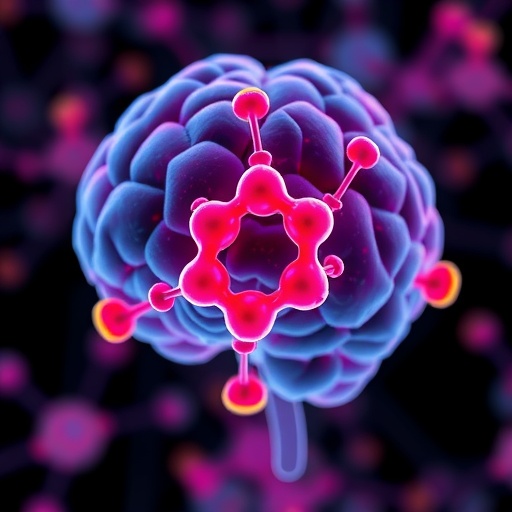
How does prostate cancer form

Photo Credit: SPL

“Using genetic deletion we found that SIRT1 normally restrains prostatic intraepithelial neoplasia in animals. Therefore too little SIRT1 may be involved in the cellular processes that starts human prostate cancer,” said Dr. Richard Pestell, M.D., Ph.D., MBA, executive Vice President of Thomas Jefferson University and Director of the Sidney Kimmel Cancer Center. “As we had shown that gene therapy based re expression of SIRT1 can block human prostate cancer tumor growth, and SIRT1 is an enzyme which can be targeted, this may be an important new target for prostate cancer prevention.”

The researchers led by Dr. Pestell, created a mouse model that lacked SIRT1 and noticed that these mice were more likely to develop an early form of prostate cancer called prostatic intraepithelial neoplasia (PIN).

Other researchers had shown that SIRT1 can defend the cell against damage from free radicals. Pestell’s group took the work further by showing that in this prostate cancer model, free radicals built up in cells lacking SIRT1. They showed that normally, SIRT1 proteins help activate a mitochondrial protein called SOD2, in turn activating those proteins to keep free-radical levels in check. When SIRT1 level are diminished, SOD2 is no longer effective at removing free radicals, allowing a dangerous build up in the cells, and leading to PIN.

“The next step,” says first author Gabriele DiSante, Ph.D., a postdoctoral fellow in the department of Cell Biology at Jefferson, “is to determine if this is also important in the development of human prostate cancer.”

Story Source:

The above story is based on materials provided by Thomas Jefferson University.
Share12Tweet8Share2ShareShareShare2

Related Posts

ctDNA-Guided Therapy Advances Muscle-Invasive Bladder Cancer

December 15, 2025

Spotting Pediatric Vertebral Tumors: Key Imaging Insights

December 15, 2025

Neoadjuvant Immunotherapy for Rectal Cancer: A Review

December 15, 2025

Phage Therapy and Microbiome in Blood Cancers

December 12, 2025
Please login to join discussion

POPULAR NEWS

  • Scientists Uncover Chameleon’s Telephone-Cord-Like Optic Nerves, A Feature Missed by Aristotle and Newton

    Scientists Uncover Chameleon’s Telephone-Cord-Like Optic Nerves, A Feature Missed by Aristotle and Newton

    122 shares
    Share 49 Tweet 31
  • Nurses’ Views on Online Learning: Effects on Performance

    69 shares
    Share 28 Tweet 17
  • NSF funds machine-learning research at UNO and UNL to study energy requirements of walking in older adults

    70 shares
    Share 28 Tweet 18
  • MoCK2 Kinase Shapes Mitochondrial Dynamics in Rice Fungal Pathogen

    71 shares
    Share 28 Tweet 18

About

We bring you the latest biotechnology news from best research centers and universities around the world. Check our website.

Follow us

Recent News

Pre-Processing Techniques Enhance Deep Learning Breast Image Segmentation

Evaluating Autism Portrayals: A Diagnostic Accuracy Study

Plasmonic BTO-on-SiN Achieves 200+ GBd Optical Modulation

Subscribe to Blog via Email

Enter your email address to subscribe to this blog and receive notifications of new posts by email.

Join 70 other subscribers
  • Contact Us

Bioengineer.org © Copyright 2023 All Rights Reserved.

Welcome Back!

Login to your account below

Forgotten Password?

Retrieve your password

Please enter your username or email address to reset your password.

Log In
No Result
View All Result
  • Homepages
    • Home Page 1
    • Home Page 2
  • News
  • National
  • Business
  • Health
  • Lifestyle
  • Science

Bioengineer.org © Copyright 2023 All Rights Reserved.