• HOME
  • NEWS
  • EXPLORE
    • CAREER
      • Companies
      • Jobs
    • EVENTS
    • iGEM
      • News
      • Team
    • PHOTOS
    • VIDEO
    • WIKI
  • BLOG
  • COMMUNITY
    • FACEBOOK
    • INSTAGRAM
    • TWITTER
Wednesday, April 1, 2026
BIOENGINEER.ORG
No Result
View All Result
  • Login
  • HOME
  • NEWS
  • EXPLORE
    • CAREER
      • Companies
      • Jobs
        • Lecturer
        • PhD Studentship
        • Postdoc
        • Research Assistant
    • EVENTS
    • iGEM
      • News
      • Team
    • PHOTOS
    • VIDEO
    • WIKI
  • BLOG
  • COMMUNITY
    • FACEBOOK
    • INSTAGRAM
    • TWITTER
  • HOME
  • NEWS
  • EXPLORE
    • CAREER
      • Companies
      • Jobs
        • Lecturer
        • PhD Studentship
        • Postdoc
        • Research Assistant
    • EVENTS
    • iGEM
      • News
      • Team
    • PHOTOS
    • VIDEO
    • WIKI
  • BLOG
  • COMMUNITY
    • FACEBOOK
    • INSTAGRAM
    • TWITTER
No Result
View All Result
Bioengineer.org
No Result
View All Result
Home NEWS Science News Biology

Zebrafish brain repair following concussion

Bioengineer by Bioengineer
February 10, 2018
in Biology
Reading Time: 2 mins read
0
Share on FacebookShare on TwitterShare on LinkedinShare on RedditShare on Telegram
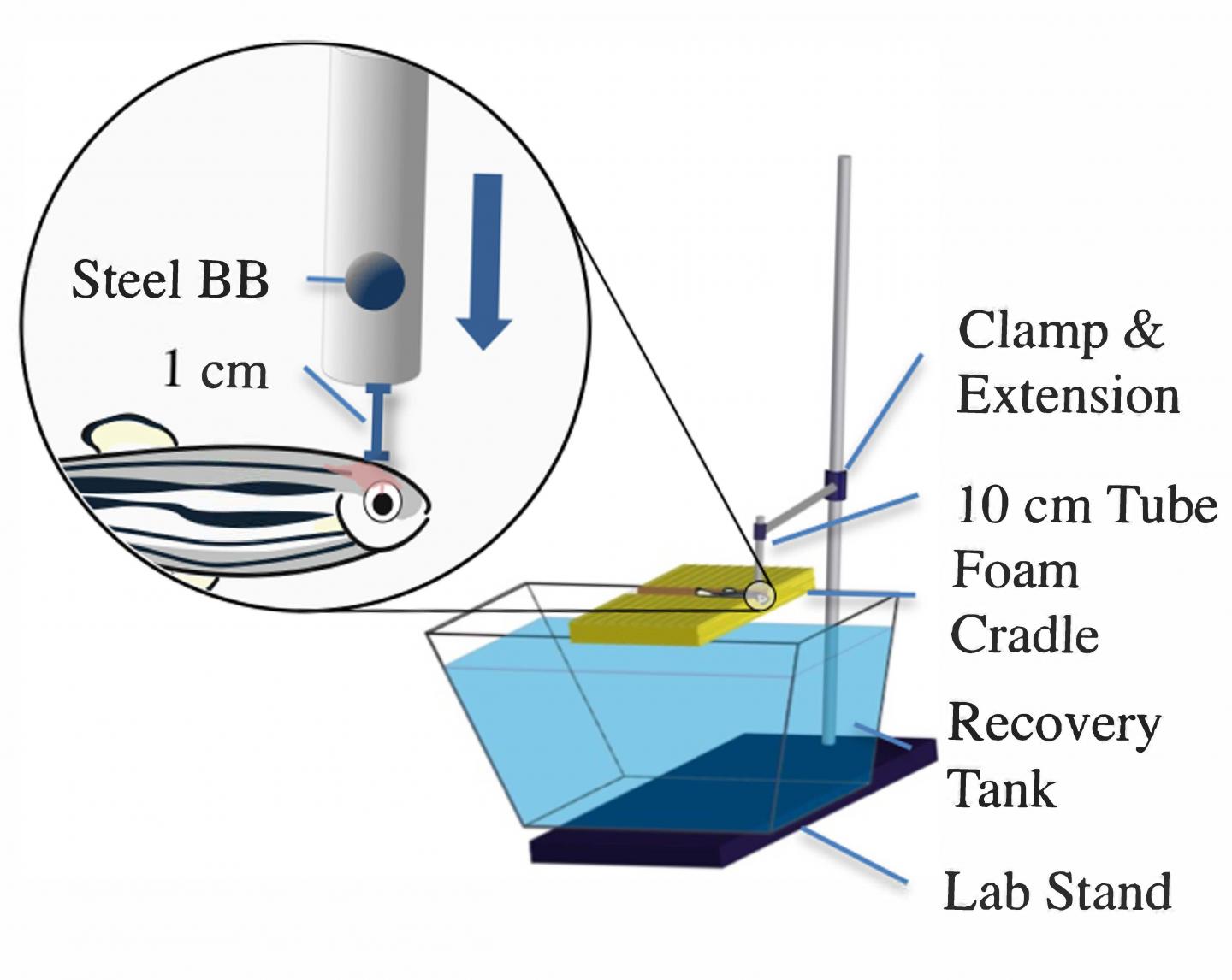
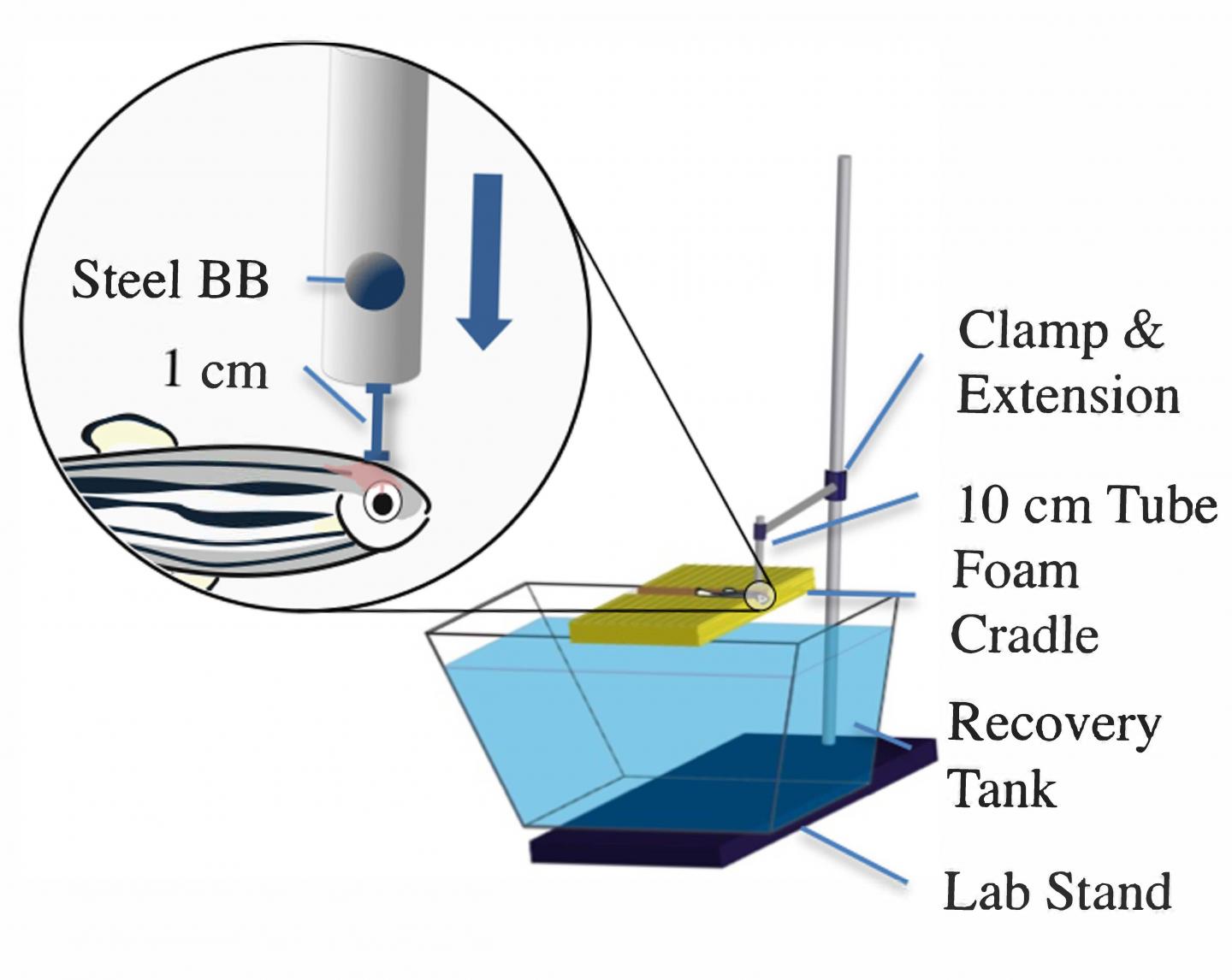
IMAGE

Credit: Maheras et al., eNeuro (2018)

A simple and inexpensive zebrafish model of concussion, reported in eNeuro, reveals the genetic pathways underlying the animal's remarkable ability to regenerate injured brain tissue. Understanding the mechanisms of regeneration in the zebrafish brain could ultimately help identify new ways to promote recovery from head injury in humans.

Mild traumatic brain injury, better known as concussion, is a common and underreported physical trauma caused by a blow to the head. Rory Spence and colleagues developed a technique to induce concussion and study recovery in a line of zebrafish that are very genetically similar to humans. They found that, within the first three days of injury, fish in the concussion group were slower to find a school of fish with which they previously swam, a measure of spatial memory which is impaired in other animal models of concussion and human patients. The researchers identified differences in the expression of genes involved in various aspects of the injury response and recovery, including the proliferation and migration of new brain cells, compared to control fish.

###

Article: Genetic Pathways of Neuroregeneration in a Novel Mild Traumatic Brain Injury Model in Adult Zebrafish
DOI: https://doi.org/10.1523/ENEURO.0208-17.2018

Corresponding author:

Rory Spence
Keck Science Department
Claremont, CA, USA
[email protected]

About eNeuro

eNeuro, the Society for Neuroscience's new open-access journal launched in 2014, publishes rigorous neuroscience research with double-blind peer review that masks the identity of both the authors and reviewers, minimizing the potential for implicit biases. eNeuro is distinguished by a broader scope and balanced perspective achieved by publishing negative results, failure to replicate or replication studies. New research, computational neuroscience, theories and methods are also published.

About The Society for Neuroscience

The Society for Neuroscience is the world's largest organization of scientists and physicians devoted to understanding the brain and nervous system. The nonprofit organization, founded in 1969, now has nearly 37,000 members in more than 90 countries and over 130 chapters worldwide.

Media Contact

David Barnstone
[email protected]
202-962-4000
@SfNJournals

http://www.sfn.org

Related Journal Article

http://dx.doi.org/10.1523/ENEURO.0208-17.2018

Share12Tweet8Share2ShareShareShare2

Related Posts

Chikungunya Virus Lingers in Joint Macrophages, Causes Chronic Disease

Chikungunya Virus Lingers in Joint Macrophages, Causes Chronic Disease

April 1, 2026
Unveiling How Two Genes Collaborate to Shape Dental and Facial Features

Unveiling How Two Genes Collaborate to Shape Dental and Facial Features

April 1, 2026

Do Your Genes Influence How Lifestyle Choices Affect Aging?

April 1, 2026

Combining Single-Cell Multiomics Unlocks Precise Identification of Rare Cell Types and States

March 31, 2026
Please login to join discussion

POPULAR NEWS

  • blank

    Revolutionary AI Model Enhances Precision in Detecting Food Contamination

    96 shares
    Share 38 Tweet 24
  • Imagine a Social Media Feed That Challenges Your Views Instead of Reinforcing Them

    1006 shares
    Share 398 Tweet 249
  • Promising Outcomes from First Clinical Trials of Gene Regulation in Epilepsy

    51 shares
    Share 20 Tweet 13
  • Popular Anti-Aging Compound Linked to Damage in Corpus Callosum, Study Finds

    43 shares
    Share 17 Tweet 11

About

We bring you the latest biotechnology news from best research centers and universities around the world. Check our website.

Follow us

Recent News

Dorsoventral Hippocampus Reactivates After Aversive Sleep

ALDH1L2 Controls ROS and Pancreatic Cell Changes

Tim-3 Agonist Limits ILC2, Eases Airway Reactivity

Subscribe to Blog via Email

Enter your email address to subscribe to this blog and receive notifications of new posts by email.

Join 78 other subscribers
  • Contact Us

Bioengineer.org © Copyright 2023 All Rights Reserved.

Welcome Back!

Login to your account below

Forgotten Password?

Retrieve your password

Please enter your username or email address to reset your password.

Log In
No Result
View All Result
  • Homepages
    • Home Page 1
    • Home Page 2
  • News
  • National
  • Business
  • Health
  • Lifestyle
  • Science

Bioengineer.org © Copyright 2023 All Rights Reserved.