• HOME
  • NEWS
  • EXPLORE
    • CAREER
      • Companies
      • Jobs
    • EVENTS
    • iGEM
      • News
      • Team
    • PHOTOS
    • VIDEO
    • WIKI
  • BLOG
  • COMMUNITY
    • FACEBOOK
    • INSTAGRAM
    • TWITTER
Wednesday, April 1, 2026
BIOENGINEER.ORG
No Result
View All Result
  • Login
  • HOME
  • NEWS
  • EXPLORE
    • CAREER
      • Companies
      • Jobs
        • Lecturer
        • PhD Studentship
        • Postdoc
        • Research Assistant
    • EVENTS
    • iGEM
      • News
      • Team
    • PHOTOS
    • VIDEO
    • WIKI
  • BLOG
  • COMMUNITY
    • FACEBOOK
    • INSTAGRAM
    • TWITTER
  • HOME
  • NEWS
  • EXPLORE
    • CAREER
      • Companies
      • Jobs
        • Lecturer
        • PhD Studentship
        • Postdoc
        • Research Assistant
    • EVENTS
    • iGEM
      • News
      • Team
    • PHOTOS
    • VIDEO
    • WIKI
  • BLOG
  • COMMUNITY
    • FACEBOOK
    • INSTAGRAM
    • TWITTER
No Result
View All Result
Bioengineer.org
No Result
View All Result
Home NEWS Science News Biology

WSU researchers document one of planet’s largest volcanic eruptions

Bioengineer by Bioengineer
October 11, 2017
in Biology
Reading Time: 3 mins read
0
Share on FacebookShare on TwitterShare on LinkedinShare on RedditShare on Telegram
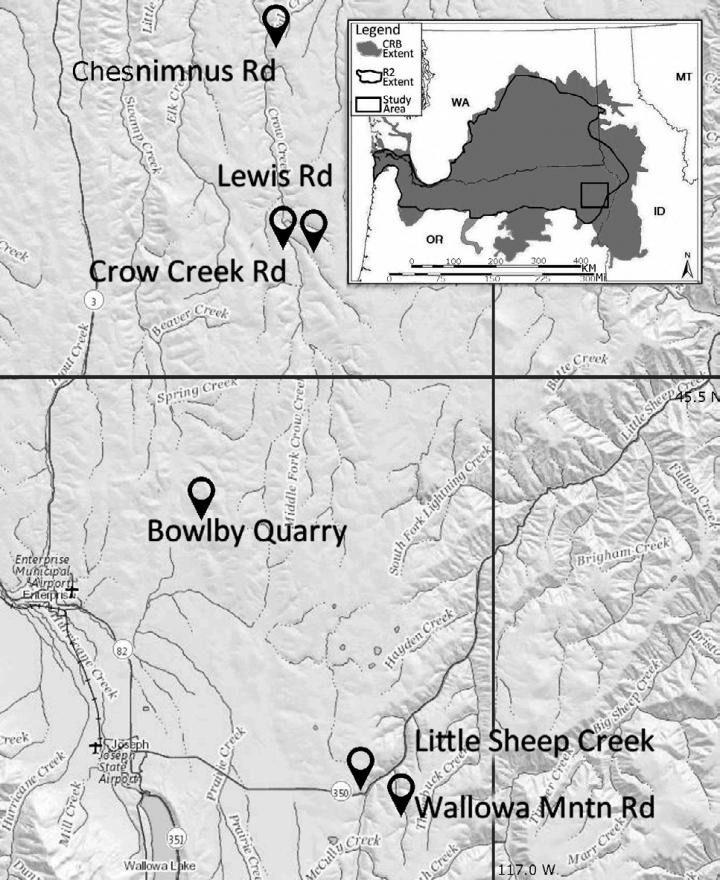
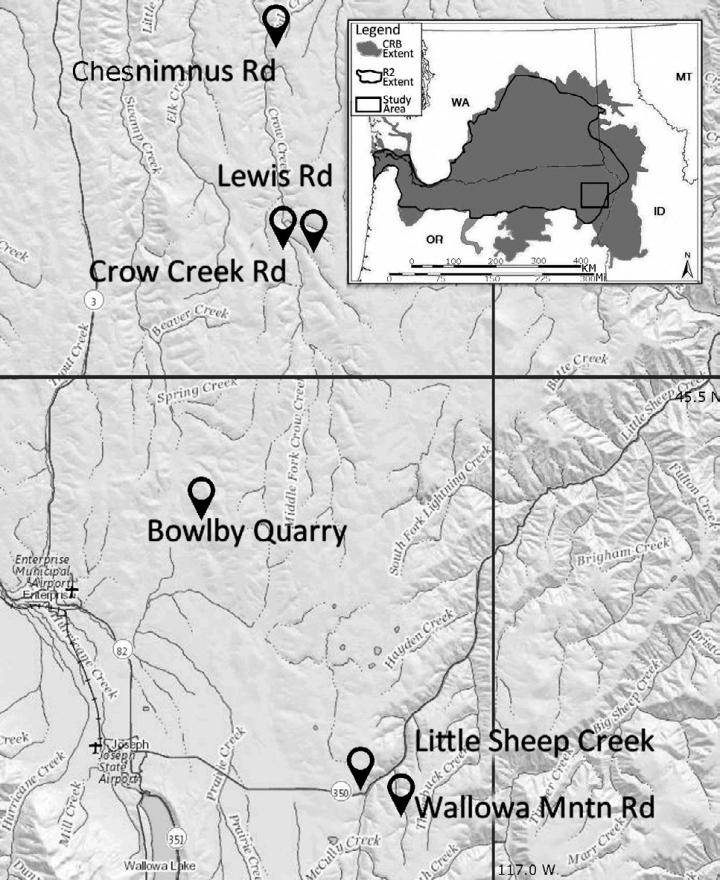
IMAGE

Credit: WSU

PULLMAN, Wash. – Washington State University researchers have determined that the Pacific Northwest was home to one of the Earth's largest known volcanic eruptions, a millennia-long spewing of sulfuric gas that blocked out the sun and cooled the planet.

Only two other eruptions — the basalt floods of the Siberian Traps and the Deccan Traps — were larger, and they led to two of the Earth's great extinctions.

"This would have been devastating regionally because of the acid-rain effect from the eruptions," said John Wolff, a professor in the WSU School of the Environment. "It did have a global effect on temperatures, but not drastic enough to start killing things, or it did not kill enough of them to affect the fossil record."

The research, which was funded by the National Science Foundation, appears in Geology, the top journal in the field. Starting 16.5 million years ago, they say, vents in southeast Washington and northeast Oregon put out a series of flows that reached nearly to Canada and all the way to the Pacific Ocean. The flows created the Wapshilla Ridge Member of the Grande Ronde Basalt, a kilometer-thick block familiar to travelers in the Columbia Gorge and most of Eastern Washington. The researchers say it is "the largest mapped flood basalt unit on Earth."

The researchers estimate that, over tens of thousands of years, the floods put out between 242 and 305 billion tons of sulfur dioxide. That's more than 4,000 times the output of the 1815 Mount Tambora eruption in present-day Indonesia. That eruption blanketed the Earth in an aerosol veil, creating the "Year Without A Summer" and food shortages across the northern hemisphere.

The volume of gas emitted from the Wapshilla Ridge lavas, said the researchers, "is equivalent to a Tambora eruption every day for 11 to 16 years."

Most of the lava's gases were released during the eruptions, but some of the gas remained trapped in crystals near the volcanic vents. Klarissa Davis, lead author of the paper, analyzed the gases as part of her doctoral studies. The other authors are Michael Rowe, now at the University of Auckland, and Owen Neill, now at the University of Michigan.

Wolff puts the eruption into one of three classes of cataclysms, the other two being a caldera eruption like the Yellowstone volcano and the impact of an asteroid. A similar eruption today "would devastate modern society globally," said Wolff.

The eruption also provides an insight into the workings of climate change. It took place in what is known as the Miocene Climactic Optimum, or MCO, when some 50 million years of cooling was interrupted by 5 to 6 degrees Fahrenheit of warming. But at its peak, the MCO had a brief cooling period that coincides with the Wapshilla eruption and its profusion of sulfur dioxide.

Sulfur dioxide is now bandied about as a possible tool for engineering a break in the Earth's current warming trend, though Wolff is not particularly keen on the idea.

"I personally think that it's probably a dangerous thing to do without understanding all of the possible consequences," he said. "But maybe we're getting an idea of some possible consequences here."

###

Media Contact

John Wolff, professor, Washington State University
[email protected]
509-335-2825
@WSUNews

Washington State University

Related Journal Article

http://dx.doi.org/10.1130/G39371.1

Share12Tweet8Share2ShareShareShare2

Related Posts

Do Your Genes Influence How Lifestyle Choices Affect Aging?

Do Your Genes Influence How Lifestyle Choices Affect Aging?

April 1, 2026
Combining Single-Cell Multiomics Unlocks Precise Identification of Rare Cell Types and States

Combining Single-Cell Multiomics Unlocks Precise Identification of Rare Cell Types and States

March 31, 2026

Genetically Engineered Marmosets Pave the Way for Advancements in Human Deafness Research

March 31, 2026

How Great Hammerhead Sharks Outsmart Ocean Temperature Swings: Insights from FIU Researchers

March 31, 2026
Please login to join discussion

POPULAR NEWS

  • blank

    Revolutionary AI Model Enhances Precision in Detecting Food Contamination

    96 shares
    Share 38 Tweet 24
  • Imagine a Social Media Feed That Challenges Your Views Instead of Reinforcing Them

    1006 shares
    Share 398 Tweet 249
  • Promising Outcomes from First Clinical Trials of Gene Regulation in Epilepsy

    51 shares
    Share 20 Tweet 13
  • Popular Anti-Aging Compound Linked to Damage in Corpus Callosum, Study Finds

    43 shares
    Share 17 Tweet 11

About

We bring you the latest biotechnology news from best research centers and universities around the world. Check our website.

Follow us

Recent News

Creating Desktop Particle Accelerators to Open New Frontiers in Scientific Research

Do Your Genes Influence How Lifestyle Choices Affect Aging?

Urban Systems and Traffic: Unequal Two-Way Links

Subscribe to Blog via Email

Enter your email address to subscribe to this blog and receive notifications of new posts by email.

Join 78 other subscribers
  • Contact Us

Bioengineer.org © Copyright 2023 All Rights Reserved.

Welcome Back!

Login to your account below

Forgotten Password?

Retrieve your password

Please enter your username or email address to reset your password.

Log In
No Result
View All Result
  • Homepages
    • Home Page 1
    • Home Page 2
  • News
  • National
  • Business
  • Health
  • Lifestyle
  • Science

Bioengineer.org © Copyright 2023 All Rights Reserved.