• HOME
  • NEWS
  • EXPLORE
    • CAREER
      • Companies
      • Jobs
    • EVENTS
    • iGEM
      • News
      • Team
    • PHOTOS
    • VIDEO
    • WIKI
  • BLOG
  • COMMUNITY
    • FACEBOOK
    • INSTAGRAM
    • TWITTER
Wednesday, May 13, 2026
BIOENGINEER.ORG
No Result
View All Result
  • Login
  • HOME
  • NEWS
  • EXPLORE
    • CAREER
      • Companies
      • Jobs
        • Lecturer
        • PhD Studentship
        • Postdoc
        • Research Assistant
    • EVENTS
    • iGEM
      • News
      • Team
    • PHOTOS
    • VIDEO
    • WIKI
  • BLOG
  • COMMUNITY
    • FACEBOOK
    • INSTAGRAM
    • TWITTER
  • HOME
  • NEWS
  • EXPLORE
    • CAREER
      • Companies
      • Jobs
        • Lecturer
        • PhD Studentship
        • Postdoc
        • Research Assistant
    • EVENTS
    • iGEM
      • News
      • Team
    • PHOTOS
    • VIDEO
    • WIKI
  • BLOG
  • COMMUNITY
    • FACEBOOK
    • INSTAGRAM
    • TWITTER
No Result
View All Result
Bioengineer.org
No Result
View All Result
Home NEWS Science News Biology

Working landscapes can support diverse bird species

Bioengineer by Bioengineer
June 5, 2019
in Biology
Reading Time: 2 mins read
0
IMAGE
Share on FacebookShare on TwitterShare on LinkedinShare on RedditShare on Telegram

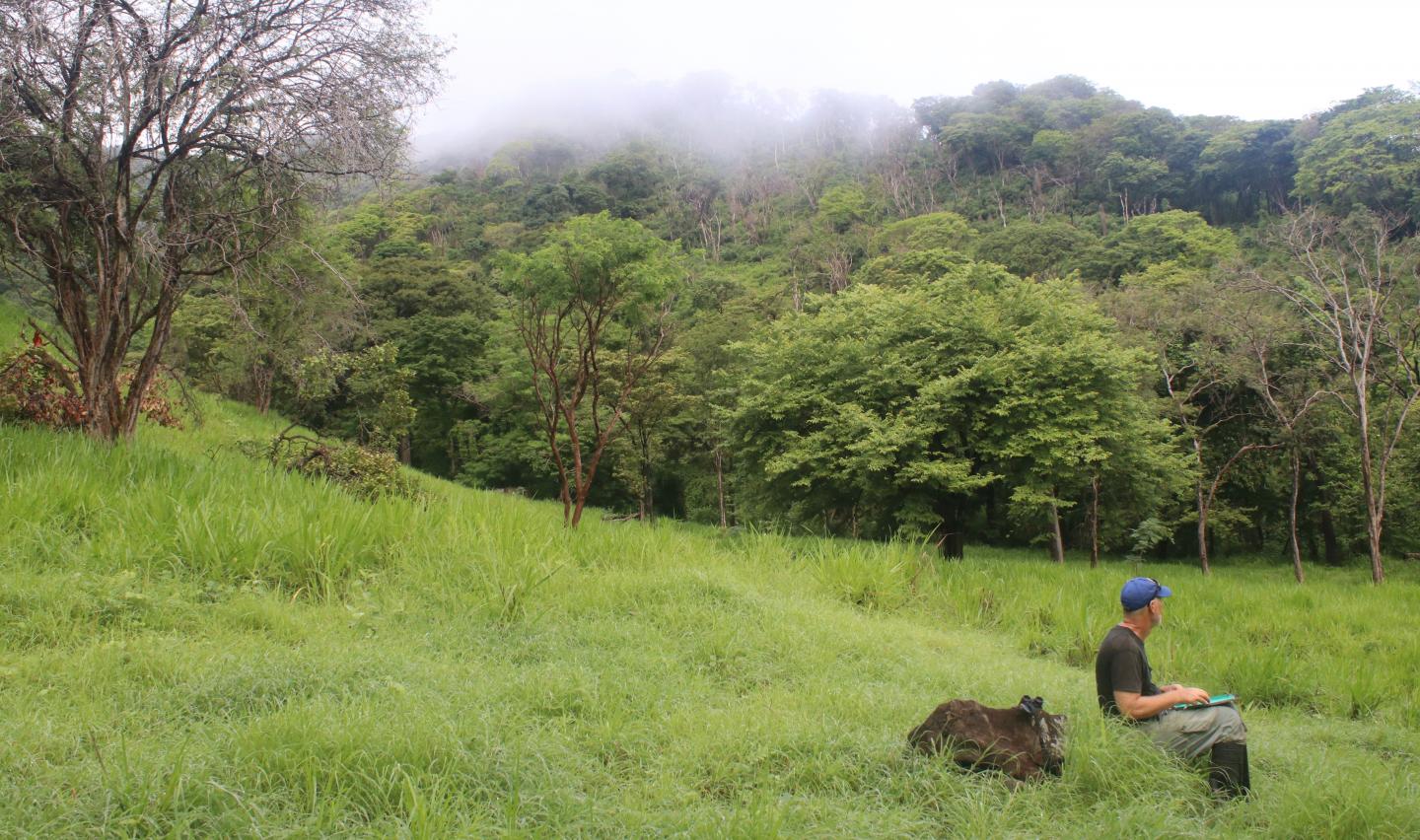
Forest patches are opportunities to conserve wildlife
IMAGE

Credit: Daniel Karp/UC Davis

Privately-owned, fragmented forests in Costa Rica can support as many vulnerable bird species as can nearby nature reserves, according to a study from the University of California, Davis.

The research suggests that working with landowners to conserve or restore forests on working landscapes can help protect wildlife. In Costa Rica, working landscapes include forest patches, crops, pastures and small towns.

The study, published June 5 in the Journal of Applied Ecology, found that reforesting private lands in regions that are wetter and already forested would yield the greatest gains for bird communities.

Such information is being used by local conservation organizations to help prioritize sites for rainforest restoration across the study region.

“With sufficient forest cover, working landscapes– even if degraded and fragmented– can maintain bird communities that are indistinguishable from those found in protected areas,” said lead author Daniel Karp, an assistant professor in the UC Davis Department of Wildlife, Fish and Conservation Biology. “This means that private landowners have great power to improve the conservation value of their lands through reforestation.”

WET, FORESTED AREAS A PRIORITY

As part of a research project funded by National Geographic, the authors surveyed Neotropical birds at 150 sites across northwestern Costa Rica over two years. They found that agricultural fields hosted diverse bird communities, but those birds were distinct from species found in protected areas. Agricultural species also had large distributions, making them of lower conservation value than species found in protected areas.

Privately-owned forests, however, housed the same bird species as those found in protected areas, despite being twice as fragmented and more degraded by logging, hunting and fires. This effect was especially strong in wetter and more forested areas. For instance, reforesting the wettest sites would increase bird similarity to protected areas four-fold compared to a two-fold increase in the driest sites, the study reported.

EVERY LITTLE BIT HELPS

After decades of decline, forest coverage in Costa Rica has been increasing since around the early 1990s. That is when the country began providing monetary incentives for landowners to maintain forest on their private lands.

In a related study published May 20 in the journal Ecological Applications, Karp showed that the amount of local forest within about 150 feet of a site was the biggest determinant of the species of birds found there.

“Tropical birds respond very strongly to the amount of forest in their immediate vicinity,” Karp said. “That’s encouraging because it means forest restoration on a small scale, even in small patches, can be really effective in safeguarding vulnerable bird species.”

###

Media Contact
Kat Kerlin
[email protected]

Tags: BiodiversityBiologyEcology/EnvironmentForestryPopulation Biology
Share12Tweet8Share2ShareShareShare2

Related Posts

Cutting-Edge Genomic Techniques Reveal Unexpected Cellular Changes in the Aging Brain — Biology

Cutting-Edge Genomic Techniques Reveal Unexpected Cellular Changes in the Aging Brain

May 12, 2026
USC Researchers Initiate Study on the Most Advanced Lab-Grown Kidney Structures — Biology

USC Researchers Initiate Study on the Most Advanced Lab-Grown Kidney Structures

May 12, 2026

Childbirth in Humans Is Not Uniquely Challenging Among Mammals, New Research Shows

May 12, 2026

From Complexity to Clarity: Unraveling the “Topological Laws” Governing Cell Death

May 11, 2026
Please login to join discussion

POPULAR NEWS

  • Research Indicates Potential Connection Between Prenatal Medication Exposure and Elevated Autism Risk

    842 shares
    Share 337 Tweet 211
  • New Study Reveals Plants Can Detect the Sound of Rain

    728 shares
    Share 290 Tweet 182
  • Salmonella Haem Blocks Macrophages, Boosts Infection

    62 shares
    Share 25 Tweet 16
  • Breastmilk Balances E. coli and Beneficial Bacteria in Infant Gut Microbiomes

    57 shares
    Share 23 Tweet 14

About

We bring you the latest biotechnology news from best research centers and universities around the world. Check our website.

Follow us

Recent News

Adults Born Preterm Have Smaller Coronary Arteries

Erin Roby Shares ECI Science Journey Insights

Immunogenetics Advances Personalised Psoriasis Diagnosis, Treatment

Subscribe to Blog via Email

Enter your email address to subscribe to this blog and receive notifications of new posts by email.

Join 82 other subscribers
  • Contact Us

Bioengineer.org © Copyright 2023 All Rights Reserved.

Welcome Back!

Login to your account below

Forgotten Password?

Retrieve your password

Please enter your username or email address to reset your password.

Log In
No Result
View All Result
  • Homepages
    • Home Page 1
    • Home Page 2
  • News
  • National
  • Business
  • Health
  • Lifestyle
  • Science

Bioengineer.org © Copyright 2023 All Rights Reserved.