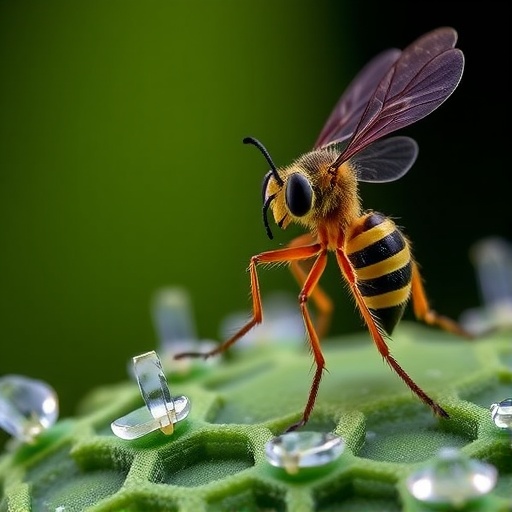
In a groundbreaking study, researchers Papachristos, Miller, and Klasson delve into the intricate dynamics of Wolbachia, a ubiquitous genus of bacteria, within the evolving populations of Neotropical Drosophila. This intricate relationship between host and symbiont challenges our understanding of evolutionary processes and adaptability in response to genomic shifts. The findings illuminate the co-speciation processes that shape the evolutionary path of these organisms and elaborate on how lifestyle transitions drive genomic consequences, underscoring the significance of microbial symbiosis in the natural world.
Wolbachia is renowned for its influence on the reproductive biology of its hosts, affecting traits such as fertility and mating systems. In the context of Drosophila, this relationship cannot be overlooked. The study illuminates the duality of Wolbachia as both a beneficial and potentially deleterious entity, depending on the environmental and genetic contexts in which these interactions unfold. The authors highlight the necessity of examining these dynamics through a lens that integrates evolutionary biology with genomic science, paving the way for deeper insights into symbiotic relationships across different taxa.
The research also emphasizes the concept of co-speciation, where two or more species evolve in tandem due to their ecological interactions. In their examination of Neotropical Drosophila, the authors propose that Wolbachia has indeed co-evolved with its hosts, exhibiting an intricate pattern of symbiotic integration. Gene flow between these species appears to depict a narrative of adaptability and resilience against environmental pressures, reinforcing the importance of studying these connections.
Of particular interest is the lifestyle transition observed in Drosophila and its associated genomic implications. As these flies adapt to new ecological niches, they experience significant genomic shifts that are recorded in their genetic makeup. This adaptation process is not merely a function of natural selection acting on the host; it is significantly influenced by the presence of Wolbachia, which may manipulate host traits in ways that enhance survival and reproductive success under changing environmental conditions.
The study’s methodological approach utilized cutting-edge genomic sequencing techniques, allowing the authors to examine the genetic architecture of both Wolbachia and its Drosophila hosts. This level of detail showcases the intricate interactions at play and highlights the potential for detecting genomic signatures of co-speciation and lifestyle shifts over time. By applying these advanced techniques, the researchers have opened a door to understanding the molecular underpinnings of symbiotic relationships.
In addition to co-speciation, the implications of these findings stretch into the realm of disease ecology. As Wolbachia is known to impact the population dynamics of its hosts, understanding these interactions provides critical insights into how such bacteria might be harnessed or controlled in the context of biocontrol strategies for pest species or disease vectors. The revelations presented in the study could lead to innovative applications in managing insect populations that harbor Wolbachia, particularly in agricultural settings or in controlling vector-borne diseases.
Moreover, the genomic insights garnered from this research serve as a foundation for future studies focusing on microbial interactions within other ecosystems. The principles of co-speciation and lifestyle transitions are likely to resonate across different host-symbiont pairings, unveiling broader patterns of evolutionary dynamics that have implications for biodiversity and ecosystem health. The collaborative nature of host-symbiont interactions observed in this study encourages interdisciplinary approaches that span molecular biology, ecology, and evolutionary theory.
In the broader context of climate change and habitat destruction, understanding the resilience mechanisms in Drosophila, facilitated by Wolbachia, becomes crucial. The study indicates that these genomic adaptations could be essential for survival in rapidly changing environments. By dissecting the genetic variations and their adaptive significance, the authors provide compelling evidence that microbial influences can significantly alter evolutionary trajectories.
As the research progresses, continued examination of Wolbachia’s role within Drosophila populations promises to reveal even more about the intricate dance of life on Earth. These findings highlight how microbiomes shape not only the biology of individual organisms but also the evolutionary patterns observable across species. The wegith of these revelations reaffirms the necessity of understanding microbial symbiosis as a central pillar of evolutionary biology.
Ultimately, this study underscores the potential for greater advancements in our comprehension of evolutionary biology and genomics. The narrative of Wolbachia and Drosophila serves as a testament to the complexity of life, intricately woven through the threads of co-evolution and adaptability. The ongoing exploration into this relationship sparks excitement within the scientific community and holds promise for further discoveries that could expand our understanding of not only Drosophila but also the broader ecological systems in which they play a pivotal role.
These insights pave the way for future research avenues, including genomic editing technologies, ecological forecasting, and the consequences of symbiotic relationships within environmental management frameworks. By mapping out the genetic landscape of powers held by Wolbachia, researchers can potentially formulate innovative strategies that leverage these microbes to enhance biodiversity conservation and ecosystem resilience.
In conclusion, the encounter of Wolbachia with Neotropical Drosophila represents a significant model for studying the intersection of host and symbiont dynamics, paving the way for a comprehensive understanding of evolutionary mechanisms that will be pertinent for future scientific endeavors. With ongoing investigations and an increasingly sophisticated analytical toolkit at our disposal, the realms of genomics and symbiotic research hold immense promise for the future.
Subject of Research: The impact of Wolbachia on the evolutionary dynamics and genomic consequences in Neotropical Drosophila.
Article Title: A co-speciation dilemma and a lifestyle transition with genomic consequences in Wolbachia of Neotropical Drosophila.
Article References:
Papachristos, K., Miller, W.J. & Klasson, L. A co-speciation dilemma and a lifestyle transition with genomic consequences in Wolbachia of Neotropical Drosophila.
BMC Genomics (2025). https://doi.org/10.1186/s12864-025-12340-z
Image Credits: AI Generated
DOI: 10.1186/s12864-025-12340-z
Keywords: Wolbachia, Drosophila, co-speciation, symbiosis, genomic transitions, evolution, microbial interactions, biodiversity.
Tags: beneficial and deleterious symbiontsco-speciation processesecological interactions driving evolutionevolutionary adaptability in bacteriaevolutionary biology and genomic science integrationgenomic shifts in symbiontsinsights into symbiotic relationshipslifestyle transitions in host-symbiont relationshipsmicrobial symbiosis significanceNeotropical Drosophila interactionsreproductive biology influenceWolbachia evolution