


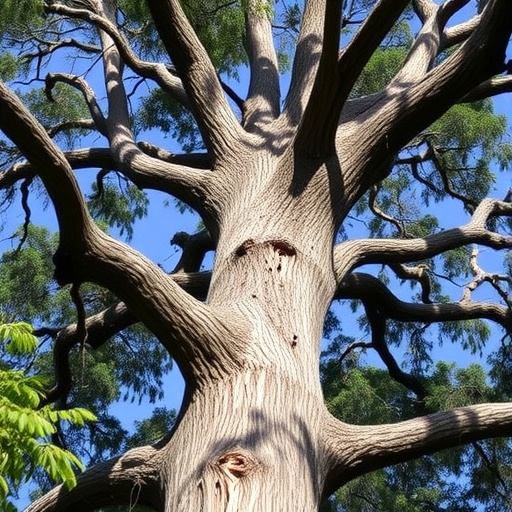
Across the Australian continent, a silent yet profound transformation is unfurling within its vast and diverse forest landscapes. Recent comprehensive research reveals a pervasive increase in tree mortality rates that spans multiple biomes and extends over eight decades, painting a concerning picture of changing forest dynamics under climatic pressures. This extensive inquiry compiles data collected from over 2,700 forest plots, spanning a striking diversity of ecosystems—from tropical savannas and rainforests to warm and cool temperate forests. The findings underline not only the scale of this ecological shift but also its alarming consistency and persistence, shedding light on a trend with deep implications for terrestrial carbon storage and global climate regulation.
The study, which chronicles forest dynamics in Australia from 1941 to 2023, offers an unprecedented temporal and spatial resolution of tree mortality patterns. By scrutinizing data amassed across such a broad temporal scale and ecological breadth, researchers have identified a marked escalation in mortality rates that transcends forest type and geographical location. This trend emerges even after meticulously accounting for variables related to forest stand structure, underscoring that the rise in mortality is not a mere artifact of forest composition changes but a genuine, climate-linked phenomenon.
Central to understanding this intensification of tree death is the incorporation of climatic factors into the analysis. Australia’s forests are subject to some of the world’s most extreme and variable weather regimes—ranging from intense droughts and heatwaves to episodic flooding—which exert profound stress on tree health and survival. The study reveals that forests located in regions with low moisture availability or high competition among trees experience a more pronounced increase in mortality rates. Such ecological stressors likely compound the vulnerability of trees, hastening mortality where resources are limited or where competition for those resources is intense.
Crucially, these mortality trends are not accompanied by compensatory increases in growth or basal area increments within stands. Rather, in many cases, basal area either stagnates or declines, implying that increased tree death is not being offset by new growth or forest regeneration. This disconnect accentuates concerns regarding the long-term carbon sequestration capacity of these ecosystems, given that living biomass represents a critical carbon sink. As trees perish at accelerating rates without parallel growth, the resilience and function of these biomes as natural carbon stores are jeopardized.
Morphological and functional traits of tree species add another dimension to the story. Species characterized by traits linked to rapid growth—such as low wood density, high specific leaf area, and shorter maximum height—demonstrate inherently higher average mortality levels. However, intriguingly, the rate at which mortality is rising does not significantly differ across species groups distinguished by these traits, highlighting that climate-driven stresses exert a broadly uniform pressure irrespective of growth strategies. This finding suggests a pervasive vulnerability that could restructure species composition and forest function over time.
Underlying the observed mortality surge is a clear association with rising temperatures. Over the last eight decades, as mean temperatures have climbed steadily, tree mortality rates have mirrored this upward trajectory. The metabolic and physiological stress imparted by heat extremes, likely exacerbated by concomitant drought, reduces tree vitality and augments susceptibility to pests, diseases, and ultimately death. This temperature-mortality linkage echoes broader patterns identified globally, cementing the role of climate warming as a critical driver of forest health decline.
Australia’s uniquely variable climate, often viewed as a natural incubator for resilient forest systems, paradoxically serves as a revealing arena for these perturbations. Historically adapted to withstand frequent and intense disturbances, Australian forests now face unprecedented challenges under shifting environmental baselines. The persistence of increased tree mortality across biomes previously deemed robust calls into question assumptions about ecosystem resilience in the face of accelerating climate change.
The ramifications of these findings extend beyond national borders and echo within global climate change discourse. Forests constitute vital carbon reservoirs, crucial in mitigating atmospheric CO2 concentrations. The loss of forest carbon stocks through heightened tree mortality threatens to shift terrestrial ecosystems from carbon sinks to sources, thereby intensifying climate feedback loops. This study, therefore, provides urgent evidence necessitating revised modeling of the global carbon budget that incorporates dynamic forest mortality trends.
Moreover, the comprehensive nature of this research, leveraging an exceptional database spanning over eight decades, affords unprecedented insight into temporal shifts that short-term studies might overlook. Longitudinal data are essential in discerning underlying trends amid natural variability, and this approach robustly delineates the creeping yet relentless nature of mortality increases in forest ecosystems.
From a management perspective, these revelations emphasize the critical need for adaptive strategies that consider ecological and climatic complexities. Conservation efforts must integrate the realities of intensifying stressors and their impacts on forest structure and function. Enhancing resilience may involve fostering species diversity, facilitating migration corridors, and prioritizing areas with higher moisture availability or lower competition stress, potentially buffering ecosystems against escalating mortality.
The nuanced understanding provided by this study also highlights knowledge gaps warranting future exploration. For instance, disentangling the relative contributions of abiotic stressors versus biotic agents such as pests or pathogens could refine intervention strategies. Additionally, leveraging remote sensing and predictive modeling could enhance the monitoring and forecasting of mortality trends under various climate scenarios, enabling proactive forest management.
In conclusion, the pervasive increase in tree mortality across Australia’s forest biomes represents a critical ecological signal reflecting the broader impacts of climate change on terrestrial ecosystems. This trend challenges the longstanding notion of forests as steadfast carbon sinks and natural buffers, instead revealing their vulnerability and dynamic nature amid environmental upheaval. The insights gleaned here underscore the urgency of global climate mitigation efforts and underscore the complex challenges of preserving forest health and function in a warming world.
These revelations mark a significant milestone in forest ecology, illustrating the profound transformations underway beneath the canopy. As the world grapples with climate instability, the silent demise of trees signals a clarion call to intensify scientific inquiry, conservation action, and policy responsiveness. Australia’s forests, once emblematic of resilience, now herald the intricate interplay between climate change and ecosystem vulnerability—a narrative that is both sobering and compelling in its global relevance.
Sustained monitoring, interdisciplinary research, and integrative management approaches will be indispensable in addressing the multidimensional challenges presented by escalating tree mortality. Only through a concerted global response can the enduring functionality of forest ecosystems be safeguarded, securing their vital role in climate regulation and biodiversity conservation for generations to come.
The implications of this study resonate far beyond Australian borders, providing a cautionary exemplar for other forested regions worldwide. As climate-induced stresses escalate, a reevaluation of forest dynamics underpins the need for global strategies that prioritize ecosystem resilience and carbon balance. The Australian experience adds a crucial chapter to the evolving narrative of climate-forest interactions, reinforcing the intricate interdependencies of climate, vegetation, and carbon cycling.
By illuminating the temporal persistence and geographical breadth of increasing tree mortality, this research invites a reevaluation of ecological baselines and the frameworks guiding conservation priorities. It compels scientists, policymakers, and the public alike to recognize the latent shifts within forests that may portend broader environmental transformations under climate change trajectories. Ultimately, these findings galvanize efforts to better understand, predict, and mitigate the impacts of this paramount ecological challenge.
Subject of Research: Global patterns and drivers of tree mortality, with a focus on Australian forest biomes under climate change.
Article Title: Pervasive increase in tree mortality across the Australian continent.
Article References:
Lu, R., Williams, L.J., Trouvé, R. et al. Pervasive increase in tree mortality across the Australian continent. Nat. Plants (2026). https://doi.org/10.1038/s41477-025-02188-2
Image Credits: AI Generated
DOI: https://doi.org/10.1038/s41477-025-02188-2
Tags: Australian tree mortalitybiodiversity loss in Australiacarbon storage in forestsclimate change impact on forestsclimate pressures on tree healthecological shifts in forest landscapes.forest dynamics research Australiaforest mortality patterns 1941-2023implications for global climate regulationlong-term ecological studiestree death rates in ecosystemstropical savannas and rainforests Australia



