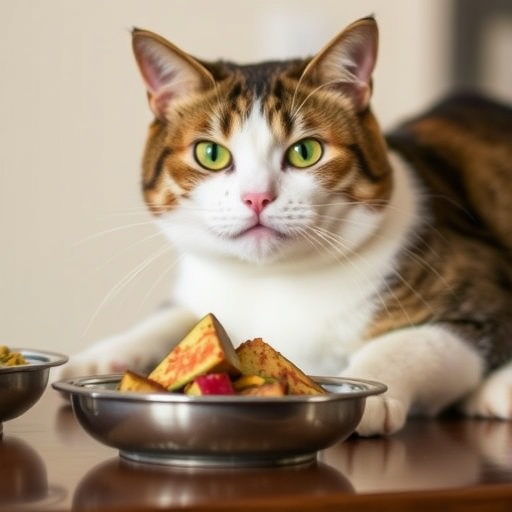
In the realm of feline feeding behavior, a groundbreaking study has shed light on a previously underestimated factor that governs cats’ appetite regulation: olfactory habituation and dishabituation. Conducted through a series of meticulously controlled feeding experiments, this new research reveals that the dynamic interplay between sensory novelty and the sense of smell critically influences feeding motivation in domestic cats. Unlike the traditional assumption that cats cease eating solely due to satiety, this work demonstrates that sensory adaptation to food odors plays a pivotal mediating role in modulating their food intake patterns.
The experimental design involved presenting cats with food across six successive feeding cycles, where each cycle consisted of a ten-minute feeding period followed by a ten-minute intermission. When cats were offered the same food in all cycles, their consumption progressively diminished, indicative of habituation to the consistent sensory cues provided by the familiar food odor. Conversely, when different foods were introduced in a sequential manner, this downturn in intake was substantially mitigated, suggesting that olfactory novelty can arrest or reverse the habituation process.
Further investigations took a critical approach to dissect the mechanisms underlying this phenomenon by testing whether a switch to a different food after multiple feeds of the same item could restore feeding interest. The results were striking: after five consecutive cycles presenting identical food, a significant decline in intake was observed; however, the introduction of a novel food in the sixth cycle resulted in a marked resurgence of consumption. Importantly, this increase was insensitive to the palatability ranking of the new food, emphasizing the role of sensory novelty itself rather than caloric or taste factors in reactivating feeding motivation.
Remarkably, the researchers extended these findings beyond the physical properties of the food by solely manipulating olfactory stimuli. Introducing the scent of a different food during the feeding regimen was sufficient to restore the diminished food intake in cats. This underscores the primacy of olfactory stimuli in modulating motivational states that guide feeding behavior. Continuous exposure to the odor of the same food between feeding sessions further reduced subsequent intake, an effect that could be reversed by introducing a novel scent during the intermissions.
This nuanced understanding of olfactory habituation accords with behavioral theories of sensory-specific satiety, wherein animals reduce consumption of particular foods as their sensory qualities become overfamiliar. However, the implications here extend deeper into recognizing the olfactory system as a dynamic regulator of motivation rather than a mere detector of food stimuli. Professor Masao Miyazaki, the lead investigator, emphasizes that the diminution of feeding is not a consequence of physiological satiation alone but reflects adaptive neural processes responding to sensory environments.
Central to the ecological validity of these findings is their ability to explain the distinctive pattern of feeding in domestic cats, characterized by multiple small meals distributed throughout the day, rather than prolonged feeding bouts. The olfactory habituation and dishabituation cycles naturally lead to fluctuating feeding drives aligned with changes in sensory input. This discovery situates sensory novelty, particularly through smell, as a potent catalyst in resetting feeding motivation, which may be evolutionarily advantageous for opportunistic predators like cats.
From a mechanistic perspective, the underlying neural circuits implicated likely involve olfactory bulb processing and higher-order integrative centers responsible for motivational states and reward evaluation, such as the hypothalamus and limbic system components. The habituation to a single odor may downregulate feeding-related neural pathways, while the introduction of a new odor provokes dishabituation, thereby reinstating neural responsiveness and subsequent feeding drive. These neurobehavioral dynamics warrant further exploration to delineate the specific neurotransmitter systems and plasticity events involved.
Practically, this study carries profound implications for feline nutritional management and welfare. Feeding strategies that incorporate olfactory variation could be strategically employed to enhance feeding motivation, especially in cats exhibiting diminished appetite due to aging, illness, or behavioral conditions. Pet food manufacturers may benefit from designing products with alternating scent profiles or intermittent introduction of novel aromas to sustain interest and prevent feeding lapses that compromise health.
Moreover, these insights extend potential therapeutic benefits by providing non-invasive behavioral interventions that exploit sensory novelty rather than pharmacological agents to stimulate food intake. This approach aligns with an increasing emphasis on enrichment modalities that respect naturalistic behavioral drives and sensory preferences, thereby promoting overall well-being in domestic animals.
In conclusion, the elegant experiments conducted by Miyazaki and colleagues elucidate a crucial sensory mechanism underpinning feeding motivation in domestic cats. By establishing that olfactory habituation decreases food intake and that dishabituation via novel odors restores it, the study revolutionizes our conceptual framework of feline feeding behavior. Not only does this advance fundamental science, but it also opens avenues for applied strategies targeting appetite modulation with precision and minimal invasiveness. Ongoing research into the neural substrates and long-term effects of sensory novelty manipulation promises to deepen our understanding of animal motivation and dietary regulation.
Subject of Research: Animals
Article Title: Olfactory habituation and dishabituation dynamically regulate feeding motivation in domestic cats
News Publication Date: 31-Mar-2026
Web References: http://dx.doi.org/10.1016/j.physbeh.2026.115328
References: Miyazaki et al., Physiology & Behavior, 2026
Image Credits: Masao Miyazaki
Keywords: Physiology, Animal physiology, Olfactory habituation, Feeding motivation, Domestic cats, Sensory novelty, Dishabituation
Tags: cat appetite regulationcat food odor and appetitecat satiety misconceptionsdomestic cat feeding experimentsfeline feeding behaviorfeline food intake patternsimpact of smell on cat appetitemitigating feeding habituation in catsolfactory dishabituation effectsolfactory habituation in catssensory adaptation and cat feedingsensory novelty in cat diet