• HOME
  • NEWS
  • EXPLORE
    • CAREER
      • Companies
      • Jobs
    • EVENTS
    • iGEM
      • News
      • Team
    • PHOTOS
    • VIDEO
    • WIKI
  • BLOG
  • COMMUNITY
    • FACEBOOK
    • INSTAGRAM
    • TWITTER
Monday, August 17, 2026
BIOENGINEER.ORG
No Result
View All Result
  • Login
  • HOME
  • NEWS
  • EXPLORE
    • CAREER
      • Companies
      • Jobs
        • Lecturer
        • PhD Studentship
        • Postdoc
        • Research Assistant
    • EVENTS
    • iGEM
      • News
      • Team
    • PHOTOS
    • VIDEO
    • WIKI
  • BLOG
  • COMMUNITY
    • FACEBOOK
    • INSTAGRAM
    • TWITTER
  • HOME
  • NEWS
  • EXPLORE
    • CAREER
      • Companies
      • Jobs
        • Lecturer
        • PhD Studentship
        • Postdoc
        • Research Assistant
    • EVENTS
    • iGEM
      • News
      • Team
    • PHOTOS
    • VIDEO
    • WIKI
  • BLOG
  • COMMUNITY
    • FACEBOOK
    • INSTAGRAM
    • TWITTER
No Result
View All Result
Bioengineer.org
No Result
View All Result
Home Headlines

Why can’t mTOR inhibitors kill cancer? Study explains

Bioengineer.org by Bioengineer.org
January 31, 2018
in Headlines, Health, Science News
Reading Time: 2 mins read
0
Share on FacebookShare on TwitterShare on LinkedinShare on RedditShare on Telegram
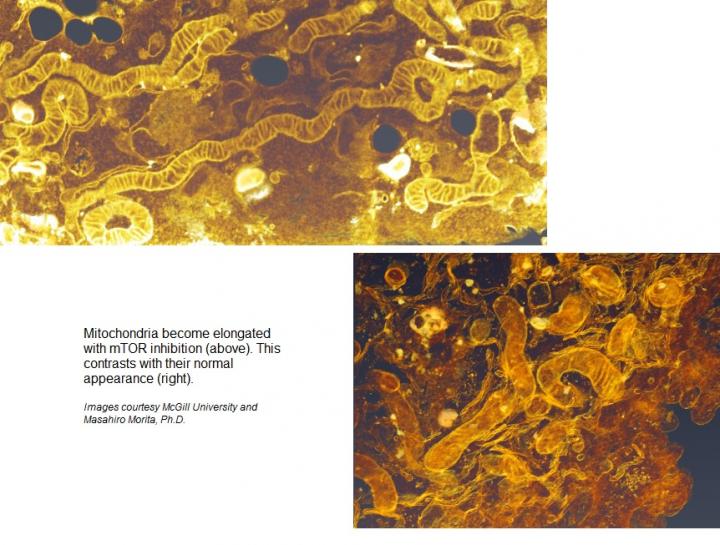
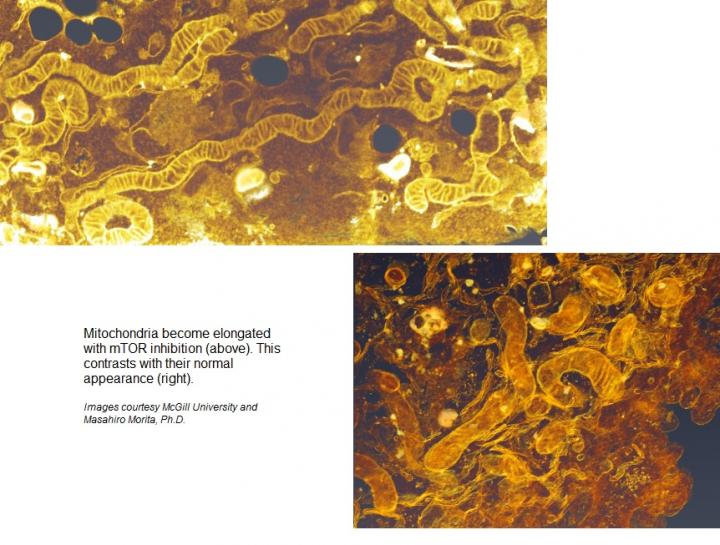
IMAGE

Credit: McGill University and Masahiro Morita, Ph.D.

Anti-cancer drugs called mTOR inhibitors slow the growth of cancer cells but show limited ability to cause cancer cell death. New studies explain why.

Masahiro Morita, Ph.D., assistant professor of molecular medicine in the Joe R. & Teresa Lozano Long School of Medicine at UT Health San Antonio, contributed to the research. He is an investigator with the university's Sam & Ann Barshop Institute for Longevity & Aging Studies.

Before joining UT Health, Dr. Morita was a postdoctoral fellow at McGill University in Montreal, Quebec.

The cancer drugs act on a cell regulator called mTOR (Mechanistic Target of Rapamycin).

mTOR controls a process that determines how large our cells are and how many cells we have. mTOR also impacts mitochondria, which are the energy centers in our cells.

Mitochondria become elongated when mTOR activity is inhibited, Dr. Morita said. When mTOR is stimulated, these energy centers become fragmented.

"Increased fragmentation of mitochondria is implicated in some cancers," Dr. Morita said.

mTOR controls expression of proteins that alter mitochondrial structure and function in ways that unexpectedly protect cells from death, the team reported.

This is why the cancer cells targeted by mTOR therapy are not dying.

"The next step is to test tandem therapy in cell studies, because it makes sense to combine an mTOR inhibitor with an agent that does kill cancer cells," Dr. Morita said.

The findings are in Molecular Cell.

###

The University of Texas Health Science Center at San Antonio, with missions of teaching, research and healing, is one of the country's leading health sciences universities and is now called UT Health San Antonio™. UT Health's schools of medicine, nursing, dentistry, health professions and graduate biomedical sciences have produced more than 33,000 alumni who are advancing their fields throughout the world. With seven campuses in San Antonio and Laredo, UT Health San Antonio has a FY 2018 revenue operating budget of $838.4 million and is the primary driver of its community's $37 billion biomedical and health care industry. For more information on the many ways "We make lives better®," visit http://www.uthscsa.edu.

Media Contact

Will Sansom
[email protected]
210-567-2579
@UTHealthSA

Sidebar Shop

Share12Tweet8Share2ShareShareShare2

Related Posts

Global Cancer Genomics Enabled by Centralized Processing of Frozen Tumor Tissues

August 17, 2026

Miniature Soft Robot Actively Regulates Blood Flow Through Blocked Vessels

August 17, 2026

Engineered macrophages programmed to target bacteria combat infections in immunosuppressed patients

August 17, 2026

Aggregation-Induced Emission Achieves Ultra-Narrow 13-Nanometer Spectral Bandwidth

August 17, 2026
Please login to join discussion

POPULAR NEWS

  • Global Cancer Genomics Enabled by Centralized Processing of Frozen Tumor Tissues

    29 shares
    Share 12 Tweet 7
  • Miniature Soft Robot Actively Regulates Blood Flow Through Blocked Vessels

    29 shares
    Share 12 Tweet 7
  • Engineered macrophages programmed to target bacteria combat infections in immunosuppressed patients

    29 shares
    Share 12 Tweet 7
  • Aggregation-Induced Emission Achieves Ultra-Narrow 13-Nanometer Spectral Bandwidth

    29 shares
    Share 12 Tweet 7

About

We bring you the latest biotechnology news from best research centers and universities around the world. Check our website.

Follow us

Recent News

Global Cancer Genomics Enabled by Centralized Processing of Frozen Tumor Tissues

Miniature Soft Robot Actively Regulates Blood Flow Through Blocked Vessels

Engineered macrophages programmed to target bacteria combat infections in immunosuppressed patients

Subscribe to Blog via Email

Enter your email address to subscribe to this blog and receive notifications of new posts by email.

Join 85 other subscribers
  • Contact Us

Bioengineer.org © Copyright 2023 All Rights Reserved.

Welcome Back!

Login to your account below

Forgotten Password?

Retrieve your password

Please enter your username or email address to reset your password.

Log In
No Result
View All Result
  • Homepages
    • Home Page 1
    • Home Page 2
  • News
  • National
  • Business
  • Health
  • Lifestyle
  • Science

Bioengineer.org © Copyright 2023 All Rights Reserved.