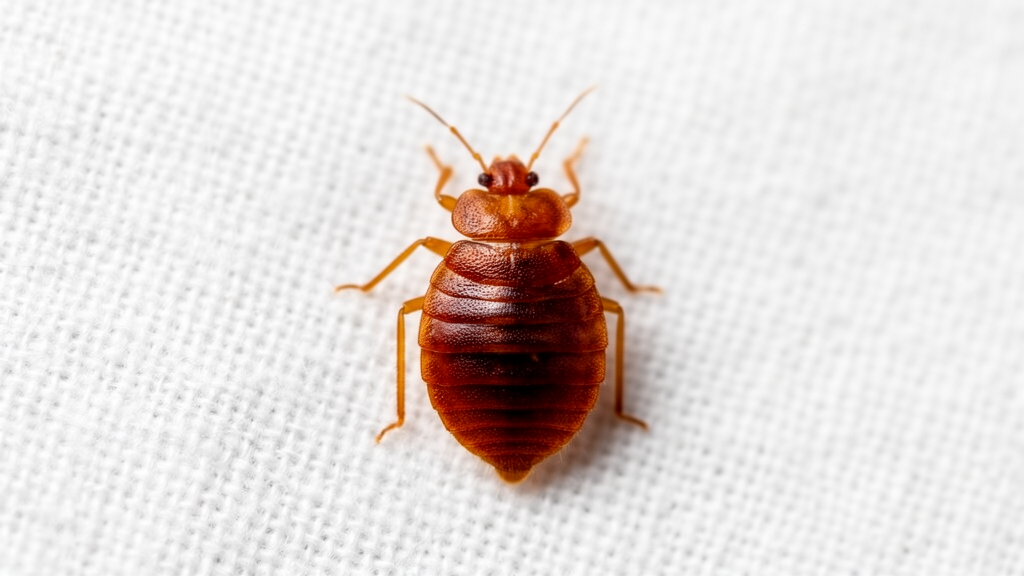
A systematic review synthesizes experimental and theoretical evidence demonstrating that bed bugs fail to function as biological vectors of human infectious diseases due to the cumulative effect of physiological and behavioral barriers rather than any single biological constraint. Although bed bugs can harbor human pathogens transiently under laboratory conditions, multiple complementary defenses prevent pathogen survival, migration, and delivery to subsequent hosts. These integrated constraints include rapid innate immune activation, absence of pathogen dissemination beyond the midgut, lack of salivary gland colonization, infrequent host switching, and rare defecation on human skin during feeding.
The investigation, authored by Li Lim and Abdul Hafiz Ab Majid and published in Discover Life, evaluated the biological mechanisms governing vector incompetence across two primary pest species: Cimex lectularius, which predominates in temperate regions, and Cimex hemipterus, which is more common across tropical and subtropical zones. Both species are obligate hematophagous ectoparasites that feed almost exclusively on human blood. While their close taxonomic relationship to triatomine bugs—competent vectors of Trypanosoma cruzi—has historically prompted public health scrutiny, the authors conducted a multi-stage synthesis to resolve why bed bugs remain epidemiologically irrelevant as disease vectors.
The researchers applied a structured five-stage review methodology that encompassed research question formulation, study identification, screening, data extraction with comparative synthesis, and reporting. A systematic literature search was updated through July 26, 2025, across the Scopus, PubMed, and Google Scholar databases using targeted search terms including “bed bug AND immunity,” “bed bug AND vector,” and “Why bed bugs cannot transmit diseases.” Across all publication years, the search initially identified 361 records following duplicate removal. Title and abstract screening narrowed the field to 55 articles for full-text assessment, after which 30 articles were excluded for lacking relevance or failing inclusion criteria, yielding 21 included studies.
The 21 reviewed studies systematically addressed six major categories of hypotheses: antimicrobial activity and immune defenses, limited host range, biological and behavioral traits, symbiont-mediated effects, cellular immune responses, and the upregulation of immune-related genes such as defensins and prolixicins. To contextualize these findings, the authors extracted comparative data from literature on established disease vectors, including mosquitoes, ticks, tsetse flies, sand flies, and triatomine bugs. These comparisons evaluated physiological checkpoints, pathogen development cycles, feeding durations, mobility, transmission routes, defecation patterns, and host-switching dynamics.
Laboratory research documented that bed bugs can ingest and transiently harbor several human pathogens, including Trypanosoma cruzi, Bartonella quintana, Borrelia recurrentis, and hepatitis B virus. In controlled experimental settings, bed bugs have transmitted Trypanosoma cruzi to mice through fecal contamination. However, field studies consistently document that natural infection rates in wild bed bug populations are extremely low or entirely absent. Similarly, while viral particles or viral DNA from hepatitis B virus and human immunodeficiency virus can persist inside bed bugs for days to weeks following an infectious blood meal, studies show no evidence of viral replication, salivary gland invasion, or transmission to humans, and large-scale bed bug eradication programs have produced no measurable change in hepatitis B prevalence.
This absence of transmission contrasts sharply with related insects within the family Cimicidae, such as swallow bugs (Oeciacus vicarius) and bat bugs (Stricticimex species), which serve as competent biological vectors for arboviruses among avian and chiropteran hosts. In competent arthropod vectors such as mosquitoes, ticks, tsetse flies, and sand flies, ingested pathogens successfully breach the midgut, undergo replication or development, and migrate to salivary glands or fecal reservoirs. In tsetse flies, for example, Trypanosoma brucei differentiates in the midgut and migrates to salivary glands to produce infective metacyclic forms delivered during feeding. Bed bugs consistently fail at each of these critical biological checkpoints.
A primary physiological barrier identified in the review is the bed bug midgut epithelium. Following ingestion of microbial agents, bed bugs mount rapid innate immune responses via the Toll and Immune Deficiency (IMD) signaling pathways. Transcriptomic analyses confirm that microbial exposure induces substantial upregulation of antimicrobial peptides, notably defensins, prolixicins, and lysozymes, creating an intensely hostile gut lumen. This antimicrobial response prevents human pathogens from traversing the midgut barrier and entering the hemocoel. Furthermore, while environmental bacteria stimulate robust peptide expression, human pathogens like Borrelia species elicit weak or atypical responses, yet these spirochetes rapidly lose viability and fail to establish sustained infections.
Salivary physiology forms a second barrier to biological transmission. In competent vectors such as mosquitoes, sand flies, and ticks, saliva contains immunomodulatory compounds that actively suppress host localized immunity to facilitate pathogen establishment. Conversely, bed bug saliva has not demonstrated any capacity to promote pathogen survival, colonization, or inoculation into human hosts. Salivary gland colonization has never been documented in Cimex species, and salivary fluids contain lysozyme and other bioactive peptides believed to exert direct antimicrobial activity, eliminating saliva-mediated transfer as a viable infection route.
Behavioral traits further restrict bed bug vector potential when contrasted with highly mobile vectors. Mosquitoes and sand flies exhibit high host-switching frequencies across successive gonotrophic cycles, while ticks switch hosts across developmental stages and tsetse flies feed periodically on diverse hosts. In contrast, bed bugs are secondarily wingless, indoor-dwelling ectoparasites that exhibit low host-switching rates, typically feeding repeatedly on the same host in confined harborages. Furthermore, while triatomine bugs defecate during or immediately after feeding to facilitate stercorarian transmission, bed bugs primarily defecate away from the host in harborages. Human skin compounds, specifically triglycerides, actively discourage bed bugs from lingering on host skin following blood feeding.
Finally, the synthesis examined cellular defenses and internal microbial communities. Bed bugs possess diverse hemocyte populations that contribute to cellular pathogen clearance, and unique reproductive adaptations driven by traumatic insemination have selected for powerful antimicrobial defenses in reproductive fluids and tissues. Regarding microbial symbionts, the dominant intracellular bacterium Wolbachia does not appear to inhibit viral replication in bed bugs, and the role of other associated bacteria such as Dickeya chrysanthemi remains uncharacterized. The authors conclude that bed bugs remain a public health nuisance rather than vectors of infectious disease because their vector incompetence is enforced by this multi-layered, cumulative system of biological, physiological, and behavioral barriers.
The review protocol established a clear procedural division of labor, where both authors jointly formulated the foundational research question, while the first author independently executed study identification, screening, data extraction, and synthesis. Beyond standard peer-reviewed journal articles, eligible materials intentionally incorporated academic dissertations, theses, and conference abstracts alongside original laboratory investigations on Cimex lectularius and Cimex hemipterus. This inclusive criteria captured experimental evaluations of insect immunity as well as theoretical analyses of vector competence across blood-feeding arthropods. To build a robust comparative framework, the researchers extracted key traits from literature on established disease vectors, including mosquitoes, ticks, tsetse flies, sand flies, and triatomine bugs, mapping how pathogen development cycles, feeding durations, host contact dynamics, transmission pathways, and ecological contexts differ from bed bugs.
The taxonomic kinship between bed bugs and triatomine bugs, both belonging to the order Hemiptera, offers an instructive physiological contrast. Triatomines transmit Trypanosoma cruzi through stercorarian mechanisms, wherein parasites proliferate in the hindgut and pass onto host skin in feces deposited during or shortly after feeding. In bed bugs, parasites fail to achieve hindgut proliferation, and their brief feeding duration followed by rapid departure prevents stercorarian contamination. Divergent biological patterns also appear in symbiotic relationships. In tsetse flies, obligate bacterial symbionts like Wigglesworthia are vital for immune system development, and eliminating them heightens susceptibility to Trypanosoma infection. Conversely, in bed bugs, the primary endosymbiont Wolbachia neither suppresses viral replication nor alters viral titers, diverging from the viral interference Wolbachia provides in mosquitoes. Furthermore, potential pathogen-suppressing roles of secondary bed bug symbionts, such as Dickeya chrysanthemi, remain completely unexplored.
Reproductive adaptations provide an evolutionary explanation for bed bug vector incompetence. Female bed bugs undergo traumatic insemination, wherein males pierce the abdominal wall to deliver sperm directly into hemolymph, repeatedly exposing internal tissues to microbes. This traumatic wounding is not confined to male-female mating; piercing events also occur between nymphs or between rival males. To counteract microbial entry into vital fluids, bed bugs evolved robust antimicrobial defenses across reproductive structures and hemolymph, alongside diverse hemocyte populations that execute cellular clearance. Although these physiological adaptations evolved to protect survival and reproduction against puncture-induced sepsis, they concurrently generate an internal biochemical environment that suppresses incoming human pathogens. In addition, researchers noted an evolutionary hypothesis linked to host specialization: because flightless bed bugs depend on repeated blood meals from stationary hosts in confined shelters, natural selection may favor traits that minimize host harm rather than facilitating pathogen transmission.
The review underscores that vector incompetence stems from cumulative physical, biochemical, and behavioral impediments rather than an isolated limiting factor. In competent vectors, ingested microbes escape the midgut, multiply, colonize salivary glands or fecal reservoirs, and transmit during frequent feeding visits across multiple hosts. Bed bugs disrupt this sequence at every checkpoint: ingested microbes encounter hostile gut peptides, fail to invade salivary glands, and are excreted away from hosts within harborages. The authors noted that no new experimental datasets were generated for their review, which synthesizes existing literature through mid-2025. They identified critical gaps for future research, including resolving cellular hemocyte functions and exploring whether gut microbial interactions assist pathogen clearance. While laboratory assays show select microbes transiently persist inside bed bugs, the absence of natural human transmission confirms that bed bugs remain strictly a public health nuisance.
Subject of Research: Biological and behavioral barriers preventing disease transmission by bed bugs
Article Title: Mechanisms underlying the absence of disease transmission by bed bugs
Article References: Lim, L., & Ab Majid, A. H. (2026). Mechanisms underlying the absence of disease transmission by bed bugs. Discover Life, 56(1), Article 15. https://doi.org/10.1007/s11084-026-09737-5
Image Credits: AI Generated
DOI: 10.1007/s11084-026-09737-5
Keywords: bed bugs, vector competence, disease transmission, Cimex lectularius, Cimex hemipterus, innate immunity, infectious disease, parasitology, Mechanisms, underlying, absence, disease
News Source: Kristina Jarvis. (November 8, 2026). Why Bed Bugs Do Not Transmit Infectious Diseases Despite Harboring Pathogens. Scienmag.