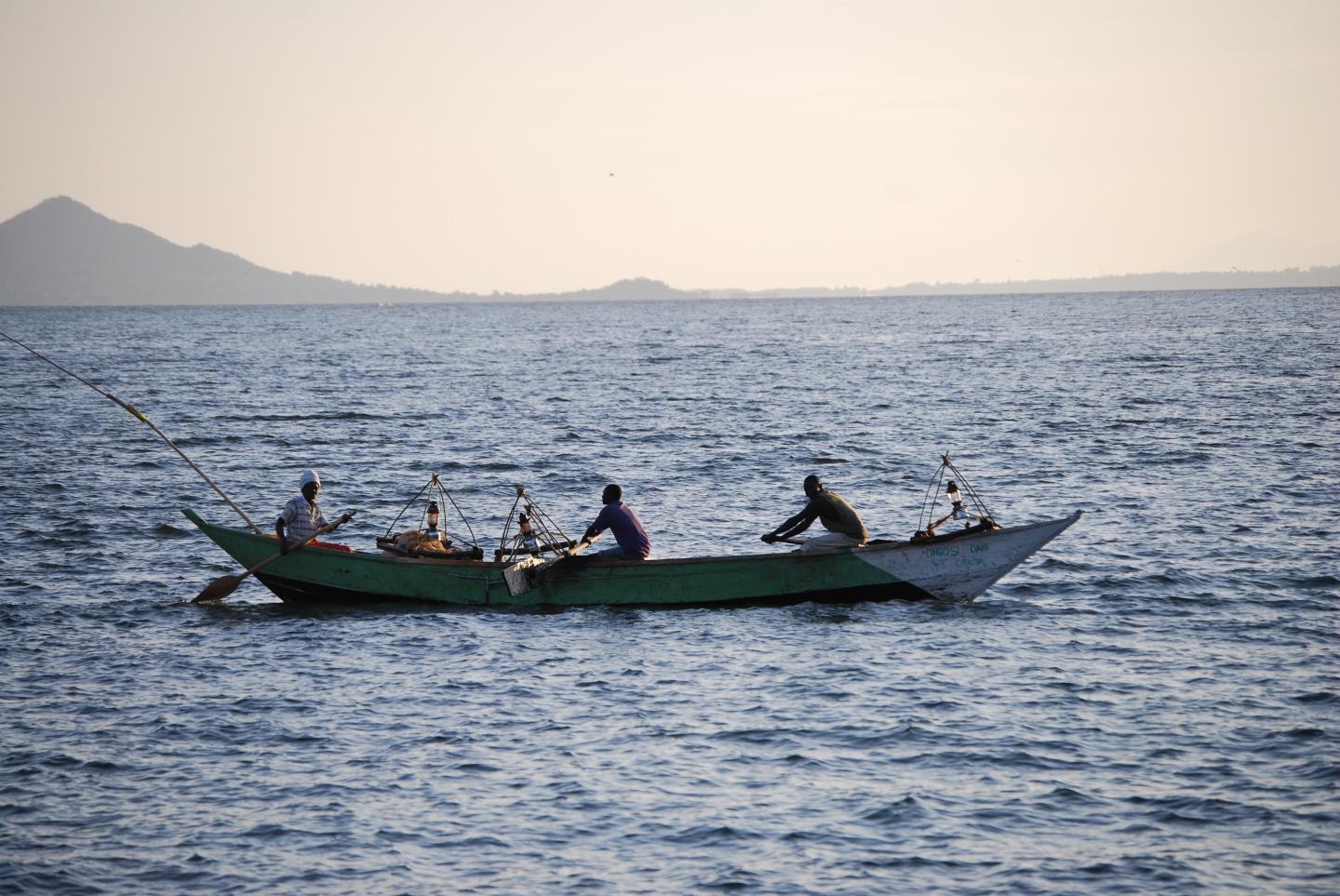
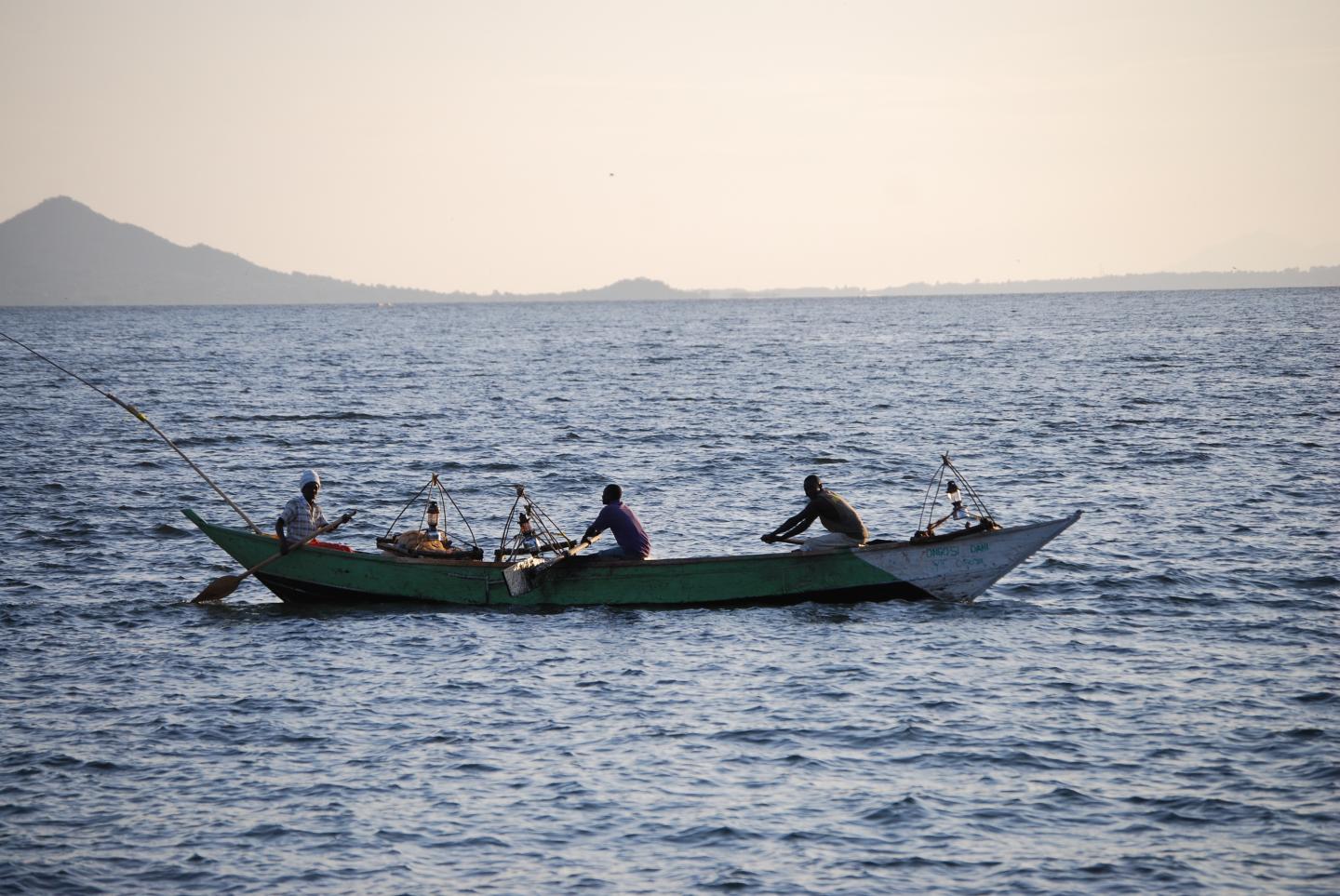
Credit: Kathryn Fiorella
A toxic environment is known to create health problems for people, but sick people can also create health problems for the environment. Around Kenya's Lake Victoria, a fishing community where locals battle high rates of disease and a depleted fish stock, scientists found that human illness exacerbates unsustainable fishing practices.
The study challenges the long-held assumption in environmental research that human disease provides a natural check to environmental exploitation and demonstrates a new way that poor human health may harm the environment. The study suggests that quality healthcare could have benefits beyond human populations and help people manage their environment and the sustainability of those resources.
"Studies have suggested people will spend less time on their livelihoods when they are sick, but we didn't see that trend in our study. Instead, we saw a shift toward more destructive fishing methods when people where ill," said Kathryn Fiorella, the lead author of the study and a postdoctoral scholar at Cornell University. Fiorella was a doctoral student at Berkeley during the study, working in the lab of professor Justin Brashares.
The study will be published the week of April 3 in the journal Proceedings of the National Academy of Sciences. The study was supported by funding from the National Science Foundation.
Understanding the links between human and environmental health is critical for the millions who cope with recurrent illness and rely directly on natural resources for sustenance.
"Healthy people, it turns out, are better for the environment," said Richard Yuretich, program officer for the National Science Foundation's Dynamics of Coupled Natural and Human Systems Program, which funded the research. "When you feel well, you can plan the tasks you need to accomplish more carefully. But when you're sick, you often just want to get things done fast, with the result that you may be more wasteful. This project illustrates the complex relationships we have with the world around us. Investigating these links is the principal aim of NSF's Dynamics of Coupled Natural and Human Systems Program."
Added Brashares: "We're focused on identifying and illuminating these connections between a changing environment and its potential impacts on human economies, health and social systems," Brashares said.
To study these connections, Fiorella spent three months of each year of her graduate studies at Lake Victoria, a place where health and the environment are intertwined in complex ways and have been for decades.
Lake Victoria transformed after British colonists introduced Nile perch, a predatory fish, to the lake in the 1960s to support commercial fishing. Nile perch quickly dominated the lake and caused the extinction of hundreds of native cichlid species. During the 1980s and 1990s, commercial fishing grew around the lake and Nile perch started to decline, so regulations were enacted to save the fishery. During the same time, the HIV epidemic was spreading throughout East Africa. As Lake Victoria's fishing community grew sicker, the environmental exploitation of the fishery worsened.
To explore how illness was altering fishing practices, the researchers tracked 303 households living on Lake Victoria. The households were interviewed four different times over a year. The researchers collected data about household health and fishing habits and looked for trends during times of sickness and good health.
Among active fishers, the study found limited evidence that illness reduced fishing effort. Instead, ill fishers shifted the methods they used. When ill, fishers were more likely to use methods that were illegal, destructive and concentrated near the shoreline, but required less travel and energy, the study found. Ill fishers were also less likely to use legal methods that are physically demanding, require travel to deep waters and are considered more sustainable.
"When people are chronically ill, they have different outlooks on the future," Brashares said. "That different outlook means that they increasingly rely on unsustainable methods because they're focused on short-term gain."
###
Media Contact
Brett Israel
[email protected]
510-643-7741
@UCBerkeleyNews
############
Story Source: Materials provided by Scienmag