Osaka, Japan – Probiotics offer a range of health benefits, but their adverse effects can occasionally lead to bacteremia, wherein bacteria circulate in the bloodstream throughout the body. In Japan, Clostridium butyricum (C. butyricum) MIYAIRI 588 is commonly used, yet the prevalence and characteristics of bacteremia caused by this strain, as well as its bacteriological and genetic profile, remain unknown.
Credit: Osaka University
Osaka, Japan – Probiotics offer a range of health benefits, but their adverse effects can occasionally lead to bacteremia, wherein bacteria circulate in the bloodstream throughout the body. In Japan, Clostridium butyricum (C. butyricum) MIYAIRI 588 is commonly used, yet the prevalence and characteristics of bacteremia caused by this strain, as well as its bacteriological and genetic profile, remain unknown.
A research team from the Graduate School of Medicine, Osaka University, found an association between bacteremia and probiotics from a study of the genetic materials of bacteria in hospitalized patients with bacteremia.
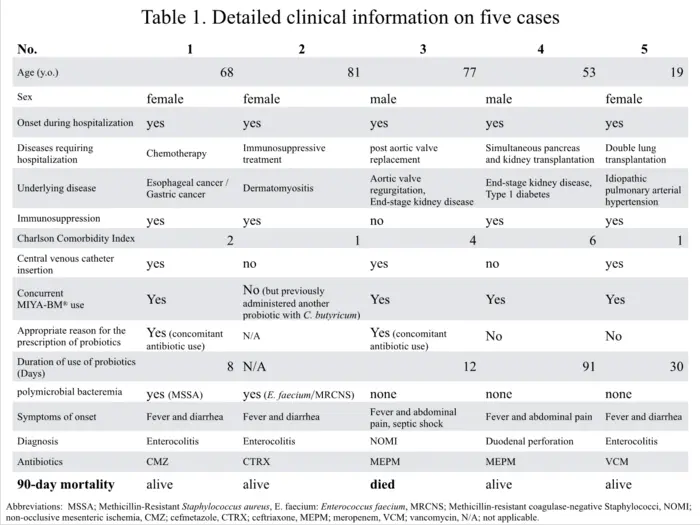
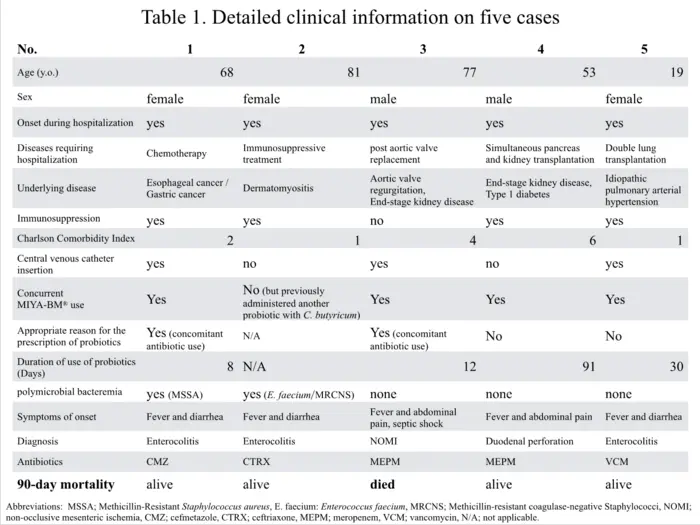
From September 2011 to February 2023, Osaka University Hospital documented 6,576 cases of positive blood cultures. Among these, C. butyricum was detected in five cases (0.08%). Whole-genome sequencing revealed that all five strains of C. butyricum-causing bacteremia were derived from probiotics. In two of these cases, no clear reason for appropriate oral intake of the probiotics could be identified, and one patient died within 90 days after the bacteremia diagnosis.
“Probiotics can provide a variety of health benefits, but this study shows that even such agents can present with rare but serious adverse events,” says study lead author Ryuichi Minoda Sada. “Our findings underscore the risk for bacteremia resulting from probiotic use, especially in hospitalized patients, necessitating judicious prescription practices.”
It is expected that the results of this study will increase awareness of the potential health risks associated with probiotics. It is recommended to avoid aimless and unnecessary prescribing of probiotics, especially in hospitalized patients undergoing immunosuppressive treatment.
###
The article, “Clostridium butyricum Bacteremia Associated with Probiotic Use, Japan,” was published in Emerging Infectious Diseases at DOI: http://doi.org/10.3201/eid3004.231633
About Osaka University
Osaka University was founded in 1931 as one of the seven imperial universities of Japan and is now one of Japan’s leading comprehensive universities with a broad disciplinary spectrum. This strength is coupled with a singular drive for innovation that extends throughout the scientific process, from fundamental research to the creation of applied technology with positive economic impacts. Its commitment to innovation has been recognized in Japan and around the world, being named Japan’s most innovative university in 2015 (Reuters 2015 Top 100) and one of the most innovative institutions in the world in 2017 (Innovative Universities and the Nature Index Innovation 2017). Now, Osaka University is leveraging its role as a Designated National University Corporation selected by the Ministry of Education, Culture, Sports, Science and Technology to contribute to innovation for human welfare, sustainable development of society, and social transformation.
Website: https://resou.osaka-u.ac.jp/en
Journal
Emerging Infectious Diseases
DOI
10.3201/eid3004.231633
Method of Research
Case study
Subject of Research
People
Article Title
Clostridium butyricum Bacteremia Associated with Probiotic Use, Japan
Article Publication Date
27-Feb-2024