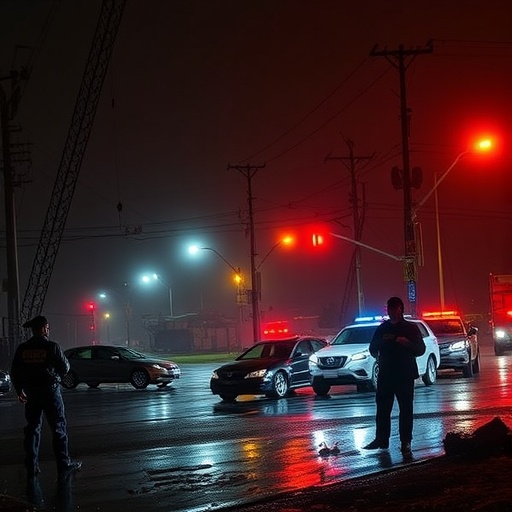
In an era dominated by rapid technological advancements and widespread connectivity, the role of social media in disaster management has become increasingly pivotal. The 2024 DANA (Depresión Aislada en Niveles Altos) disaster in Spain presented a grim testament to this reality, highlighting not only the devastating effects of extreme weather events but also the critical gap between official response efforts and citizen-driven initiatives in crisis scenarios. As the skies unleashed relentless downpours, leading to catastrophic flooding and infrastructure collapse, a digital revolution in disaster response quietly unfolded across social platforms, reshaping the landscape of emergency management.
The meteorological phenomenon known as DANA, a cold-core low pressure system forming at high altitude, triggered unprecedented rainfall concentrated over eastern Spain. This localized storm brought about sudden and violent flash floods, resulting in widespread destruction of homes, transportation networks, and essential utilities. Traditional emergency response frameworks, despite being primed for such events, quickly found themselves overwhelmed. Resource allocation, communication protocols, and situational awareness within official channels failed to keep pace with the fast-evolving scenario, culminating in delayed rescue operations and mounting public frustration.
Amid this chaos, social media emerged as a critical conduit for real-time information dissemination and grassroots coordination. Platforms like Twitter, Facebook, and WhatsApp became lifelines for affected communities, enabling citizens to document flooding hotspots, share immediate needs, and broadcast warnings in near real-time. This decentralized flow of information was instrumental in bridging the communication void left by official channels, empowering individuals to mobilize rescue teams, coordinate relief supplies, and facilitate evacuation efforts autonomously. The phenomenon underscored the democratizing power of digital connectivity during emergencies, where every smartphone became a node in the burgeoning community-based response network.
The analysis of social media activity during the DANA events reveals intricate patterns of citizen engagement and technological interplay. Hashtags flooded timelines, photo and video content provided visual evidence of damage, and geotagged posts enabled precise localization of distress signals. Algorithms and crowd-sourced mapping tools harvested this open-source data, creating dynamic situational awareness maps accessible to responders and the public alike. These emergent “digital crowdsourcing” mechanisms effectively supplemented, and at times outpaced, traditional emergency information systems. They highlighted a paradigm shift: disasters are no longer solely managed from the top down but are increasingly governed by a blend of institutional authority and collective social action.
Yet, the reliance on social media also illuminated profound challenges. The deluge of unverified information risked the spread of misinformation and panic, complicating the work of responders striving for clear communication. False alarms, exaggerated reports, and contradictory messages occasionally hampered coordinated efforts. Moreover, disparities in digital literacy and access created uneven participation, with vulnerable populations potentially sidelined from these virtual lifelines. This underscores the necessity for integrating social media strategies into formal disaster management protocols, ensuring digital inclusivity while harnessing the power of real-time citizen reporting.
Technically, the DANA disaster underscored the limits of existing meteorological forecasting models in predicting isolated high-altitude depressions with such concentrated, rapid-impact rainfall. Enhanced remote sensing technologies, including satellite-based precipitation radars and high-resolution Doppler systems, are critical for improving lead times and spatial accuracy of alerts in future events. Coupling these with AI-driven predictive analytics can empower emergency agencies to proactively deploy resources. However, the societal aspect—the human sensor network—remains indispensable. Citizens equipped with smartphones effectively function as distributed environmental sensors, their collective inputs providing granular, hyperlocal data that complements macro-scale meteorological modeling.
The response disparity during the DANA event also spotlights institutional preparedness gaps. Emergency management frameworks, often rigid and hierarchical, struggled to adapt to the velocity and complexity of the crisis as it unfolded. Communication channels were too linear and centralized, causing bottlenecks that delayed actionable intelligence flow to frontline responders and affected communities. This failure pushed affected populations to lean heavily on social media for situational updates and mutual aid efforts, circumventing official systems altogether. Future resilience strategies must therefore emphasize flexible, multi-tiered communication models that integrate formal and informal networks, enabling a seamless mosaic of information exchange.
An intriguing dimension to the social media activism during the DANA crisis was the psychological and social cohesion effect. In the face of institutional inadequacy, the digital collective became a source of empowerment, fostering a sense of agency and solidarity among citizens. Online communities organized fundraising campaigns, volunteered for cleanup drives, and provided emotional support, turning virtual interactions into tangible relief actions. This phenomenon serves as a reminder that disaster resilience is not merely an infrastructural or procedural challenge but a profoundly human endeavor where trust, mutual aid, and social capital play decisive roles.
The DANA case also invites critical reflections on governance and the evolving role of authorities in the digital age. While citizen-led initiatives filled crucial gaps, ultimate responsibility and coordination for emergency response rest with governmental bodies. Authorities must balance respecting the autonomy of social media mobilizations with providing authoritative guidance and resources. Failure to effectively integrate these parallel channels risks fragmentation and erodes public trust. Developing official social media engagement protocols, verified information hubs, and rapid-response digital teams can create synergy between institutional powers and citizen networks, transforming a source of chaos into a coordinated force multiplier.
From a technological standpoint, the integration of advanced data analytics, machine learning, and geospatial information systems (GIS) is crucial for optimizing social media-derived disaster intelligence. Automated natural language processing (NLP) algorithms can sift through millions of posts to identify priority incidents, sentiment trends, and misinformation hotspots. Simultaneously, real-time data fusion from social media, sensors, and weather models can inform dynamically updated risk maps, resource allocation algorithms, and evacuation route recommendations. Advances in wearable tech and drone surveillance further extend the scope of decentralized data collection, creating a comprehensive, multi-layered emergency monitoring ecosystem.
However, the ethical dimensions of leveraging social media data during disasters must not be overlooked. Privacy concerns, data security, and informed consent are paramount as citizens’ personal information becomes part of emergency analytics. Transparent policies governing data use and retention need to be embedded within disaster response frameworks to maintain public confidence and prevent potential abuses. Meanwhile, ensuring equitable access to digital tools across socio-economic and geographic divides is essential to avoid exacerbating vulnerabilities in future disasters. Investment in digital infrastructure and literacy must accompany technological innovation to create an inclusive, resilient society.
The implications of the DANA disaster extend well beyond Spain, offering universal lessons in a world increasingly marked by extreme weather events driven by climate change. The global emergency management community must rethink traditional paradigms, embracing hybrid models that leverage both top-down authority and bottom-up citizen agency mediated through social media. This dual approach promises more agile, informed, and community-centered disaster responses, essential as stakes grow ever higher with each passing year. International cooperation on best practices and technology sharing can accelerate this evolution, fostering robust, interconnected networks of resilience transcending national borders.
Looking ahead, research must focus on designing integrated digital ecosystems that facilitate seamless collaboration among all stakeholders. This includes emergency planners, meteorologists, technologists, social scientists, and communities themselves. Cross-disciplinary approaches can synthesize cutting-edge sensors, AI analytics, and social media dynamics into cohesive platforms tailored for diverse disaster scenarios. Iterative field testing and scenario-based training will be crucial to calibrate these systems for real-world effectiveness and adaptability. Ultimately, technology alone is insufficient; the focus must remain on empowering human collectives to respond creatively and cohesively under duress.
The 2024 DANA disaster laid bare the vulnerabilities of established emergency response systems but also illuminated the transformative potential of social media-powered citizen action. It highlighted a future where digital connectivity and human ingenuity collaborate to weather the growing tempest of natural disasters. As climate change accelerates the frequency and intensity of such events, embracing this socio-technical paradigm shift is not optional but imperative. The challenge before governments, researchers, and societies is to cultivate resilience that is as dynamic, interconnected, and adaptive as the digital era itself.
This watershed moment in disaster management underscores an urgent call to fundamentally rethink authority, technology, and community engagement. The lessons embedded within Spain’s DANA crisis narrate a story of failure and hope—of systems breaking down, yet new ones arising from the collective will of informed, connected citizens. Harnessing this synergy will define the frontlines of disaster risk reduction in the decades to come, ensuring that when nature strikes with fury, humanity’s response is swift, coordinated, and deeply resilient.
Subject of Research: Social media responses and citizen-led initiatives during the DANA disaster in Spain amid institutional emergency response failures.
Article Title: When Authorities’ Response Fails and Citizens Act: Social Media Responses to the DANA Disaster in Spain.
Article References:
Castro-Martínez, A., Torres-Martín, JL. & Villena-Alarcón, E. When Authorities’ Response Fails and Citizens Act: Social Media Responses to the DANA Disaster in Spain. Int J Disaster Risk Sci (2025). https://doi.org/10.1007/s13753-025-00686-7
Image Credits: AI Generated
Tags: citizen-driven crisis initiativesDANA disaster in Spainemergency management technologyextreme weather events managementflash flood response strategiesgrassroots disaster coordinationinfrastructure collapse communicationpublic frustration in emergenciesreal-time information disseminationsocial media disaster responsesocial platforms in crisistraditional emergency response challenges