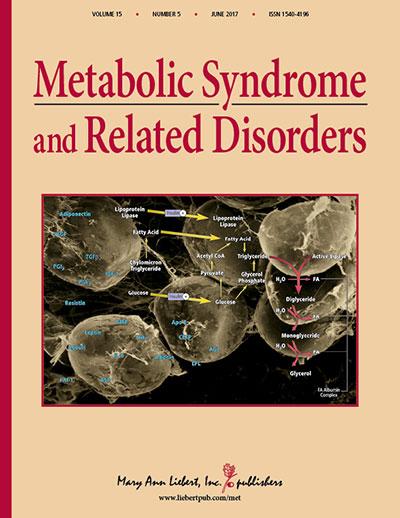
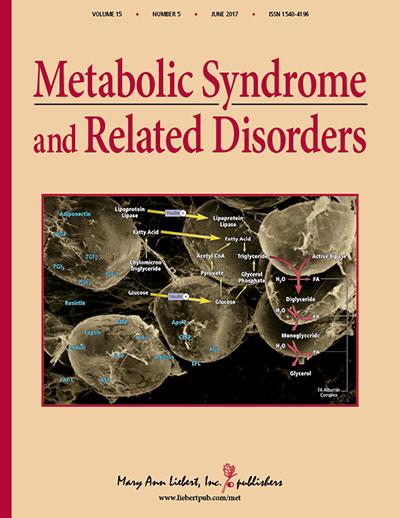
Credit: Mary Ann Liebert, Inc., publishers
New Rochelle, NY, August 3, 2017–In the destructive cycle that leads to and perpetuates type 2 diabetes, driven by overeating, excessive blood glucose, defective pancreatic beta cell function, and imbalances in insulin-regulating hormone levels, the gut appears to play a key role. The effects of gastric emptying rates on blood sugar levels after eating and resulting glucose-related hormone release are examined in the article "The Gut: A Key to the Pathogenesis of Type 2 Diabetes?" published in Metabolic Syndrome and Related Disorders, a peer-reviewed journal from Mary Ann Liebert, Inc., publishers. The article is available free on the Metabolic Syndrome and Related Disorders website until September 3, 2017.
Coauthors Jens Juul Holst, Jens Pedersen, Nicolai Jacob Wewer Albrechtsen, and Filip Krag Knop, University of Copenhagen, Denmark, focus specifically on how the gastrointestinal tract contributes to the regulation of postprandial plasma glucose and secretion of the incretin hormones known as GIP and GLP-1. After a meal, these hormones help induce and regulate the release of insulin cells by pancreatic beta cells to control the level of glucose in the blood. The researchers also discuss the role of the gut in the hypersecretion of glucagon in individuals with type 2 diabetes.
"The role of the gastrointestinal tract in modulating the response to glucose ingestion is often overlooked. In this commentary, Professor Holst and colleagues revisit the role of the GI tract in health and disease," says Adrian Vella, MD, FRCP (Edin.), Editor-in-Chief of Metabolic Syndrome and Related Disorders and Professor of Medicine, Mayo Clinic College of Medicine, Rochester, MN.
###
Research reported in this publication was supported by the National Institutes of Health under Award Number R01 AG028730. The content is solely the responsibility of the authors and does not necessarily represent the official views of the National Institutes of Health.
About the Journal
Metabolic Syndrome and Related Disorders is the only peer-reviewed journal focusing solely on the pathophysiology, recognition, and treatment of metabolic syndrome. Led by Adrian Vella, MD, FRCP (Edin.), Professor of Medicine, Mayo Clinic College of Medicine (Rochester, MN), the Journal covers a range of topics including insulin resistance, central obesity, glucose intolerance, dyslipidemia with elevated triglycerides, predominance of small dense LDL-cholesterol particles, hypertension, endothelial dysfunction, and oxidative stress and inflammation. Tables of content and a sample issues may be viewed on the Metabolic Syndrome and Related Disorders website.
About the Publisher
Mary Ann Liebert, Inc., publishers is a privately held, fully integrated media company known for establishing authoritative peer-reviewed journals in many promising areas of science and biomedical research, including Childhood Obesity, Diabetes Technology and Therapeutics, and Thyroid. Its biotechnology trade magazine, GEN (Genetic Engineering & Biotechnology News), was the first in its field and is today the industry's most widely read publication worldwide. A complete list of the firm's 80 journals, newsmagazines, and books is available on the Mary Ann Liebert, Inc., publishers website.
Media Contact
Kathryn Ryan
[email protected]
914-740-2250
@LiebertPub
http://www.liebertpub.com
Original Source
http://www.liebertpub.com/global/pressrelease/what-role-does-the-gut-play-in-type-2-diabetes/2229/ http://dx.doi.org/10.1089/met.2017.0015