• HOME
  • NEWS
  • EXPLORE
    • CAREER
      • Companies
      • Jobs
    • EVENTS
    • iGEM
      • News
      • Team
    • PHOTOS
    • VIDEO
    • WIKI
  • BLOG
  • COMMUNITY
    • FACEBOOK
    • INSTAGRAM
    • TWITTER
Thursday, April 2, 2026
BIOENGINEER.ORG
No Result
View All Result
  • Login
  • HOME
  • NEWS
  • EXPLORE
    • CAREER
      • Companies
      • Jobs
        • Lecturer
        • PhD Studentship
        • Postdoc
        • Research Assistant
    • EVENTS
    • iGEM
      • News
      • Team
    • PHOTOS
    • VIDEO
    • WIKI
  • BLOG
  • COMMUNITY
    • FACEBOOK
    • INSTAGRAM
    • TWITTER
  • HOME
  • NEWS
  • EXPLORE
    • CAREER
      • Companies
      • Jobs
        • Lecturer
        • PhD Studentship
        • Postdoc
        • Research Assistant
    • EVENTS
    • iGEM
      • News
      • Team
    • PHOTOS
    • VIDEO
    • WIKI
  • BLOG
  • COMMUNITY
    • FACEBOOK
    • INSTAGRAM
    • TWITTER
No Result
View All Result
Bioengineer.org
No Result
View All Result
Home NEWS Science News Biology

What can the herpesvirus teach us about oral inflammation?

Bioengineer by Bioengineer
August 1, 2018
in Biology
Reading Time: 2 mins read
0
Share on FacebookShare on TwitterShare on LinkedinShare on RedditShare on Telegram
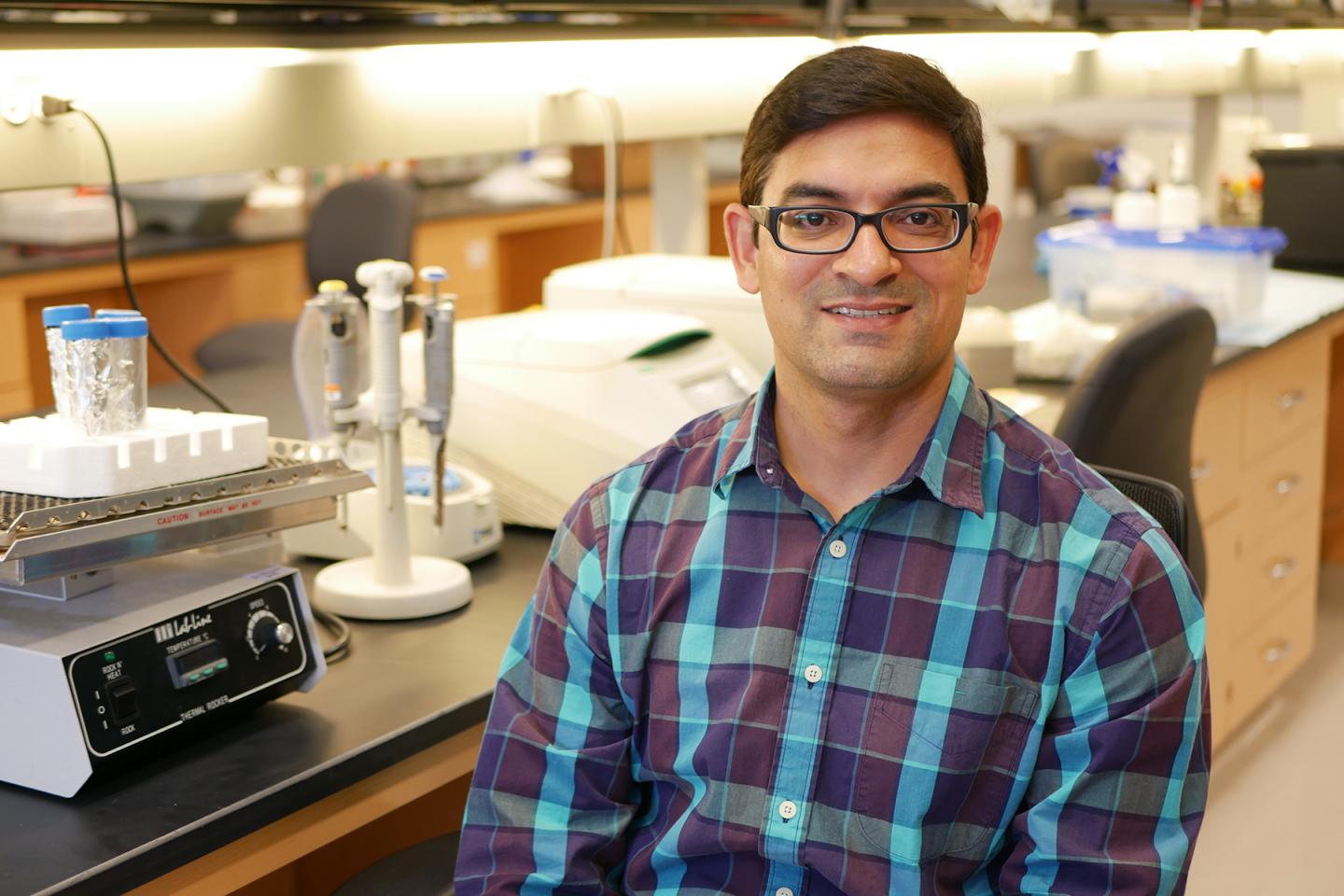
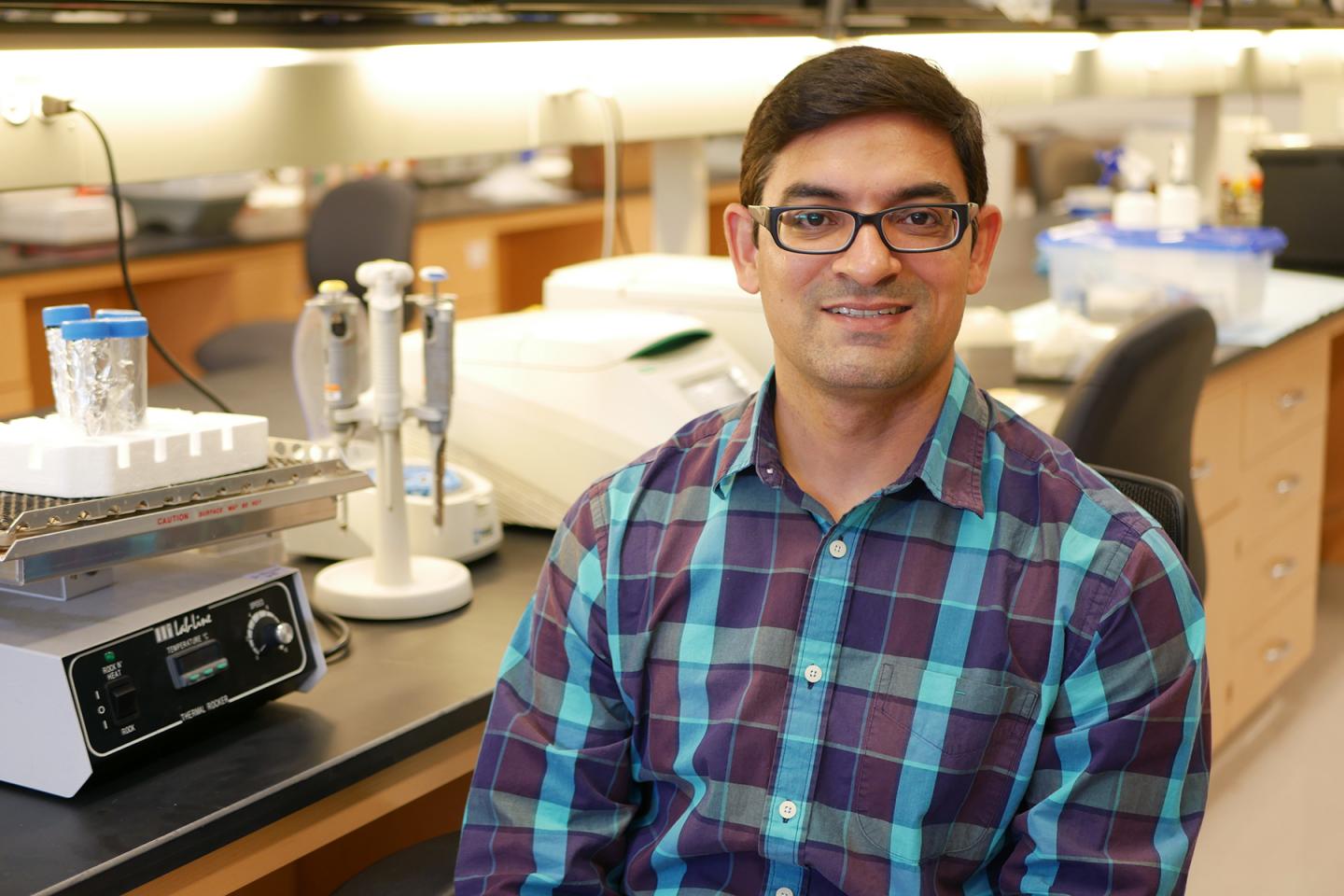
IMAGE

Credit: UIC/Chris Bevel

A $2 million grant from the National Institutes of Health will help University of Illinois at Chicago researchers study how herpesviruses, and their underlying molecular mechanisms, contribute to increased inflammation in oral diseases, like periodontitis.

The researchers, led by the UIC College of Dentistry's Afsar Naqvi, will also study how manipulating the small molecules that help to regulate gene expression in the herpesvirus may aid health care professionals to diagnose and treat oral diseases.

"Herpesviruses are unique in both their lifelong persistence in the human body and in their ability to encode viral microRNAs that not only alter their own genetic activities but their host cells' functions as well," said Naqvi, assistant professor of periodontics.

MicroRNAs are small molecules in cells that help to control how genes are expressed.

"Herpesvirus encoded microRNA helps the virus to survive in multiple ways," Naqvi said. "Because we see a correlation between herpesviruses and oral inflammation, we want to examine if viral microRNAs accumulate in inflamed oral tissues and if they impair the body's immune responses."

Naqvi and his team will study the impact of the five most common herpesviruses associated with oral inflammatory diseases and quantify their microRNA and genome levels.

"We want to identify the microRNAs that change when the tissue around the teeth becomes inflamed," Naqvi said.

The funding, which was awarded in July, will support this research for five years, during which time the researchers hope to uncover whether or not viral microRNA can be used as a biomarker to identify patients who may be more prone to oral inflammation and influence treatment decisions toward better outcomes. The research team will also investigate the molecular and cellular mechanisms through which disease-associated herpesvirus microRNAs dysregulate host immune cell functions.

"Understanding the way herpesvirus microRNAs affect oral inflammation may also help us develop better therapies and drug targets for common inflammatory conditions, not limited to those in the mouth, like periodontitis," Naqvi said.

Working with Naqvi on this research are UIC's Deepak Shukla, the Marion H. Schenk Esq. Professor of Ophthalmology, and Salvador Nares, associate professor and head of periodontics research.

###

Media Contact

Jackie Carey
[email protected]
312-996-8277
@uicnews

http://www.uic.edu

Original Source

https://today.uic.edu/what-can-the-herpesvirus-teach-us-about-oral-inflammation

Share12Tweet8Share2ShareShareShare2

Related Posts

Newly Discovered Chronic Pain Circuit Unveils Potential Avenues for Innovative Treatments

Newly Discovered Chronic Pain Circuit Unveils Potential Avenues for Innovative Treatments

April 2, 2026
DNA Transforms from Blueprint to Active Field Agent

DNA Transforms from Blueprint to Active Field Agent

April 2, 2026

UBC Okanagan Study Reveals How Trees Visually Signal Their Spring Rehydration

April 1, 2026

Rising Temperatures from Climate Change Associated with Reduced Newborn Size

April 1, 2026
Please login to join discussion

POPULAR NEWS

  • blank

    Revolutionary AI Model Enhances Precision in Detecting Food Contamination

    96 shares
    Share 38 Tweet 24
  • Imagine a Social Media Feed That Challenges Your Views Instead of Reinforcing Them

    1007 shares
    Share 398 Tweet 249
  • Promising Outcomes from First Clinical Trials of Gene Regulation in Epilepsy

    51 shares
    Share 20 Tweet 13
  • Popular Anti-Aging Compound Linked to Damage in Corpus Callosum, Study Finds

    44 shares
    Share 18 Tweet 11

About

We bring you the latest biotechnology news from best research centers and universities around the world. Check our website.

Follow us

Recent News

Breakthrough Enables Infinite Recycling of Acrylic Plastics Without Environmental Impact

How Science Can Advance and Strengthen the High Seas Treaty

Electric Dipole Moment Powers TNFR1 Signalosome

Subscribe to Blog via Email

Enter your email address to subscribe to this blog and receive notifications of new posts by email.

Join 78 other subscribers
  • Contact Us

Bioengineer.org © Copyright 2023 All Rights Reserved.

Welcome Back!

Login to your account below

Forgotten Password?

Retrieve your password

Please enter your username or email address to reset your password.

Log In
No Result
View All Result
  • Homepages
    • Home Page 1
    • Home Page 2
  • News
  • National
  • Business
  • Health
  • Lifestyle
  • Science

Bioengineer.org © Copyright 2023 All Rights Reserved.