Convened biennially by the German-West African Centre for Global Health and Pandemic Prevention in partnership with the World Health Organization Hub for Pandemic and Epidemic Intelligence, the Robert Koch Institute, and the Ghana Ministry of Health, the forum operated under the Chatham House Rule to foster confidential, implementation-focused discourse. The central theme of the 2024 dialogue was “Capabilities for Better Data, Better Analytics, Better Decisions,” reflecting a regional consensus that the quality, accessibility, and interoperability of health data are foundational to effective pandemic prevention, preparedness, and response. Participants from Ghana, Burkina Faso, The Gambia, Liberia, Sierra Leone, Cameroon, and Côte d’Ivoire engaged in high-level discussions aimed at articulating priorities to enhance data generation, integration, and utilization across the region.
The urgency of this dialogue is underscored by the increasing frequency and complexity of emerging and re-emerging infectious diseases with pandemic potential. In West Africa, surveillance, preparedness, and response systems remain vulnerable to key drivers such as environmental degradation, rapid urbanization, and intensified global connectivity. These factors have accelerated the risk of cross-border pathogen transmission, highlighting the imperative for robust frameworks. The COVID-19 pandemic further demonstrated the indispensable role of timely, accurate, and integrated data as the foundation for informed decision-making. Despite significant progress since the pandemic, including the widespread adoption of digital Integrated Disease Surveillance and Response systems, challenges persist that undermine the establishment of an integrated and responsive data ecosystem.
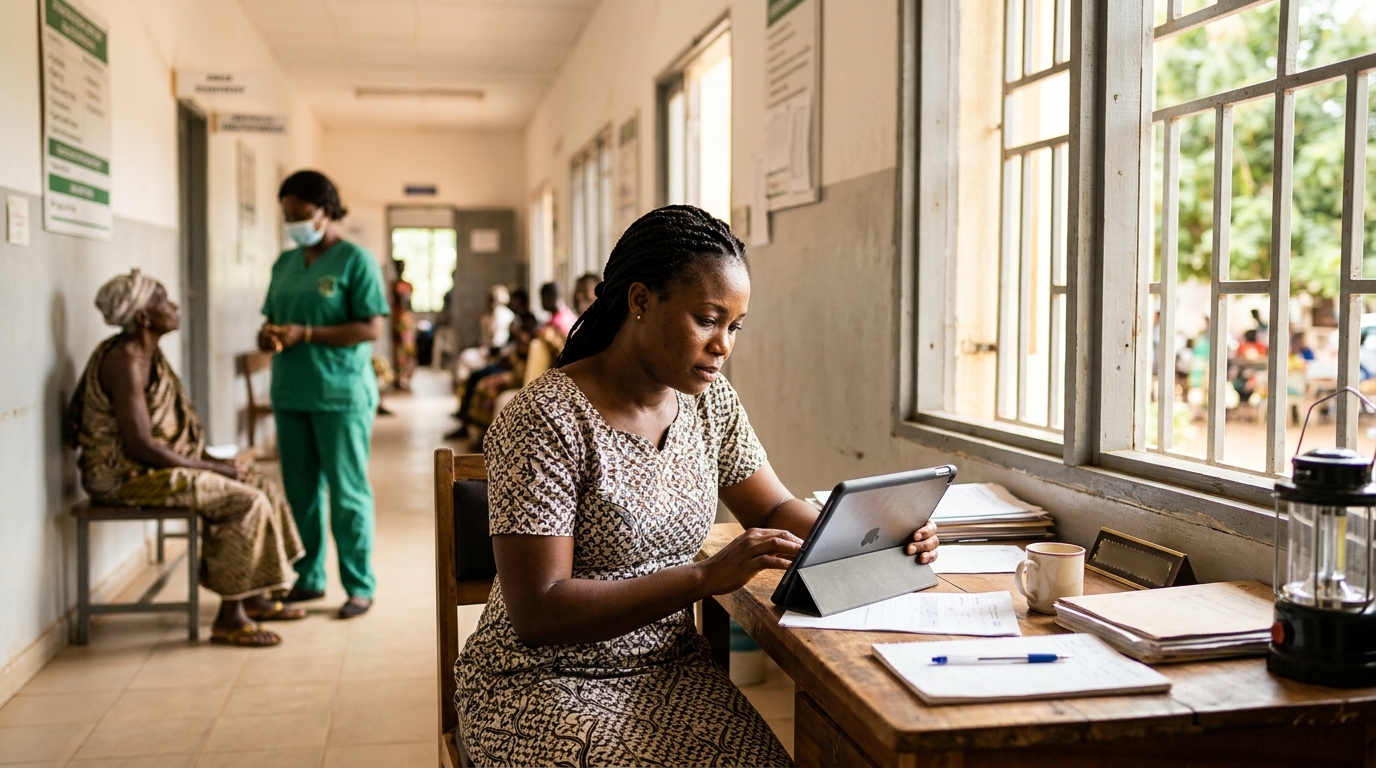
One of the most persistent challenges identified by participants is the continued reliance on paper-based data collection in peripheral health facilities. This reliance on manual entry is compounded by human resource attrition, which weakens data collection and management systems in several countries. The collection of data at the community level presents a particular challenge, requiring better links and trust from communities as well as feedback mechanisms for community-level data contributors. This is further complicated by the widespread use of traditional medicine providers, who are rarely integrated into community-based surveillance efforts.
Despite these challenges, considerable progress has been made regarding the completeness and timeliness of indicator-based reports submitted by countries since 2022. While only 10 out of 47 countries in the WHO African Region had submitted data in May 2022, this number increased to 35 countries, or 74 percent, by April 2023. This improvement was supported by efforts to digitize data collection through electronic Integrated Disease Surveillance and Response systems, which streamline reporting and enable improved analytics. However, the dialogue noted that only 35 percent of countries had submitted complete reports on time, highlighting the need for further efforts to improve timeliness and completeness. Greater use of digital tools, ranging from simple data collection through Excel to sophisticated platforms like SORMAS or REDCap, could considerably improve the timeliness of available data.
A critical focus of the dialogue was the need for better integrated One Health surveillance systems. Traditional surveillance systems rely on separate data collection efforts for environmental health, animal health, and human health, underpinned by separate institutional responsibilities. An integrated One Health approach offers significant benefits, including the early detection of new or re-emerging pathogens in animals before they spread to humans, a more comprehensive understanding of disease development and spread, and improved, better-coordinated public health responses. Recognition of these benefits has led to the emergence of One Health policies and strategies in several countries, including Ghana and Cameroon. However, institutional fragmentation continues to hamper greater integration, with siloed approaches prevailing in many countries due to different mandates and regulatory provisions governing institutions such as the Ministry of Health and the Ministry of Food and Agriculture.
Participants emphasized that cross-sector collaboration, common data platforms, and interdisciplinary training programs are needed to support greater integration. More cross-sector collaboration among government entities, private sector stakeholders, and communities is required to reduce regulatory fragmentation and realize the potential of a One Health approach. The establishment of joint working groups, such as a One Health Steering Committee, or dedicated agencies could support better integration. Interdisciplinary training programs for professionals from different fields can contribute to greater knowledge about the benefits of a One Health approach and promote a mindset of collaboration. Additionally, data sharing protocols, the establishment of interoperable systems, and the creation of common data platforms enabling real-time data access for all relevant stakeholders would considerably improve the situation.
Genomic sequencing has emerged as a critical component of pathogen surveillance, identifying the genetic makeup of pathogens to monitor the spread and circulation of variations such as new strains or variants. Genomic sequencing has informed public health decisions in several situations, including during the 2022 Marburg virus outbreak and the 2024 Dengue fever outbreak. Governments in several countries, including Ghana, Côte d’Ivoire, and The Gambia, have considerably strengthened national infrastructure and capacities for genomic sequencing. On a policy level, Ghana has developed a National Genomic Surveillance Strategy. Yet, capacities vary widely across countries, and genomic sequencing has not yet reached its full potential due to numerous interrelated challenges.
These challenges include infrastructure-related issues such as unreliable electricity supply and intermittent internet connectivity, as well as a limited number of genomic sequencing facilities. Human resource challenges include a lack of qualified lab technicians and bioinformaticians due to limited training capacity and brain drain. Logistical challenges involve procurement issues for reagents and consumables and inadequate sample management. Funding challenges exist regarding the purchase of reagents, maintenance and calibration of equipment, and external quality assurance. Furthermore, genomic sequencing data sharing is currently not integrated into routine surveillance systems, and data sharing across countries is burdened by technical, political, and bureaucratic problems at all levels. International partners, such as the WHO, the International Pathogen Surveillance Network, the US Centers for Disease Control and Prevention, and the Robert Koch Institute, support in-country processes to build and strengthen these capacities through training, funding, and policy advocacy.
The dialogue also addressed the harmonization and integration of different data sources towards a West African Health Data Space. Lack of standardization during data collection often hampers the creation of integrated databases. To enable integration, data curation is needed, which involves data cleaning and annotation. Large language models may support anonymization and clustering to transform unstructured data, but robust validation is essential to ensure reliability and accuracy. Further variable transformation, adjustment of heterogeneous variable structures, and standardization are needed to facilitate data sharing and collaborative analysis. The International Severe Acute Respiratory and Emerging Infection Consortium, with its African data hub in Kumasi, Ghana, supports clinical research networks with standardized protocols and data integration tools, providing a model for further efforts in data integration.
Standardized data collection based on common protocols facilitates data integration. The WHO-ISARIC Clinical Characterisation Protocol has been widely implemented by ISARIC members to study various diseases, including Ebola, Zika, MERS, COVID-19, Dengue, and Mpox. This protocol facilitates standardized data collection through the use of Case Report Forms that ensure consistency while allowing customization to suit specific outbreak contexts. To support the rapid development of standardized forms, ISARIC developed ARC, a comprehensive, machine-readable library of questions, and BRIDGE, a web-based application designed to tailor ARC’s functionality to meet the needs of specific outbreak scenarios. To support data analysis, ISARIC developed VERTEX, a web-based application designed to facilitate evidence generation through the use of Reusable Analytical Pipelines and enable interactive visualization of curated datasets.
Digital data collection tools used by health workers in communities or health facilities can contribute to more standardized data collection. However, the use of multiple different tools by different categories of health professionals may create duplication of efforts and problems of data integration. Existing tools, such as SORMAS, DHIS-2, and LHIMS, operate with different variables and different levels of granularity, thus complicating the aggregation and integration of different data sources. Publicly available information from social media is increasingly used for event-based surveillance, with the Epidemic Intelligence from Open Source initiative becoming a cornerstone of public health surveillance in the WHO African Region. More than 38 countries are contributing to this early warning system, which is detecting about half of all public health events in the region as the first source of information. However, data from this system is not yet integrated into other surveillance systems, limiting its use to its own web-based interface.
Achieving targets for the establishment of the WHO African Region Health Data Hub requires greater efforts at the country level. National data harmonization projects building on intersectoral collaborative efforts of relevant institutions and partners are needed. More work is needed to strengthen relationships between different actors, to build trust, and to create awareness of the advantages of interoperability of different data collection systems. These will be essential steps to prepare for the establishment of the Regional Health Data Hub. National policies on data collection, storage, and use should reflect country and regional data needs. Where these policies are not yet available, they will need to be developed to enable the establishment of the Regional Health Data Hub. In countries where integrative cross-sector data collection policies are already available, problems may exist with regard to implementation, making it equally important to convene stakeholders to develop a tailored and realistic implementation strategy.
Policies should be based on an integrative cross-sectoral One Health approach, focusing on the integration of data from different sources, including civil registration and vital statistics systems, epidemiological data, clinical data, pathogen data, genomic sequencing data, health service utilization data, and data on environmental hazards. Involvement of all stakeholders in the development of such policies is key. Strengthening data collection at the community level is important and requires trust, as effective surveillance has to start at the community level. National data collection policies should prioritize digital data collection approaches to improve timeliness and completeness of data. Digital data collection could improve cost-effectiveness, but to achieve its merits, existing systems need to be better integrated to avoid duplicate data entry and unnecessary burden on health workers. Data should be findable, accessible, interoperable, and reusable.
Reaching better decisions based on data requires a stronger evidence ecosystem and more investments into training and retaining professionals. Sufficient numbers of highly skilled professionals are needed to translate existing data into information and, in turn, into better decisions. Currently available numbers of specialized experts, for example in bioinformatics, are limited. In addition, a stronger focus is needed on retention of trained staff, because there is a high degree of attrition and brain drain. The formal and informal linkages and interactions between different actors, as well as their capacities and resources in the use of evidence, need to be strengthened to develop a stronger evidence ecosystem. Policy dialogues that bring together relevant stakeholders, exploring and analyzing existing problems together based on the best available evidence, may play a role in efforts aiming to strengthen the evidence ecosystem. Trust of involved stakeholders is an essential resource for data integration efforts, and a common understanding of existing problems and joint deliberations about the benefits and drawbacks of potential solutions can contribute to the emergence of trust in evidence-informed policy-making. Overall, discussions from the dialogue underscore that while progress has been made in enhancing the quality and diversity of data sources for disease surveillance and pandemic prevention, significant systemic challenges remain. To advance disease and genomic surveillance efforts, it is imperative to invest in comprehensive digital transformation strategies, including the phased replacement of paper-based systems and expansion of digital infrastructure. Workforce development programs must address attrition by building sustainable capacity in epidemiology, bioinformatics, and data science. Standardized data protocols and interoperable tools should be developed and adopted across sectors, guided by policies that promote One Health integration and support community-based surveillance initiatives. Coordinated efforts across local, national, and international levels will be critical to building resilient, data-driven health systems.
Subject of Research: West African health data integration and pandemic preparedness policy
Article Title: West African Policy Dialogue—impulse for better data: progress towards better analytics and better decisions
Article References: Acheampong, G. K., Aku, F. Y., Amuasi, J., Annang, S., Argimon, S., Asiedu, E. K., Bonney, J. H. K., Busse, R., Emikpe, B., Garcia-Gallo, E., Gmanyami, J. M., Meierkord, A., Newton, S. K., Nkrumah, B., Nyakutsey, B., Opoku, D., Ouma, P. E. O., Owusu, M., & Quentin, W. (2026). West African Policy Dialogue—impulse for better data: progress towards better analytics and better decisions. BMC Proceedings, 20(S7), Article 21. https://doi.org/10.1186/s12919-026-00362-8
Image Credits: AI Generated
DOI: 10.1186/s12919-026-00362-8
Keywords: West Africa, Pandemic Preparedness, Health Data, One Health, Genomic Surveillance, Policy Dialogue, Digital Health, WHO AFRO, West, African, Policy, Dialogue
News Source: Kristina Jarvis. (November 8, 2026). West African Leaders Push for Integrated Health Data Systems. Scienmag.