A groundbreaking nationwide study conducted in Japan has shed new light on the intricate relationship between air pollution and the risk of acute myocardial infarction (AMI), commonly known as a heart attack. This extensive observational research, spanning a decade from 2012 through 2022, unveils compelling evidence that short-term exposure to fine particulate matter, specifically PM2.5, significantly elevates the risk of heart attacks. More intriguingly, the study highlights a pronounced decline in pollution-related risk for a particular subtype of heart attack following the behavioral changes widely adopted during the COVID-19 pandemic, with mask-wearing playing a potentially protective role.
The cardiovascular implications of PM2.5—ultrafine particles with diameters less than 2.5 micrometers—have been a subject of intense scientific scrutiny over the past several years. These particles possess the ability to penetrate deep into the respiratory tract, bypassing natural airway defenses and inducing systemic inflammation, oxidative stress, endothelial dysfunction, and alterations in autonomic nervous system regulation. Such pathophysiological disruptions can precipitate acute cardiovascular events, including sudden myocardial ischemia and infarction. However, how these mechanisms vary with different types of heart attacks has remained insufficiently understood until now.
Leveraging Japan’s comprehensive nationwide cardiovascular database (JROAD-DPC), the research team, led by Dr. Masanobu Ishii of Kumamoto University, meticulously analyzed the medical records of 270,091 patients hospitalized due to AMI over a ten-year period. Their exploration uniquely focused on comparing the incidence and pollution-related risks associated with AMI before and during the global COVID-19 pandemic. This pandemic period was characterized not only by viral outbreaks but also by dramatic shifts in public health behaviors—including widespread adoption of face masks, voluntary social distancing, and altered mobility patterns—which provided a natural experiment on environmental exposure and health outcomes.
The results revealed that short-term spikes in PM2.5 concentrations were correlated with increased odds of hospitalization for acute myocardial infarction across the board. Notably, one subset of AMI labeled MINOCA, or myocardial infarction with non-obstructive coronary arteries, demonstrated a remarkably stronger association with airborne particulate exposure. MINOCA is distinguished from classical myocardial infarction by the absence of significant coronary artery blockages, often attributed to mechanisms like coronary artery spasm, microvascular dysfunction, or plaque disruption without obstruction. The unique susceptibility of MINOCA to air pollution underscores the nuanced pathophysiology of pollution-induced cardiac injury.
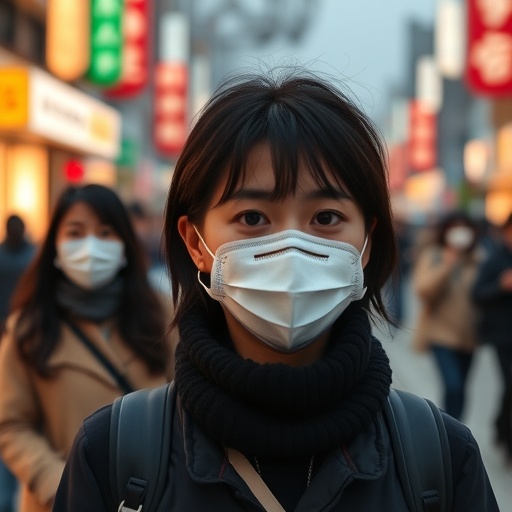
Strikingly, with the onset of the COVID-19 pandemic and the concomitant surge in mask-wearing and other precautionary measures, the study observed a significant reduction in PM2.5-related risk for MINOCA. This decline suggests that face masks, by filtering out particulate matter and reducing inhalation exposure, may have mitigated vascular insults that typically precipitate these non-obstructive cardiac events. Meanwhile, the risk associated with the more classical obstructive myocardial infarction type, MI-CAD, remained relatively unaffected by these behavioral adaptations. This differential response hints at distinct biological pathways influenced by pollutant exposure in varying heart attack phenotypes.
These findings lend critical real-world evidence to the hypothesis that personal protective interventions, such as wearing masks, can serve as effective barriers against environmental hazards traditionally considered beyond individual control. Despite Japan’s absence of stringent lockdown mandates, the voluntary adoption of preventive measures correlates with measurable cardiovascular health benefits, potentially opening avenues for public health policy that emphasize behavioral risk reduction alongside efforts to improve ambient air quality.
At the mechanistic level, the protective effects of mask usage against particulate matter inhalation likely extend beyond simple filtration. By attenuating respiratory exposure to inflammatory and oxidative agents, masks may reduce systemic endothelial injury and the propensity for coronary vasospasm or microvascular dysfunction, which are implicated in MINOCA pathology. This sheds light on the intricate connection between environmental toxins, endothelial health, and acute cardiac syndromes, advancing the frontier of preventive cardiology.
From a public health perspective, these insights resonate with urgent global imperatives to address environmental determinants of chronic and acute diseases. While sustained improvements in air quality through regulatory measures remain paramount, the study highlights the utility of accessible, low-cost interventions during episodes of elevated pollution. This approach is especially salient for vulnerable populations—including the elderly, those with pre-existing cardiovascular conditions, and residents of urban pollution hotspots—who are disproportionately burdened by particulate matter exposure.
Furthermore, the research underscores the importance of continuous, high-resolution monitoring of pollutant concentrations alongside detailed clinical databases to unravel the temporal and causal relationships between environment and cardiovascular events. Integrating such datasets facilitates precision public health strategies capable of dynamically mitigating risk in real-time, particularly during periods of environmental or societal upheaval akin to the COVID-19 pandemic.
Looking ahead, these findings invite further investigation into the mechanistic pathways by which air pollution differentially influences the spectrum of myocardial infarction subtypes. They also prompt reassessment of pandemic-induced behavioral changes as inadvertent natural experiments with significant health ramifications. Harnessing this knowledge could accelerate innovation in cardiovascular risk reduction through interdisciplinary collaborations bridging environmental science, clinical cardiology, and public health policy.
In sum, the pioneering Japanese study advances our understanding of how short-term visceral environmental exposures intersect with cardiac vulnerability and reveals the profound impact of societal behavior modifications. The adoption of simple interventions such as mask-wearing transcends infectious disease control—it emerges as a promising strategy to shield at-risk populations from the cardiovascular consequences of pervasive air pollution. As the world grapples with escalating urbanization and climate challenges, the lessons gleaned from this research carry profound implications for safeguarding heart health at a population level.
Subject of Research: Not applicable
Article Title: Air pollution before and during the COVID-19 pandemic: changes in risk of acute myocardial infarction
News Publication Date: 13-Feb-2026
Web References: http://dx.doi.org/10.1093/eurheartj/ehag102
References: Ishii et al., “Air pollution before and during the COVID-19 pandemic: changes in risk of acute myocardial infarction,” European Heart Journal (2026).
Image Credits: Ishii et al.
Keywords: Myocardial infarction, Air pollution, COVID-19, Epidemics, Risk factors, Public health, Environmental health
Tags: acute myocardial infarction risk factorsair pollution PM2.5 and cardiovascular healthCOVID-19 mask-wearing and heart attack riskCOVID-19 pandemic behavioral changesendothelial dysfunction and heart attacksJapan nationwide cardiovascular studyJROAD-DPC database researchoxidative stress and heart diseasePM2.5 impact on myocardial ischemiaprotective effects of masks against air pollutionshort-term exposure to fine particulate mattersystemic inflammation from air pollution