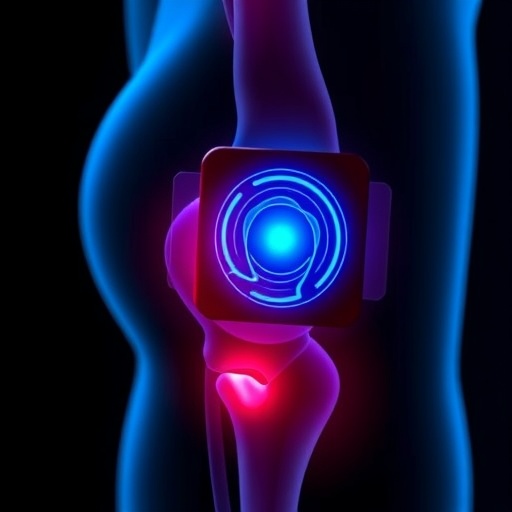
In a groundbreaking advancement that could revolutionize the treatment of gouty arthritis, researchers have unveiled a novel wearable device combining ultrasound technology with microneedles to provide both on-demand and sustained therapeutic effects. This innovative ultrasound microneedle patch, described in a recent publication in npj Flexible Electronics, represents a significant leap forward in personalized medicine, offering patients a more effective and user-friendly alternative to conventional gout therapies.
Gouty arthritis, a painful inflammatory condition caused by the deposition of urate crystals in joints, has long posed challenges to effective management, especially in ensuring timely and sustained drug delivery. Traditional systemic treatments often lead to side effects and fluctuating drug levels, which can result in sporadic relief or chronic discomfort. The newly developed patch seeks to address these issues by combining the benefits of localized therapy with advanced wearable technology.
At the core of the device is a flexible patch embedded with microscopic needles—microneedles—that penetrate the skin’s surface painlessly, allowing direct delivery of therapeutic agents into the affected tissues. These microneedles are engineered from biocompatible materials, ensuring minimal irritation and promoting patient compliance. Their size and flexibility enable them to conform seamlessly to the skin’s contours, even over joints, where movement is frequent.
Complementing the microneedles, the patch incorporates a miniaturized ultrasound transducer array capable of generating ultrasonic waves that can be precisely controlled in amplitude and frequency. The use of ultrasound serves multiple purposes: enhancing the permeability of skin tissues to the medication and facilitating a controlled and responsive drug release triggered “on-demand” based on the patient’s needs. Ultrasound’s mechanical effects can disintegrate crystal deposits and improve local circulation, potentially augmenting the therapeutic outcome beyond mere drug delivery.
One of the remarkable features of this device is its capacity for sustained management. The patch’s embedded microneedles can maintain a reservoir of medication, where ultrasound pulses stimulate periodic release, enabling continuous treatment without the need for repeated drug administration. This avoids the peaks and troughs in drug concentration seen with oral or injectable regimens and mitigates side effects linked to systemic exposure.
The technology relies on precise engineering at the intersection of flexible electronics, biomedical engineering, and drug delivery science. The flexible substrate on which the microneedles and ultrasound components rest ensures that the patch can endure the mechanical stress of daily activity without compromising functionality. Moreover, the patch’s integration with wearable electronics allows for wireless communication with external devices, enabling healthcare providers to monitor treatment progress and adjust therapy parameters remotely.
Clinical implications of this innovation are far-reaching. For patients suffering from gouty arthritis, who often experience acute flare-ups requiring prompt intervention, the on-demand capability of the device offers the convenience of immediate symptom relief. Simultaneously, the sustained release mechanism supports ongoing management, potentially reducing the frequency and severity of attacks. This dual-functionality embodies the ideals of precision medicine by tailoring treatment dynamically.
Further research emphasizes the patch’s safety and efficacy, with preliminary in vivo studies demonstrating significant reductions in inflammation markers and urate crystal loads in affected joints. The non-invasive nature of the patch eliminates barriers associated with injections or frequent hospital visits, and its discreet design encourages adherence by fitting seamlessly under clothing. Patients report minimal discomfort during use, highlighting the importance of patient-centered design in medical technology.
From a technical perspective, the patch leverages piezoelectric materials to convert electrical energy into ultrasound waves, controlled by onboard circuits and powered by miniaturized batteries or energy harvesting modules. The interfacial engineering between microneedles and transducer elements ensures synergistic performance without interference. Manufacturing processes utilize scalable techniques, suggesting the potential for mass production and broad clinical application in the near future.
The potential applications of this wearable ultrasound microneedle patch extend beyond gouty arthritis. By adjusting the drug reservoirs and ultrasound parameters, the platform could be adapted to treat a variety of musculoskeletal disorders, including rheumatoid arthritis, tendinopathies, and localized infections. Its modularity and flexibility position it as a versatile tool in the burgeoning field of wearable therapeutic devices.
Moreover, this innovation aligns with current trends emphasizing patient autonomy and home-based care. As healthcare systems worldwide grapple with the demand for chronic disease management, devices that empower individuals to manage symptoms effectively without constant medical supervision are becoming invaluable. The integration of wireless data transmission ensures that clinicians remain informed, allowing for timely interventions if necessary.
Looking forward, the research team envisions enhancements such as integration with smartphone applications, enabling patients to customize treatment schedules and receive real-time feedback. Machine learning algorithms could analyze usage patterns and physiological data to optimize dosing regimens, further personalizing care. These advancements underline the patch’s potential not only as a therapeutic device but as a component of a comprehensive digital health ecosystem.
The combination of microneedle technology and ultrasound in a flexible, wearable format heralds a new horizon in drug delivery and disease management. By addressing the limitations of existing treatment modalities for gouty arthritis, this pioneering device offers hope for improved quality of life and symptom control. Its development represents an exemplary fusion of interdisciplinary research and technological innovation.
As commercialization moves forward, regulatory evaluations and larger-scale clinical trials will be essential to substantiate long-term benefits and establish safety profiles. Collaborations with industry partners and healthcare organizations are expected to accelerate adoption, potentially transforming clinical practice and standard-of-care approaches for inflammatory joint diseases.
In sum, this wearable ultrasound microneedle patch exemplifies the future of smart medical devices—compact, patient-friendly, and capable of delivering complex therapies with precision and responsiveness. The marriage of cutting-edge materials science, biomedical engineering, and electronics showcased in this project not only opens new avenues for gouty arthritis treatment but also sets a precedent for managing a broad spectrum of chronic conditions with wearable technology.
Subject of Research: Wearable medical device for gouty arthritis treatment using ultrasound and microneedle technology
Article Title: Wearable ultrasound microneedle patch for on-demand and sustained management of gouty arthritis
Article References:
Zhang, S., Zhou, Z., Chen, L. et al. Wearable ultrasound microneedle patch for on-demand and sustained management of gouty arthritis.
npj Flex Electron (2026). https://doi.org/10.1038/s41528-026-00554-4
Image Credits: AI Generated
Tags: advanced wearable medical devicesbiocompatible microneedles for arthritisflexible electronics in healthcareimproved patient compliance in arthritis carelocalized gouty arthritis treatmentmicroneedle drug delivery systemnon-invasive arthritis pain managementpersonalized medicine for inflammatory conditionssustained therapeutic drug releasetargeted urate crystal treatmentultrasound-enhanced transdermal therapywearable ultrasound patch for gout relief