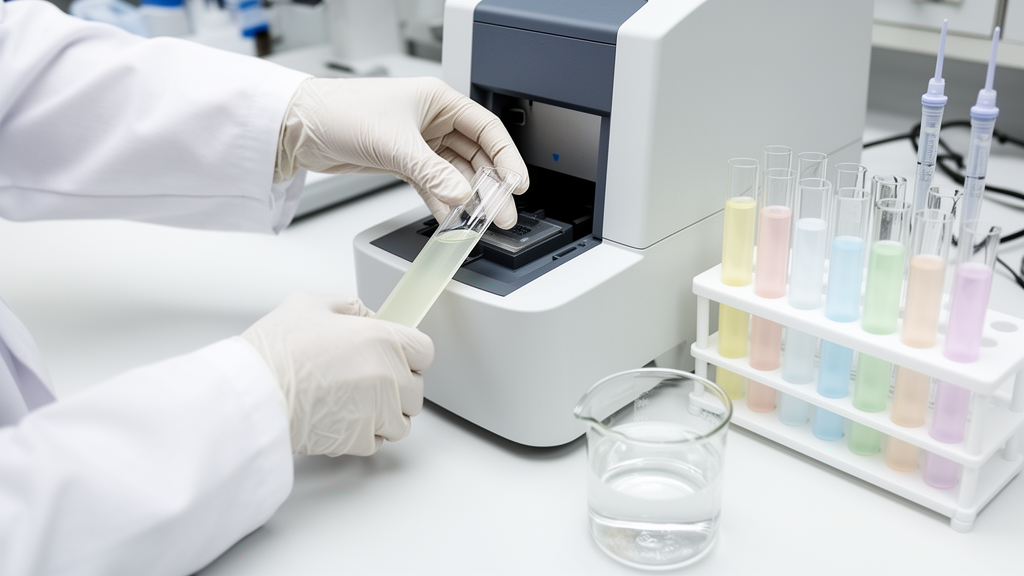
Chemists have developed three new spectrophotometric methods that can simultaneously measure acetaminophen, dextromethorphan hydrobromide, and pseudoephedrine hydrochloride in a single co-formulated product, using nothing but distilled water as the solvent. The work, published in BMC Chemistry, describes a fully validated, organic solvent-free approach to analyzing a ternary pharmaceutical mixture that is sold commercially as Tylenol Cold and Flu Multi-Action caplets, each of which contains 500 mg of acetaminophen, 15 mg of dextromethorphan hydrobromide, and 30 mg of pseudoephedrine hydrochloride.
The three drugs are combined for the symptomatic relief of the common cold and upper respiratory tract disorders. Acetaminophen, an N-(4-hydroxyphenyl) acetamide with analgesic and antipyretic properties, appears in more than 600 over-the-counter products, including allergy, cold and flu, sleep aid, and multi-symptom formulations. Dextromethorphan hydrobromide, a levorphanol-derived codeine analogue with known potential for abuse, acts as a cough suppressant. Pseudoephedrine hydrochloride, an alpha-adrenergic agonist, is used to treat nasal and sinus congestion and allergic rhinitis. Because their zero-order absorption spectra overlap significantly across the ultraviolet range, none of the three components can be determined directly from a simple absorbance reading.
The research team, led by Abdallah M. Hamdy and Esraa M. Meselhy with Magda M. El Henawee, Hisham Hashem, and Hany Ibrahim, tackled this overlap with three complementary mathematical strategies: the double divisor-ratio spectra derivative method (DDRS-DS), the mean centering of double divisor ratio spectra method (MC-DDRS), and the dual wavelength in ratio spectrum method (DWRS). All three rely on the same underlying idea: dividing the absorption spectrum of one drug by the combined spectra of the other two, so that the interfering signals cancel out and the target analyte can be quantified from its own characteristic response.
In the DDRS-DS approach, the absorption spectrum of each drug is divided by the spectrum of a mixture containing the other two drugs at fixed concentrations, and a first derivative of the resulting ratio spectrum is calculated. Calibration graphs were constructed at 239 nm for acetaminophen, 273 nm for dextromethorphan, and 268 nm for pseudoephedrine, with correlation coefficients of 0.9995, 0.9997, and 0.9998 respectively. The MC-DDRS method adds a mean-centering step performed in MATLAB over defined wavelength windows for each analyte, with calibration plots computed at 245 nm, 281 nm, and 259 nm and correlation coefficients of 0.9998, 0.9996, and 0.9996. The DWRS method combines dual-wavelength and ratio-difference logic, suppressing the spectral interference of one component through a paired-wavelength strategy and eliminating the second interfering species by using it as the divisor, with amplitude differences plotted against concentration for each drug.
One practical obstacle was the enormous concentration gap among the three components. The validated linear ranges were 2 to 24 micrograms per milliliter for acetaminophen, 25 to 350 micrograms per milliliter for dextromethorphan, and 100 to 1400 micrograms per milliliter for pseudoephedrine, reflecting the very different doses at which the drugs appear in the caplet. To bridge this gap, the researchers introduced an in-lab sample enrichment strategy they call spectrum addition. Known amounts of reference standard, 25 micrograms per milliliter of dextromethorphan and 100 micrograms per milliliter of pseudoephedrine, are added to sample dilutions so that the minor components fall within their calibration curves; during recovery calculations, the recovery of the added concentration is subtracted from the total. The authors note that this enrichment enhances the analytical signal by adding known quantities of standard to dilutions of the processed sample solution, and helps mitigate deviations from Beer’s law that occur at low concentrations.
Validation followed the recommendations of the International Conference on Harmonization. Accuracy was assessed at three concentration levels within each validated range, each measured in triplicate, and reported as mean percentage recovery values. Intra- and inter-day precision were examined at 4, 12, and 20 micrograms per milliliter for acetaminophen, 100, 200, and 300 micrograms per milliliter for dextromethorphan, and 400, 800, and 1200 micrograms per milliliter for pseudoephedrine, with three replicate analyses on the same day and three days later. Specificity was tested using six laboratory-prepared mixtures with varying ratios of the three drugs, all of which produced recoveries and standard deviations within acceptable ranges. Limits of quantification were recorded as 1.21 to 1.88 micrograms per milliliter for acetaminophen, 20.48 to 24.01 micrograms per milliliter for dextromethorphan, and 92.43 to 99.00 micrograms per milliliter for pseudoephedrine.
The methods were then applied to the commercial caplets. Ten Tylenol Cold and Flu Multi-Action caplets were weighed, ground into a fine powder, dissolved in distilled water with 20 minutes of sonication, filtered through a 0.5 micrometer Whatman filter paper, and diluted. A 0.5 milliliter aliquot of the filtrate was enriched with 5.0 milliliters of pseudoephedrine stock standard (2000 micrograms per milliliter) and 2.5 milliliters of dextromethorphan stock standard (1000 micrograms per milliliter), yielding a final solution containing 10 micrograms per milliliter of acetaminophen, 100.60 micrograms per milliliter of pseudoephedrine, and 25.30 micrograms per milliliter of dextromethorphan. Standard addition was used to confirm that no excipient interference was present.
A central selling point of the study is its environmental profile. Because acetaminophen, dextromethorphan hydrobromide, and pseudoephedrine hydrochloride are all adequately soluble in water, distilled water served as the sole solvent for the stock solutions, eliminating hazardous organic solvents entirely. Measurements were performed on a JASCO V-630 dual-beam UV-visible spectrophotometer over 200 to 400 nanometers with quartz cuvettes, equipment the authors describe as requiring no advanced apparatus. The environmental sustainability of the methods was evaluated with several complementary assessment tools: the Analytical Eco-Scale, on which the proposed methods accrued only 6 penalty points out of a possible 100, the Analytical Greenness (AGREE) metric based on the twelve principles of green analytical chemistry, and the Green Analytical Procedure Index (GAPI), which the authors report showed low environmental impact across most stages of the analytical workflow, mainly due to water-based solvents, reduced reagent consumption, and simplified sample preparation.
Beyond greenness, the team assessed practical applicability and overall sustainability. The Blue Applicability Grade Index (BAGI), where a score exceeding 60 denotes high methodological relevance, returned a score of 80 for the techniques, which the authors attribute to high production throughput, strong potential for automation, and remarkably low operational costs. The RGB 12 model, which evaluates twelve parameters across green (environmental and safety), red (analytical quality), and blue (practical and economic) domains, indicated a favorable balance between environmental safety, analytical reliability, and economic practicality. A one-way ANOVA test at a significance level of 0.05, comparing recovery data from the three proposed techniques with a reference method, found no statistically significant difference between the groups, with P greater than 0.05.
The authors conclude that the three eco-friendly, cost-effective methods enable simultaneous determination of the ternary mixture without prior separation, are simple, robust, accurate, and precise, and were successfully applied to both pure substances and pharmaceutical dosage forms without interference from excipients. Spectrophotometry, they note, reduces reliance on expensive reagents, specialized personnel, sophisticated instrumentation, and high-purity solvents, making it well suited to the routine functions of pharmaceutical laboratories. The datasets used and analyzed during the study are available from the corresponding author upon reasonable request, and the article’s peer review reports are publicly viewable through the journal.
Subject of Research: Development and validation of three organic solvent-free spectrophotometric methods for the simultaneous determination of acetaminophen, dextromethorphan hydrobromide, and pseudoephedrine hydrochloride in a co-formulated pharmaceutical product.
Article Title: Eco-sustainable organic solvent-free spectrophotometric method for the concurrent determination of a ternary pharmaceutical mixture
Article References: Hamdy, A. M., Meselhy, E. M., El Henawee, M. M., Hashem, H., & Ibrahim, H. (2026). Eco-sustainable organic solvent-free spectrophotometric method for the concurrent determination of a ternary pharmaceutical mixture. BMC Chemistry, 20(1), Article 207. https://doi.org/10.1186/s13065-026-01903-0
Image Credits: AI Generated
DOI: 10.1186/s13065-026-01903-0
Keywords: spectrophotometry, green analytical chemistry, acetaminophen, dextromethorphan, pseudoephedrine, pharmaceutical analysis, ternary mixture, ratio spectra derivative, method validation, ICH guidelines, solvent-free, BMC Chemistry
News Source: Bethany Barker. (October 27, 2026). Water-only spectrophotometric methods untangle a three-drug cold remedy mixture. Scienmag.