

• HOME
  • NEWS
  • EXPLORE
    • CAREER
      • Companies
      • Jobs
    • EVENTS
    • iGEM
      • News
      • Team
    • PHOTOS
    • VIDEO
    • WIKI
  • BLOG
  • COMMUNITY
    • FACEBOOK
    • INSTAGRAM
    • TWITTER
Wednesday, April 1, 2026
BIOENGINEER.ORG
No Result
View All Result
  • Login
  • HOME
  • NEWS
  • EXPLORE
    • CAREER
      • Companies
      • Jobs
        • Lecturer
        • PhD Studentship
        • Postdoc
        • Research Assistant
    • EVENTS
    • iGEM
      • News
      • Team
    • PHOTOS
    • VIDEO
    • WIKI
  • BLOG
  • COMMUNITY
    • FACEBOOK
    • INSTAGRAM
    • TWITTER
  • HOME
  • NEWS
  • EXPLORE
    • CAREER
      • Companies
      • Jobs
        • Lecturer
        • PhD Studentship
        • Postdoc
        • Research Assistant
    • EVENTS
    • iGEM
      • News
      • Team
    • PHOTOS
    • VIDEO
    • WIKI
  • BLOG
  • COMMUNITY
    • FACEBOOK
    • INSTAGRAM
    • TWITTER
No Result
View All Result
Bioengineer.org
No Result
View All Result
Home NEWS Science News Biology

Warmer water signals change for Scotland’s shags

Bioengineer by Bioengineer
January 24, 2018
in Biology, Science News
Reading Time: 2 mins read
0
Share on FacebookShare on TwitterShare on LinkedinShare on RedditShare on Telegram
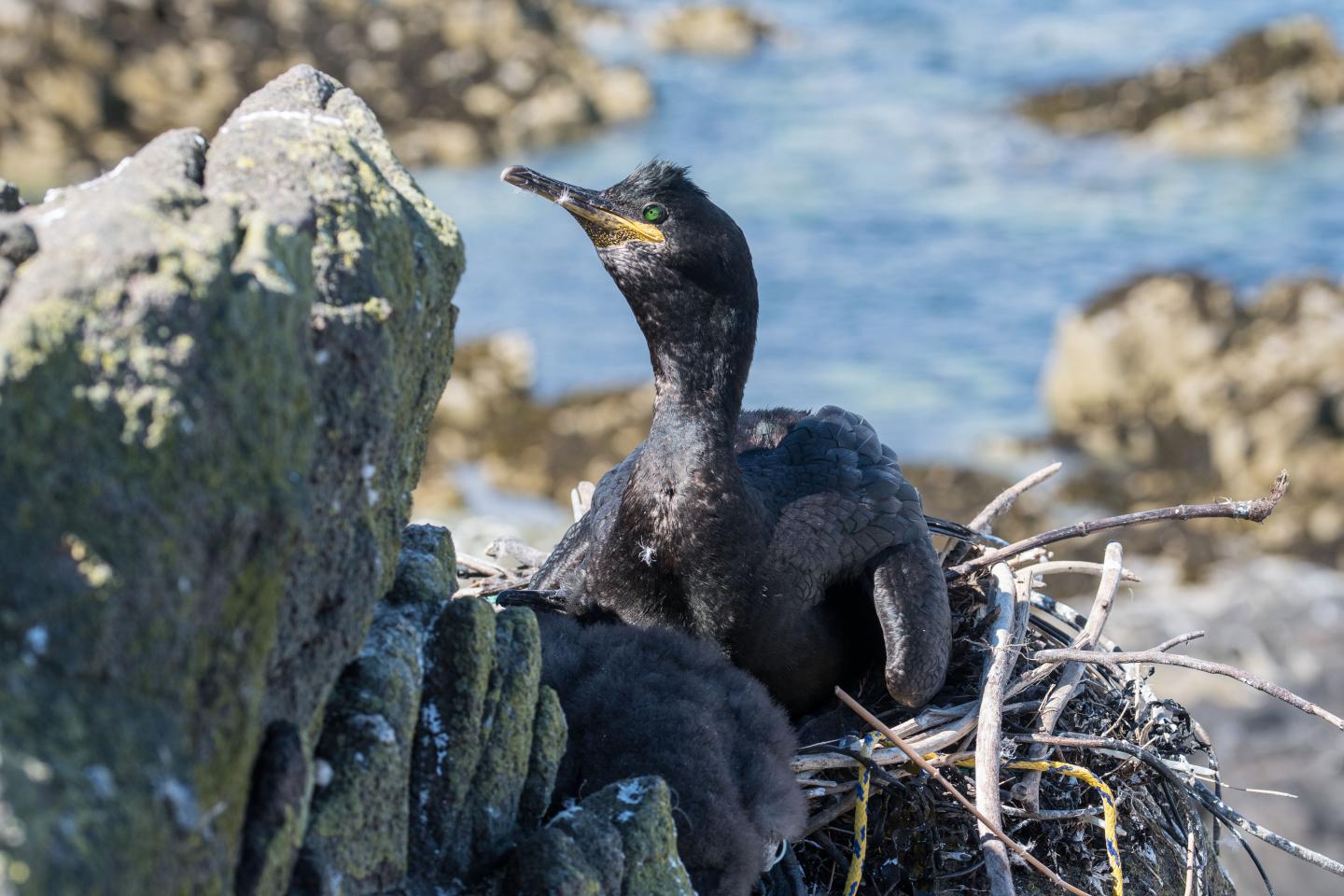
IMAGE

Credit: Gary Howells

An increasingly catholic diet among European Shags at one of Scotland's best-studied breeding colonies has been linked to long-term climate change and may have important implications for Scotland's seabirds, according to research led by the Centre for Ecology & Hydrology on November 16 2017.

Three decades of data from the Isle of May, off Scotland's east coast, found that the proportion of sandeels – the bird's usual fayre – declined by 48% between 1985 and 2014. Over the same period, the number of other fish prey in the diet increased, from an average of just 1 species per year in 1985 to 11 in 2014. Crucially, the results, presented in the Marine Ecology Progress Series and produced in collaboration with researchers from the University of Liverpool, the Sir Alister Hardy Foundation for Ocean Science, and Biomathematics and Statistics Scotland, show that the increase in diet diversity was linked to warming trends in Sea Surface Temperature, an indicator of climate change in the region.

The North Sea is one of the most rapidly warming marine ecosystems on the planet, and warmed by 0.037 degrees Celsius per year between 1982 and 2012. Lead author, Richard Howells explains that the study, "ties in with many observations of changes in the abundance, distribution and phenology of many species in the North Sea, and a decline in the availability and size of sandeels.

"Climate models predict further increases in sea surface temperature and weather variability in the region, with generalisation in shag diet, one way in which this species appears to be responding to this change."

Short-term weather conditions also impacted on the bird's ability to feed, with, "windier conditions on a daily basis linked to fewer sandeel in the diet. This may affect the ability of parents to successfully feed their chicks."

"Changes in the prey types consumed by this population suggest that adults may now be hunting across a broader range of habitats than they did in the past, such as rocky habitats where they can find the Rock Butterfish. Such changes may alter interactions with potential threats, such as small-scale offshore renewable developments."

Finally, Howells adds, "By identifying effects of both long-term temperature trends and short term weather variability, this study helps us gain a better understanding of how our seabird species are affected by ongoing climate change, and may help us direct conservation efforts to preserve these populations now and in the future".

###

Media Contact

Paul Fisher
[email protected]
44-079-202-95384
@CEHScienceNews

http://www.ceh.ac.uk

Original Source

https://www.ceh.ac.uk/news-and-media/news/warmer-water-signals-change-scotland%E2%80%99s-shags http://dx.doi.org/10.3354/meps12343

Share12Tweet8Share2ShareShareShare2

Related Posts

FGFR2b Links to Biomarkers, Tumor Diversity, Survival

April 1, 2026

Frailty, Malnutrition Link Falls to Daily Functioning

April 1, 2026

Dactylides D, E: Novel 22-Membered Polyol Macrolides

April 1, 2026

Longer Leukocyte Telomeres Linked to Premature Membrane Rupture

April 1, 2026
Please login to join discussion

POPULAR NEWS

  • blank

    Revolutionary AI Model Enhances Precision in Detecting Food Contamination

    96 shares
    Share 38 Tweet 24
  • Imagine a Social Media Feed That Challenges Your Views Instead of Reinforcing Them

    1006 shares
    Share 398 Tweet 249
  • Promising Outcomes from First Clinical Trials of Gene Regulation in Epilepsy

    51 shares
    Share 20 Tweet 13
  • Popular Anti-Aging Compound Linked to Damage in Corpus Callosum, Study Finds

    43 shares
    Share 17 Tweet 11

About

We bring you the latest biotechnology news from best research centers and universities around the world. Check our website.

Follow us

Recent News

FGFR2b Links to Biomarkers, Tumor Diversity, Survival

Frailty, Malnutrition Link Falls to Daily Functioning

Dactylides D, E: Novel 22-Membered Polyol Macrolides

Subscribe to Blog via Email

Enter your email address to subscribe to this blog and receive notifications of new posts by email.

Join 78 other subscribers
  • Contact Us

Bioengineer.org © Copyright 2023 All Rights Reserved.

Welcome Back!

Login to your account below

Forgotten Password?

Retrieve your password

Please enter your username or email address to reset your password.

Log In
No Result
View All Result
  • Homepages
    • Home Page 1
    • Home Page 2
  • News
  • National
  • Business
  • Health
  • Lifestyle
  • Science

Bioengineer.org © Copyright 2023 All Rights Reserved.
