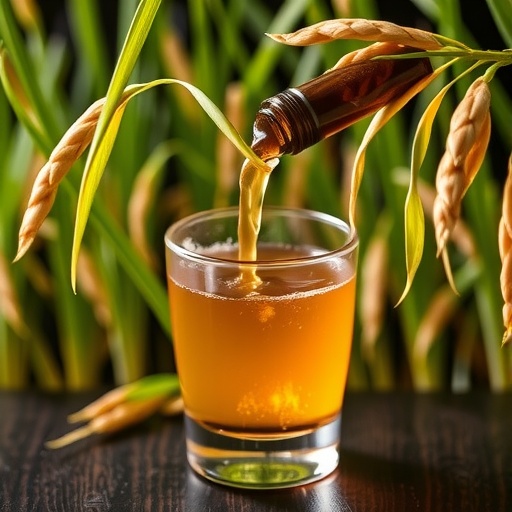
In the dynamic world of fermented beverages, rice wine stands out not only for its cultural significance but also for its complex and intriguing aroma profile. A recent breakthrough study by Y. Huang, published in Food Science and Biotechnology in January 2026, sheds unprecedented light on the volatile organic compounds (VOCs) responsible for the distinctive qualities of rice wine. This comprehensive research delves into the intricate formation mechanisms of these volatile compounds and elucidates the cutting-edge analytical methodologies employed to unravel their mysteries.
Volatile organic compounds are pivotal in defining the sensory characteristics of fermented products, and rice wine is no exception. The bouquet of rice wine is a tapestry woven from a multitude of VOCs, each contributing subtle notes ranging from floral and fruity to earthy and umami. Understanding how these compounds arise during the fermentation and aging processes is crucial for optimizing flavor profiles, enhancing quality control, and innovating new varieties tailored to consumer preferences across global markets.
Huang’s investigation meticulously outlines the biochemical pathways that lead to the generation of these VOCs in rice wine. The study highlights that the metabolic activities of diverse yeast strains and lactic acid bacteria during fermentation are central players in the biosynthesis of alcohols, esters, aldehydes, and acids. The fermentative metabolism intricately modulates the release and transformation of precursor molecules, leading to a dynamic evolution of aroma compounds over time. Furthermore, environmental factors such as temperature, pH, and nutrient availability dynamically influence these metabolic routes, adding layers of complexity to the flavor development process.
One of the remarkable insights from the study is the role of esterification reactions in crafting the fruity and floral aromas that rice wine enthusiasts cherish. Esters, formed by the reaction of alcohols with organic acids, emerge as dominant contributors to the profile. Huang’s work reveals how manipulating fermentation conditions can tune the specific types and concentrations of ester compounds, thus offering winemakers a strategic handle to engineer desired aroma traits without genetic modification of microbial strains.
The research does not stop at the chemical genesis of VOCs; it also pioneers advancements in analytical technologies that push the boundaries of detection sensitivity and specificity. Huang discusses the application of gas chromatography coupled with mass spectrometry (GC-MS) and solid-phase microextraction (SPME) techniques, enabling precise quantification and identification of trace-level volatile compounds. These high-resolution tools allow scientists to map out an intricate landscape of rice wine volatiles with remarkable clarity, overcoming challenges posed by complex matrices and low-abundance molecules.
Moreover, Huang’s study ventures into the emerging use of multidimensional chromatographic approaches and electronic nose (e-nose) technologies. These innovations bring the capacity for real-time, non-destructive aroma profiling, revolutionizing quality assessment and authentication processes. Such techniques hold promise in combating counterfeit products and ensuring batch-to-batch consistency, which are paramount concerns for the global rice wine industry amid rising consumer demand.
The implications of this research extend beyond flavor science into health and safety domains. Some VOCs can serve as biomarkers for spoilage or contamination, and their rapid detection is essential for consumer protection. Huang identifies specific compounds that arise from undesirable microbial activity or chemical degradation, emphasizing the integration of volatile analysis into comprehensive quality management systems that safeguard both sensory appeal and safety standards.
Furthermore, the study navigates the influence of raw materials and traditional processing methods on VOC profiles. Variations in rice cultivar, milling degree, and water source impart unique chemical signatures that interact with fermentation dynamics. Huang posits that a thorough understanding of these interactions offers pathways to preserve heritage flavors while embracing innovation, thereby maintaining cultural integrity and economic viability for producers in different regions.
The ecological and sustainability aspects are not overlooked; the paper briefly addresses how optimized fermentation strategies, informed by VOC profile monitoring, can reduce waste and energy consumption. By fine-tuning microbial consortia and fermentation parameters, producers can minimize the formation of off-flavors and undesirable by-products, thereby enhancing resource efficiency and contributing to environmentally responsible production practices.
Importantly, this work opens new avenues for flavor modulation through synthetic biology and microbial engineering. While Huang does not delve deeply into genetic manipulation, the biochemical frameworks elucidated provide foundational knowledge for future endeavors aiming to create designer yeast or bacteria strains capable of producing novel or enhanced volatile compounds. This prospect heralds a new era for rice wine innovation, merging traditional craftsmanship with cutting-edge biotechnology.
Additionally, Huang’s comprehensive review compares rice wine VOC research with that of other alcoholic beverages like sake, whiskey, and beer, drawing parallels and distinctions that enrich the broader understanding of fermentation science. This comparative perspective fosters cross-disciplinary insights and potentially transfers technological advancements between beverage industries, enhancing overall quality and diversity.
The study also pays close attention to post-fermentation factors such as storage conditions and aging, which significantly alter the VOC landscape. Controlled aging can amplify desirable aromas through slow chemical transformations, while improper handling risks the development of off-notes. Huang’s findings underscore the necessity for precision in storage environments to maintain the aromatic integrity, highlighting the delicate balance between natural evolution and preservation.
From an analytical standpoint, the integration of machine learning algorithms with sensory data and volatile compound profiles represents a cutting-edge frontier showcased in the paper. By correlating large datasets of aroma compounds with human sensory evaluations, these computational tools can predict flavor outcomes and guide process adjustments with unprecedented accuracy, accelerating product development timelines.
Consumer trends further bolster the significance of this research, as there is an increasing appetite for beverages with unique sensory experiences and authentic backstories. Huang’s insights into VOC formation enable producers to craft rice wines that resonate with evolving palates, driving market differentiation and consumer engagement. This alignment of science and consumer desire exemplifies how fundamental research can directly influence commercial success.
In summary, Huang’s 2026 study offers a landmark contribution to the science of rice wine aroma. By unraveling the complex biochemical origins of volatile organic compounds and pioneering innovative analytical methodologies, this work empowers producers, researchers, and technologists alike. The multifaceted understanding presented not only enriches the sensory appreciation of rice wine but also sets the stage for sustainable, high-quality, and cutting-edge fermentation practices in the years to come.
Subject of Research: Volatile organic compounds formation mechanisms and analytical approaches in rice wine.
Article Title: Volatile organic compounds in rice wine: formation mechanisms and analytical approaches.
Article References:
Huang, Y. Volatile organic compounds in rice wine: formation mechanisms and analytical approaches. Food Sci Biotechnol (2026). https://doi.org/10.1007/s10068-025-02076-7
Image Credits: AI Generated
DOI: 23 January 2026
Tags: analysis of rice wine aroma profilebiochemical pathways in rice wine fermentationconsumer preferences in rice winefermentation processes in rice wineflavor optimization in rice wineinnovative rice wine varietieslactic acid bacteria in fermented beveragesquality control in rice winesensory characteristics of fermented productsvolatile compounds in fermented beveragesvolatile organic compounds in rice wineyeast strains in rice wine production