Manipulating the visual feedback of an ongoing reaching movement drives robust behavioral adaptation in healthy adults while leaving corticospinal excitability unchanged, according to a kinematic and neurophysiological study published in Frontiers in Human Neuroscience. Researchers investigated how altering the visual gain of a person’s own movement alters motor execution during active reaching. By testing participants inside a robotic exoskeleton, the investigation showed that people rapidly compensate for scaled visual representations of their limbs, demonstrating that movement execution and corticospinal excitability can dissociate during this form of sensorimotor adaptation.
Action observation and movement execution are frequently treated as separate paradigms within motor neuroscience and neurorehabilitation research. However, experimental frameworks that combine active execution with real-time visual modification offer unique opportunities to evaluate how visual perception directly guides motor control. In such paradigms, participants receive the sensorimotor feedback of actively moving their limbs while the visual feedback is systematically altered.
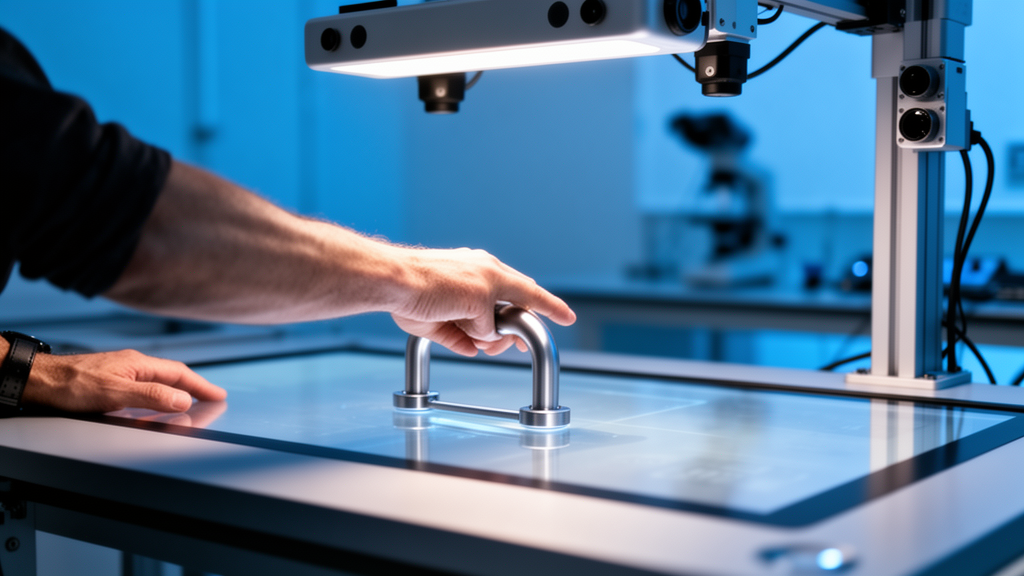
The study evaluated seventeen healthy participants who carried out a goal-directed reaching task while seated in a robotic exoskeleton. This experimental apparatus allowed the researchers to present altered visual feedback while precisely tracking elbow angular displacement throughout each reaching attempt. Participants observed visual representations of their own ongoing reaching movements under three distinct visual feedback gain conditions. These experimental conditions presented visual movements that were smaller than actual movement, greater than actual movement, or veridical relative to actual physical movement.
To evaluate potential neurophysiological adjustments alongside kinematic performance, the researchers assessed the corticospinal excitability of the biceps brachii muscle. Corticospinal measurements were conducted between reaching blocks utilizing transcranial magnetic stimulation.
The kinematic data demonstrated that altered visual feedback produced immediate, direction-specific shifts in elbow angular displacement. These initial movement deviations progressively diminished across repeated exposure as participants adapted to the altered gain. Furthermore, when veridical visual feedback was subsequently restored, participants exhibited clear after-effects, confirming the presence of robust visuomotor adaptation. The experimental results also revealed an asymmetry in movement adaptation: producing increases in movement amplitude proved more difficult than producing decreases, an effect observed both during exposure to reduced feedback gain and upon returning to baseline after exposure to increased gain.
In contrast to the clear kinematic adaptations observed during reaching, corticospinal excitability of the biceps brachii showed no significant changes across experimental conditions. The absence of modulation indicates a dissociation between behavioral adjustments and corticospinal excitability during visual feedback gain adaptation. The authors concluded that beyond serving as an experimental model for sensorimotor control, this visual gain manipulation framework provides a novel method of manipulating visual self-representation during active execution, offering potential future relevance for rehabilitation contexts focused on promoting movement execution.
Subject of Research: Visuomotor adaptation and corticospinal excitability under altered visual feedback gain
Article Title: Visuomotor adaptation to altered visual feedback gain: a kinematic and neurophysiological study
Article References: Sutter, C., Dagenais, M., & Mercier, C. (2026). Visuomotor adaptation to altered visual feedback gain: a kinematic and neurophysiological study. Frontiers in Human Neuroscience, 20, Article 1970700. https://doi.org/10.3389/fnhum.2026.1970700
Image Credits: AI Generated
DOI: 10.3389/fnhum.2026.1970700
Keywords: visuomotor adaptation, visual feedback gain, corticospinal excitability, transcranial magnetic stimulation, robotic exoskeleton, elbow angular displacement, biceps brachii, motor neuroscience, action observation, movement execution, goal-directed reaching, sensorimotor integration, neurorehabilitation, movement amplitude, kinematics, Frontiers in Human Neuroscience
News Source: Ophelia Keating. (November 18, 2026). Visual Feedback Gain Shifts Reaching Movements Without Altering Corticospinal Excitability. Scienmag.