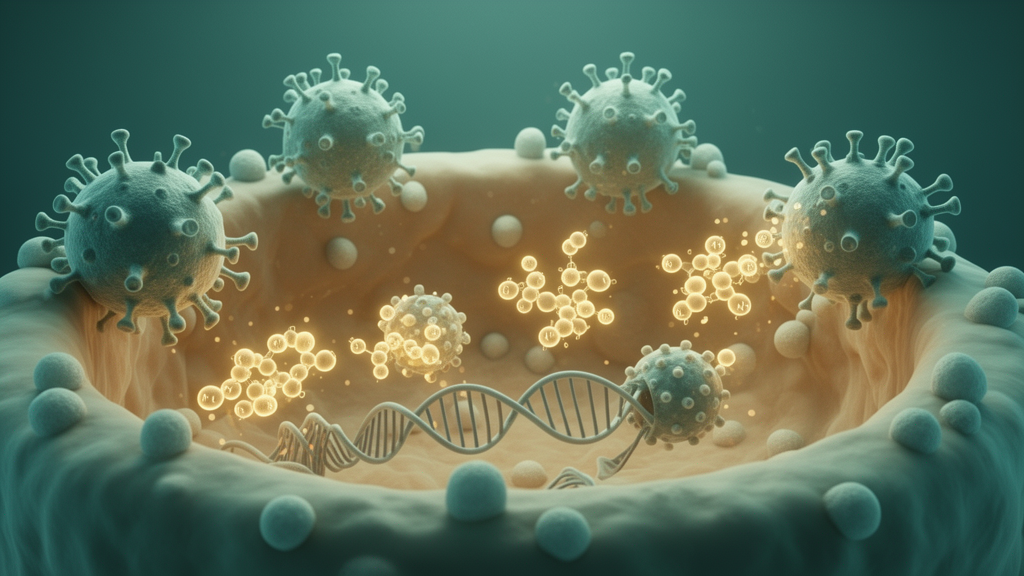
Viruses cannot replicate on their own. Once inside a host cell, they hijack the cellular machinery, forcing it to produce viral proteins and other components needed to assemble new viral particles. A recently published review in the journal Amino Acids examines one often overlooked dimension of this hijacking: the way viral infections reshape the metabolism of polyamines, small positively charged molecules that are essential for both normal cellular life and viral replication.
Polyamines are universal polycations found in living cells, where they participate in fundamental processes. The review, authored by Ekaterina Neborak, Daria Baranova, Ekaterina Dobina, Maria Ploskonos, Daria Kharkovskaya and Enzo Agostinelli, emphasizes that these molecules are equally indispensable to viruses. Yet the relationship is not a simple matter of more polyamines meaning more virus. The optimal intracellular polyamine levels required for viral activity may vary among viruses, and both increases and decreases in polyamine levels can differentially affect viral replication and survival.
One striking point highlighted in the review is that excess polyamines may even work against certain viruses. According to the authors, excessively high polyamine levels can exert antiviral effects by inhibiting some viral enzymes. This means that the direction of metabolic change matters: a rise in cellular polyamine concentrations that benefits one virus could hamper another, depending on which viral enzymes are sensitive to these polycations.
Different viruses therefore employ distinct strategies to maintain the polyamine levels they need for efficient replication. The review notes that virus-infected cells are often characterized by the simultaneous activation of polyamine biosynthesis and polyamine catabolism. At first glance, this looks like a wasteful contradiction, producing and destroying the same molecules at once, and the authors describe it as a form of metabolic dysregulation.
However, the review argues that this apparent dysregulation may be more rational than it seems. A closer examination of the role of polyamines at different stages of the life cycle of individual viruses, the authors suggest, may reveal the biological rationale underlying these changes in polyamine metabolism. In other words, what looks like cellular chaos may reflect precise viral requirements that differ from one stage of infection to the next.
Where do the building blocks for these polyamines come from during infection? The review reports that polyamine biosynthesis in virus-infected cells relies mainly on arginine, drawing on both classical and alternative biosynthetic pathways. Arginine, an amino acid already central to many aspects of cellular metabolism, thus appears to be a key substrate that infected cells channel toward polyamine production.
The review also raises a more speculative possibility. Some evidence suggests that viruses may additionally utilize proline as a precursor for polyamine biosynthesis. If confirmed by further work, this would point to an additional, less conventional route by which infected cells could supply the polyamines that replicating viruses demand.
The scope of the review is deliberately focused. The authors concentrate on clinically important viruses whose effects on host cell polyamine metabolism have been studied most extensively, comparing how these viruses alter host cell polyamine biosynthesis and degradation in relation to the functions of polyamines during their life cycles. This comparative approach allows readers to see, virus by virus, how shifts in production and breakdown of polyamines map onto the needs of the viral replication program.
As an open access review published on 23 September 2026, the article synthesizes existing findings rather than presenting new experimental data. Its central message is that polyamine metabolism is not a passive backdrop to viral infection but an active and carefully manipulated part of the host-virus interface, one that varies from virus to virus and may hold clues for understanding, and potentially interfering with, viral replication.
Subject of Research: How viral infections alter host cellular polyamine metabolism
Article Title: Alterations in cellular polyamine metabolism during viral infections
Article References: Neborak, E., Baranova, D., Dobina, E., Ploskonos, M., Kharkovskaya, D., & Agostinelli, E. (2026). Alterations in cellular polyamine metabolism during viral infections. Amino Acids. https://doi.org/10.1007/s00726-026-03556-8
Image Credits: AI Generated
DOI: 10.1007/s00726-026-03556-8
Keywords: polyamines, viral replication, host-virus interactions, polyamine metabolism, arginine, antiviral, virology, metabolic dysregulation, review, Alterations, cellular, polyamine
News Source: Daisy Hatcher. (October 28, 2026). Viruses Rely on Host Polyamine Metabolism to Complete Their Life Cycles. Scienmag.