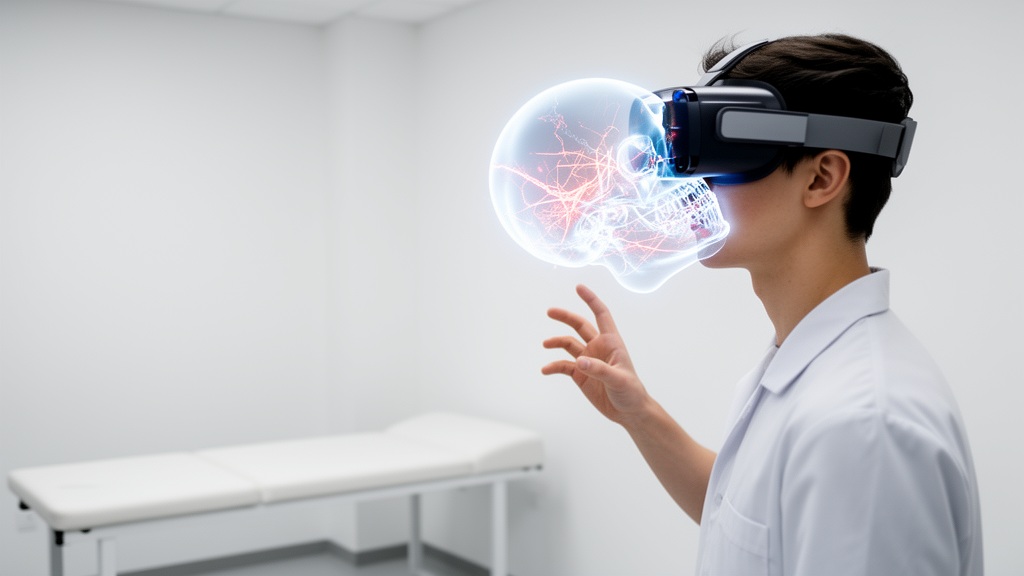
Immersive virtual reality assessment improved the accuracy of complex maxillofacial fracture classification among dental residents compared with conventional two-dimensional imaging, according to findings from a prospective, parallel-group randomized educational study published in the European Journal of Medical Research. The trial evaluated whether the three-dimensional anatomical perception afforded by virtual reality environments could enhance diagnostic performance when clinicians classify challenging facial trauma cases.
While virtual reality technology has been suggested to improve three-dimensional anatomical perception over traditional two-dimensional imaging techniques, its empirical effectiveness for AO Craniomaxillofacial (AOCMF) fracture classification had remained unclear prior to this controlled trial.
To investigate this question, the researchers approached 50 eligible dental residents for participation in the educational experiment. Among those eligible candidates, 46 residents were enrolled and randomized in an equal 1:1 allocation ratio, assigning 23 participants to the virtual reality evaluation group and 23 participants to the conventional two-dimensional imaging group. All 46 randomized dental residents completed the assigned educational study protocol, and all 46 participants were subsequently included in the final data analysis.
During the trial, each participant evaluated one anonymized complex maxillofacial fracture case and completed a corresponding AOCMF classification. The primary outcome determined by the study design was overall classification accuracy, which the investigators measured by comparing resident classifications against an established expert reference standard. In addition to accuracy, the study tracked secondary endpoints consisting of evaluation time, participant usability and satisfaction measured through an instrument based on the Computer System Usability Questionnaire (CSUQ), and perceived workload quantified with the NASA Task Load Index (NASA-TLX).
The primary analysis demonstrated a statistically significant advantage for immersive visualization, with mean AOCMF classification accuracy reaching 61.93 ± 9.56 percent in the virtual reality group compared with 52.52 ± 10.88 percent in the conventional two-dimensional imaging group. This yielded an absolute mean difference of 9.42 percentage points favoring the virtual reality cohort (95% confidence interval, 3.33 to 15.50; p = 0.003). Concurrently, assessment of perceived workload revealed that overall NASA-TLX scores were significantly higher among participants using virtual reality (p = 0.003), reflecting an increase in perceived cognitive load during the task.
Secondary operational metrics showed that evaluation time did not differ significantly between residents utilizing virtual reality and those examining conventional two-dimensional images. Furthermore, evaluation of usability and satisfaction revealed comparable scores across both study cohorts for CSUQ system usefulness, information quality, interface quality, and overall user satisfaction. The authors concluded that while virtual reality assessment imposes a greater perceived workload, it substantially enhances AOCMF classification accuracy without extending evaluation time, indicating that virtual reality may serve as a viable complementary educational tool for training in complex maxillofacial fracture assessment.
Subject of Research: Virtual reality for complex maxillofacial fracture classification in dental education
Article Title: Immersive virtual reality for classification of complex maxillofacial fractures: effects on accuracy, usability, and cognitive workload in a randomized educational study
Article References: Uranbey, Ö., Şeker, H., Aktaş, S., Gürsoytrak, B., & Nelke, K. (2026). Immersive virtual reality for classification of complex maxillofacial fractures: effects on accuracy, usability, and cognitive workload in a randomized educational study. European Journal of Medical Research. https://doi.org/10.1186/s40001-026-05438-x
Image Credits: AI Generated
DOI: 10.1186/s40001-026-05438-x
Keywords: virtual reality, maxillofacial fractures, AOCMF classification, dental education, diagnostic accuracy, cognitive workload, NASA-TLX, CSUQ usability, Immersive, virtual, reality, classification
News Source: Ophelia Keating. (November 8, 2026). Virtual Reality Enhances Maxillofacial Fracture Classification Accuracy in Educational Trial. Scienmag.