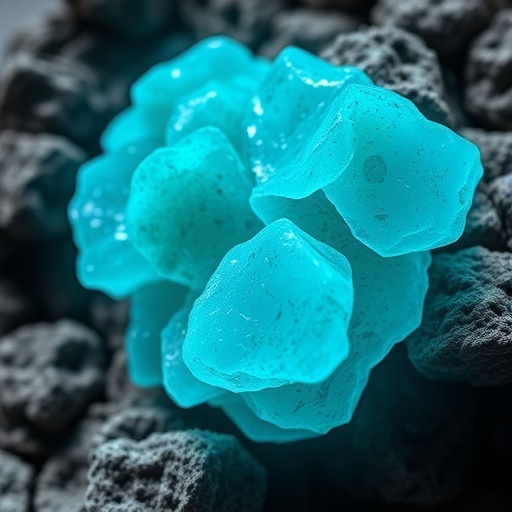
In the global effort to combat climate change, capturing carbon dioxide (CO₂) emissions before they enter the atmosphere is critical. While carbon capture technologies have been around for decades, their adoption has been hindered largely by their high cost and inefficiency. The conventional industrial approach, aqueous amine scrubbing, requires heating large volumes of liquid to temperatures above 100 °C to release the trapped CO₂, making it energy-intensive and economically impractical for widespread usage. Addressing these limitations, a research team at Chiba University in Japan has pioneered an innovative class of carbon materials, named “viciazites,” which promise a leap forward in cost-effective and energy-efficient CO₂ capture.
These new materials represent an advancement in solid adsorbents—carbon-based substances capable of binding CO₂ at comparatively lower temperatures, reducing energy consumption. Such adsorbents capitalize on their porous structures and sizable surface areas, enhancing CO₂ capture capacity. Moreover, functionalization with nitrogen-containing groups on their surfaces, particularly amine groups, has shown to improve adsorption properties substantially. Yet, historical synthesis methods result in random distribution and mixed nitrogen configurations, leaving a gap in understanding which specific molecular arrangements foster optimal performance.
Led by Associate Professor Yasuhiro Yamada and Associate Professor Tomonori Ohba, the Chiba University team has overcome this barrier by developing a cutting-edge approach to design and synthesize viciazites with nitrogen groups deliberately positioned adjacent to each other. This molecular-level precision enables researchers to study meticulously how nitrogen functionality affects adsorption and desorption behaviors. Their findings, recently published in the journal Carbon (DOI: 10.1016/j.carbon.2026.121405), mark a significant step toward scalable carbon capture solutions.
The research involved synthesizing three distinct viciazite materials, each featuring a unique nitrogen pairing in adjacent sites: primary amine groups (−NH₂), pyrrolic nitrogen, and pyridinic nitrogen. To create adjacent primary amine-functionalized viciazites, the team first subjected coronene—a polycyclic aromatic hydrocarbon—to high-temperature carbonization. Subsequent bromination and treatment with ammonia gas crafted the targeted adjacent amine groups with an impressive 76% selectivity, meaning that the vast majority of nitrogen atoms incorporated adopted the intended configuration. Parallel synthetic routes yielded pyrrolic nitrogen viciazites with 82% selectivity and pyridinic nitrogen viciazites with 60% selectivity.
To translate laboratory synthesis into practical relevance, the researchers coated activated carbon fibers with these viciazite materials, fabricating samples that could be rigorously evaluated for CO₂ adsorption and desorption performance. Advanced characterization techniques such as nuclear magnetic resonance (NMR) spectroscopy and X-ray photoelectron spectroscopy (XPS), complemented by computational modeling, confirmed the successful formation of adjacent nitrogen functionalities. This confirmation was vital, as the precise positioning of nitrogen groups underpins the materials’ promising adsorption characteristics.
Performance assays revealed that the arrangement of nitrogen functionalities dramatically influences CO₂ uptake efficiency. Viciazites incorporating adjacent −NH₂ groups and those with adjacent pyrrolic nitrogen displayed a marked improvement over untreated carbon fibers in their capacity to adsorb CO₂. Contrastingly, materials with adjacent pyridinic nitrogen groups showed minimal advantage. These insights underscore the importance of the specific chemical environment of nitrogen groups in governing CO₂ interaction.
Of particular note was the desorption performance—how effectively and at what temperatures the adsorbed CO₂ could be released, allowing the adsorbent material to regenerate for reuse. The viciazite material bearing adjacent amine groups excelled, with the majority of captured CO₂ desorbing below 60 °C. This low-temperature desorption opens the possibility of harnessing industrial waste heat, significantly lowering the energy input and operational costs for carbon capture processes. Dr. Yamada underscores this potential transformative impact, highlighting reduced energy demands as key to enabling widespread industrial adoption.
On the other hand, although the pyrrolic nitrogen-type viciazite required slightly higher temperatures for CO₂ release, it may offer superior chemical durability. Its enhanced stability could translate to longer adsorbent lifetimes, a critical factor in the economic feasibility of carbon capture technologies. This trade-off between desorption temperature and material robustness paints a nuanced picture that could guide future material design based on intended application contexts.
The ability to deliberately synthesize carbon materials with controlled adjacent nitrogen functional groups represents a paradigm shift in adsorbent engineering. Beyond CO₂ capture, the unique surface chemistry of viciazites might extend their utility to applications such as selective metal ion adsorption and catalytic processes. By tailoring the molecular architecture at the carbon surface, researchers can envision a new class of customizable materials tailored for environmental management and chemical manufacturing.
Dr. Yamada expresses that their team’s motivation lies in advancing molecular-level control over carbon materials, believing their work lays the groundwork for next-generation, cost-effective CO₂ capture technology. The synthesis methods and characterization protocols developed provide a replicable pathway that other researchers and industries can adopt, accelerating innovation in climate mitigation tools.
The research received support from the Mukai Science and Technology Foundation, the Japan Society for the Promotion of Science (JSPS KAKENHI Grant Number JP24K01251), and the Ministry of Education, Culture, Sports, Science and Technology (MEXT) through the Advanced Research Infrastructure for Materials and Nanotechnology in Japan (ARIM, Grant Number JPMXP1225JI0008). Such backed endeavors reflect a global commitment to environmental technologies with economic viability.
As the global community increasingly focuses on reducing greenhouse gas emissions, breakthroughs like viciazites offer hope that carbon capture can become more efficient, affordable, and sustainable. With ongoing refinement and scaling efforts, these adjacent nitrogen-functionalized carbon materials may soon play an essential role in the diversified portfolio of climate solutions needed to avert catastrophic global warming.
Subject of Research: Not applicable
Article Title: Viciazites: Carbon Materials with Adjacent Nitrogen Functionalities for Advanced CO2 Capture
News Publication Date: 27-Feb-2026
Web References:
https://doi.org/10.1016/j.carbon.2026.121405
https://www.cn.chiba-u.jp/en/news/
References:
Kota Kondo, Ayane Uchizono, Lizhi Pu, Itsuki Takahashi, Ryoshin Suzuki, Sota Nakamura, Kai Kan, Kazuma Gotoh, Tetsuro Soejima, Satoshi Sato, Tomonori Ohba, and Yasuhiro Yamada. “Viciazites: Carbon Materials with Adjacent Nitrogen Functionalities for Advanced CO2 Capture.” Carbon, 27 February 2026. DOI: 10.1016/j.carbon.2026.121405.
Image Credits: Associate Professor Yasuhiro Yamada from Chiba University, Japan
Keywords
Applied sciences and engineering, Chemical engineering, Materials engineering, Carbon capture, Global temperature, Environmental chemistry, Environmental management, Fabrication, Pollution control, Carbon emissions
Tags: amine-group surface functionalizationcarbon capture materialscarbon capture research Japanclimate change mitigation technologiescost-effective CO2 capture solutionsenergy-efficient carbon adsorbentsinnovative carbon capture technologylow-temperature CO2 desorptionnitrogen-functionalized carbon adsorbentsporous carbon materials for CO2solid adsorbent carbon captureviciazites carbon materials